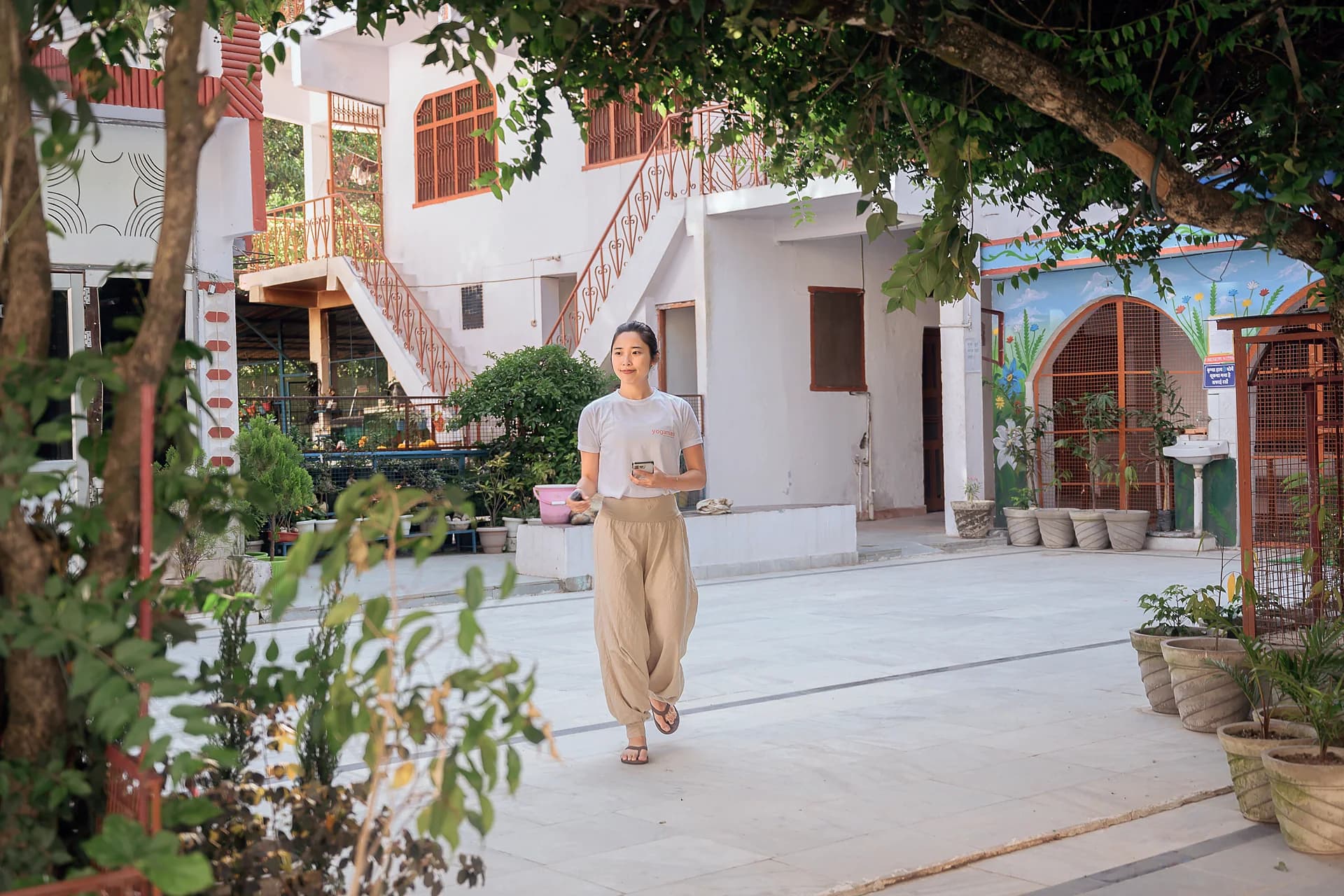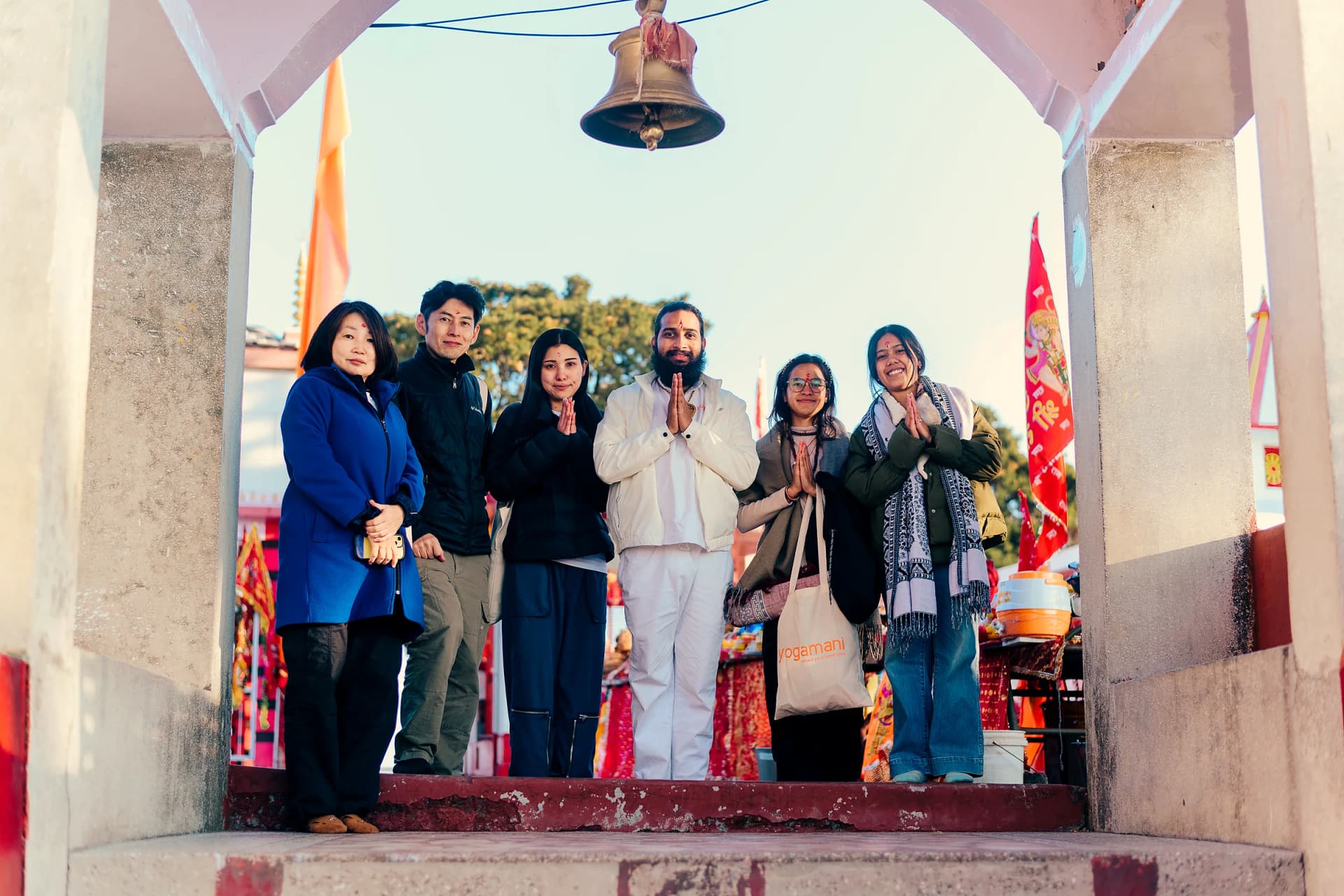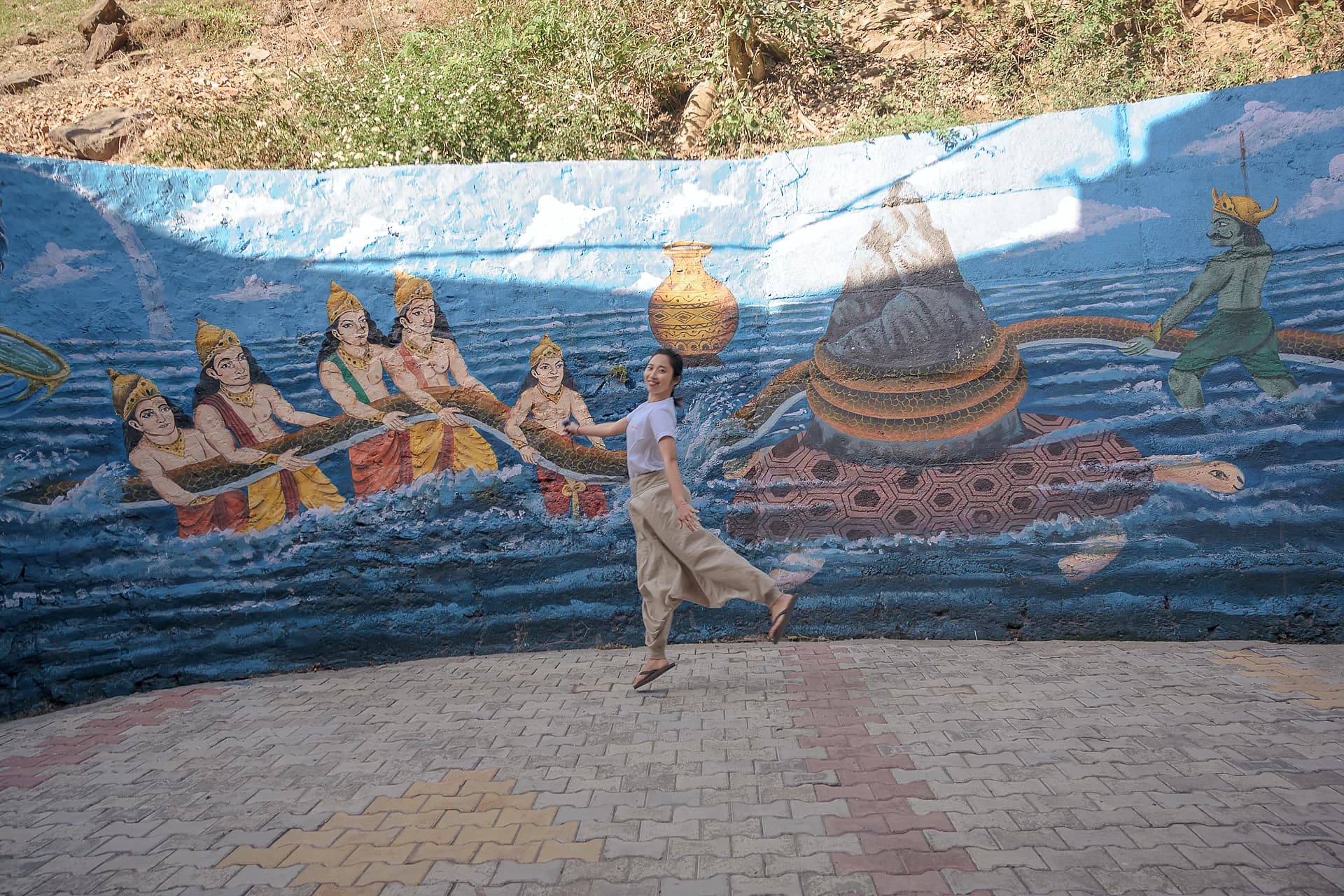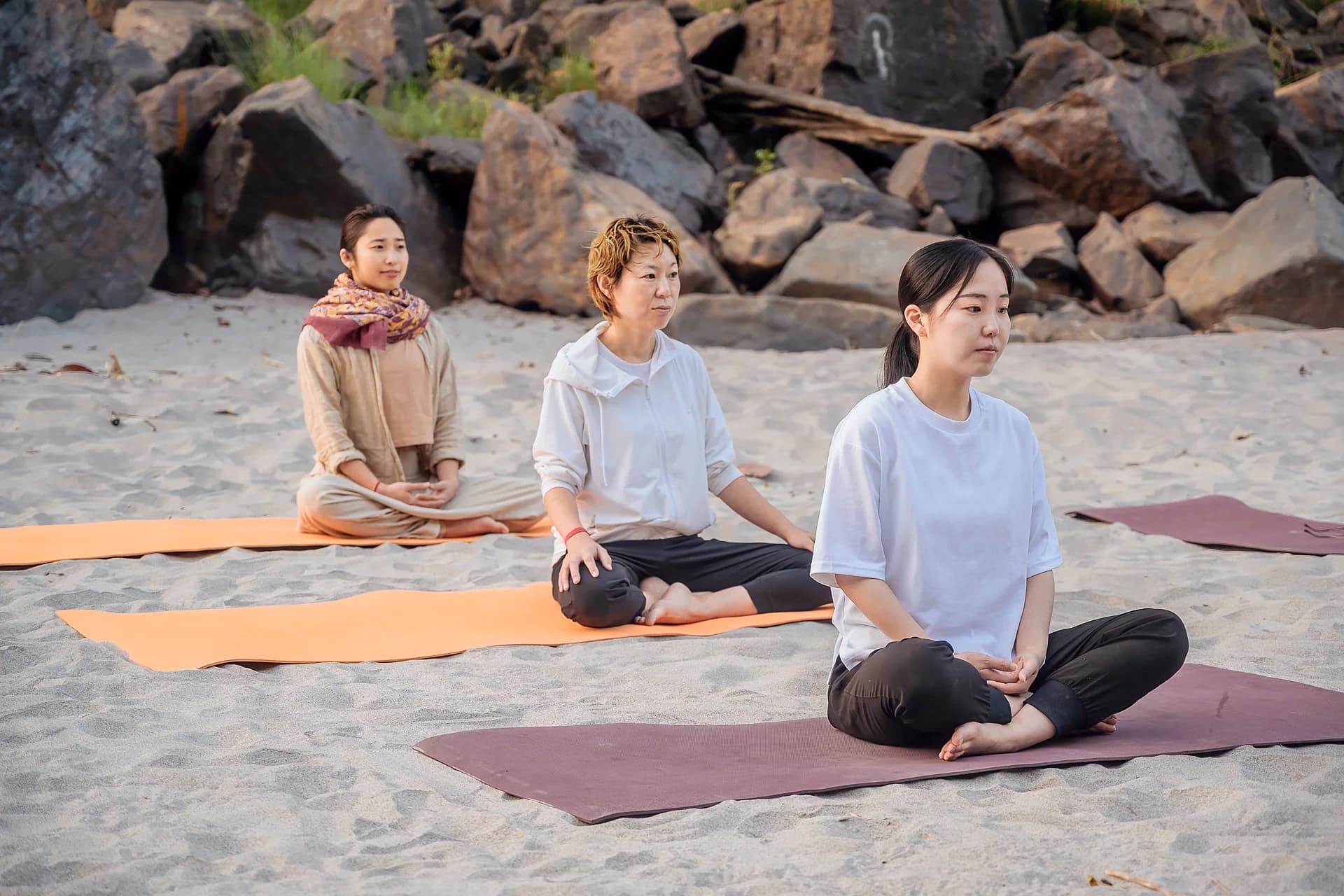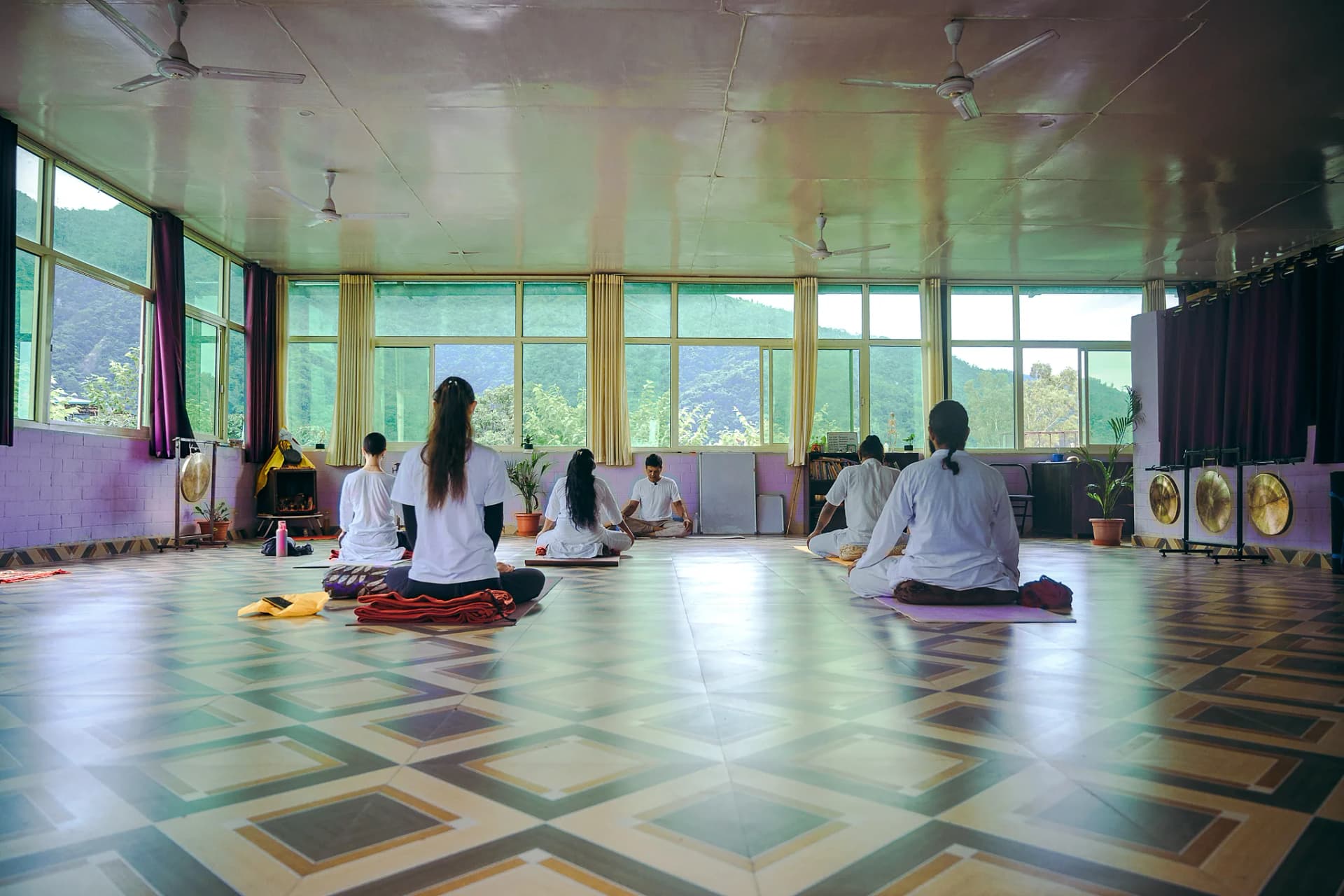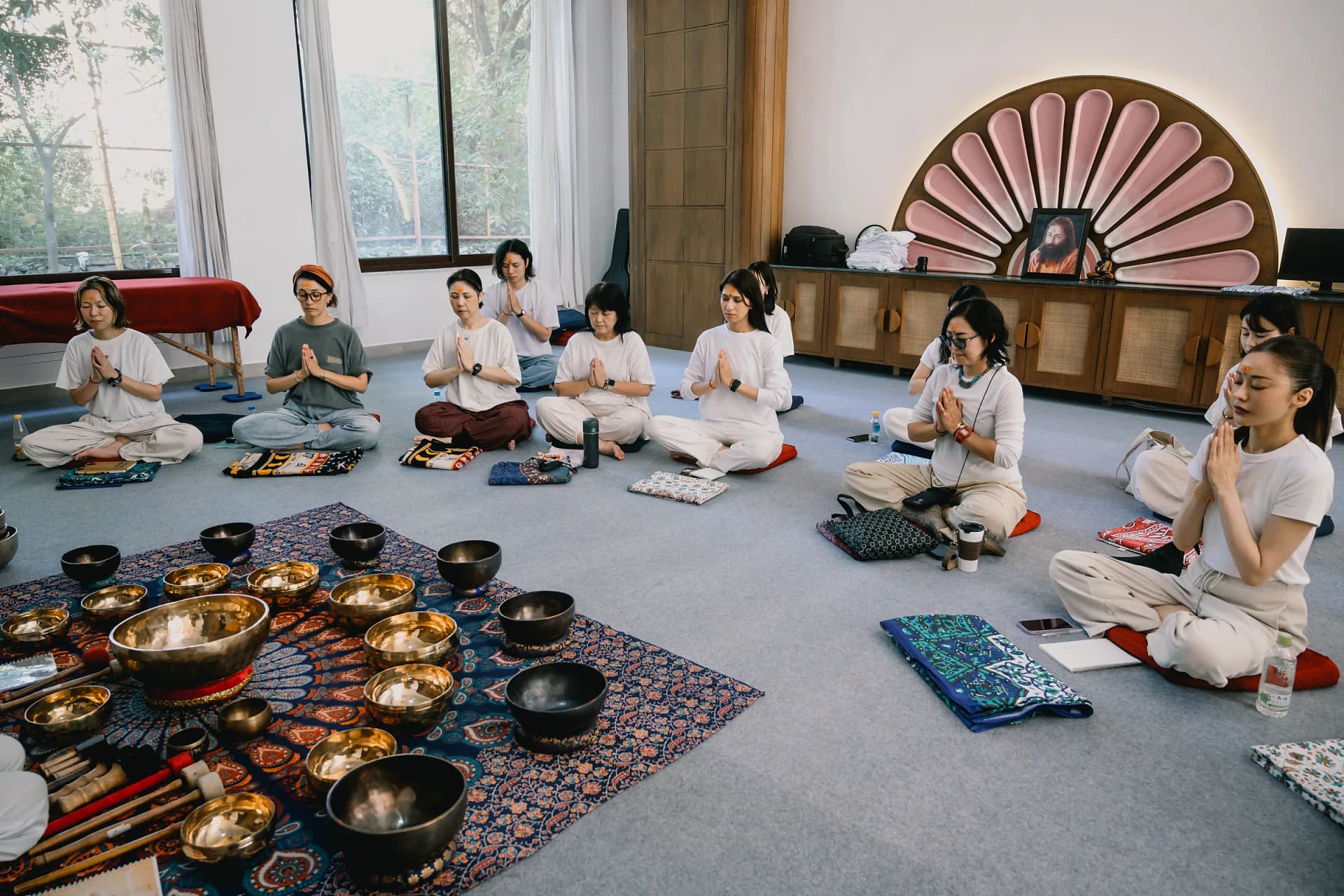
Morning class on the ashram terrace
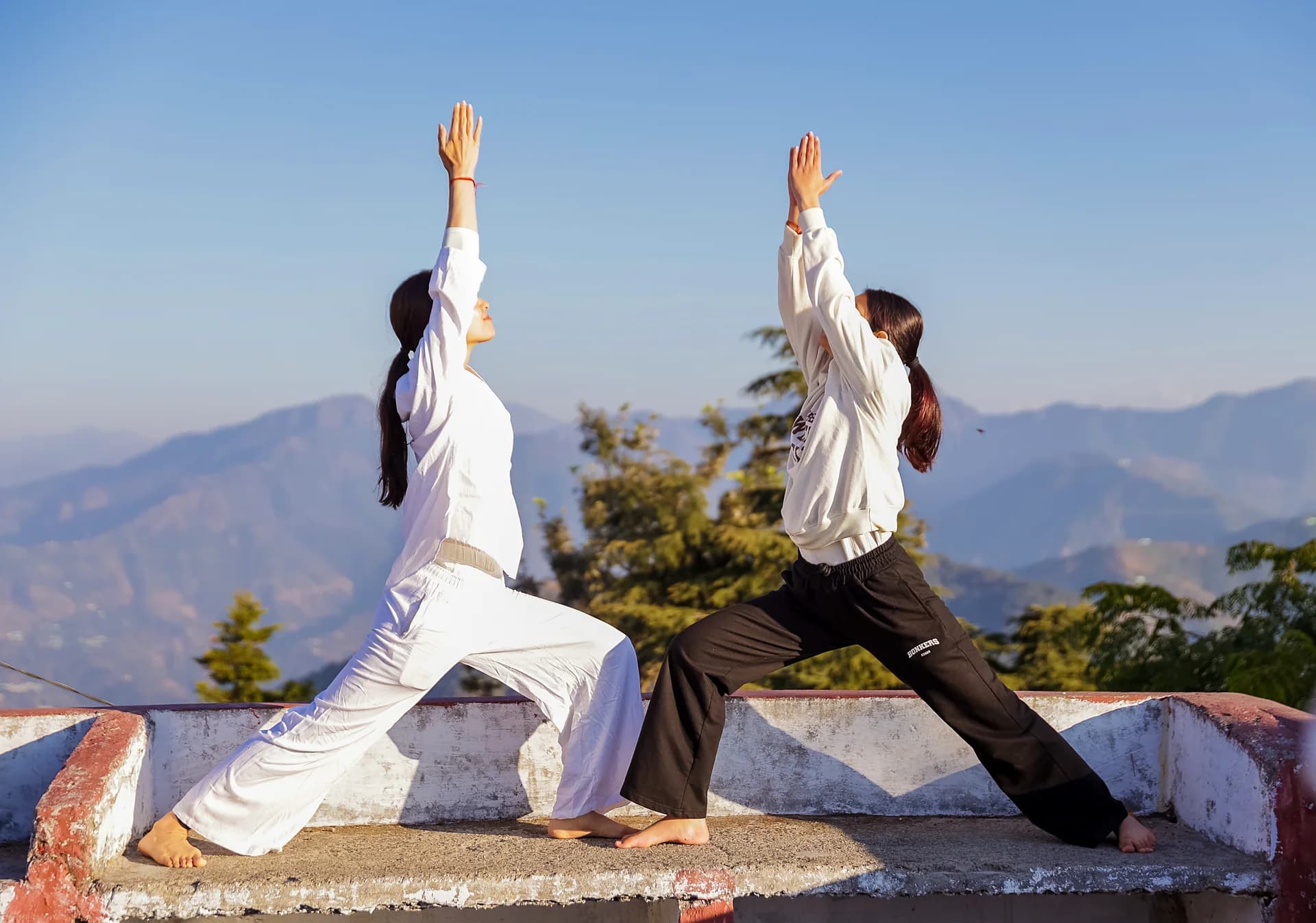
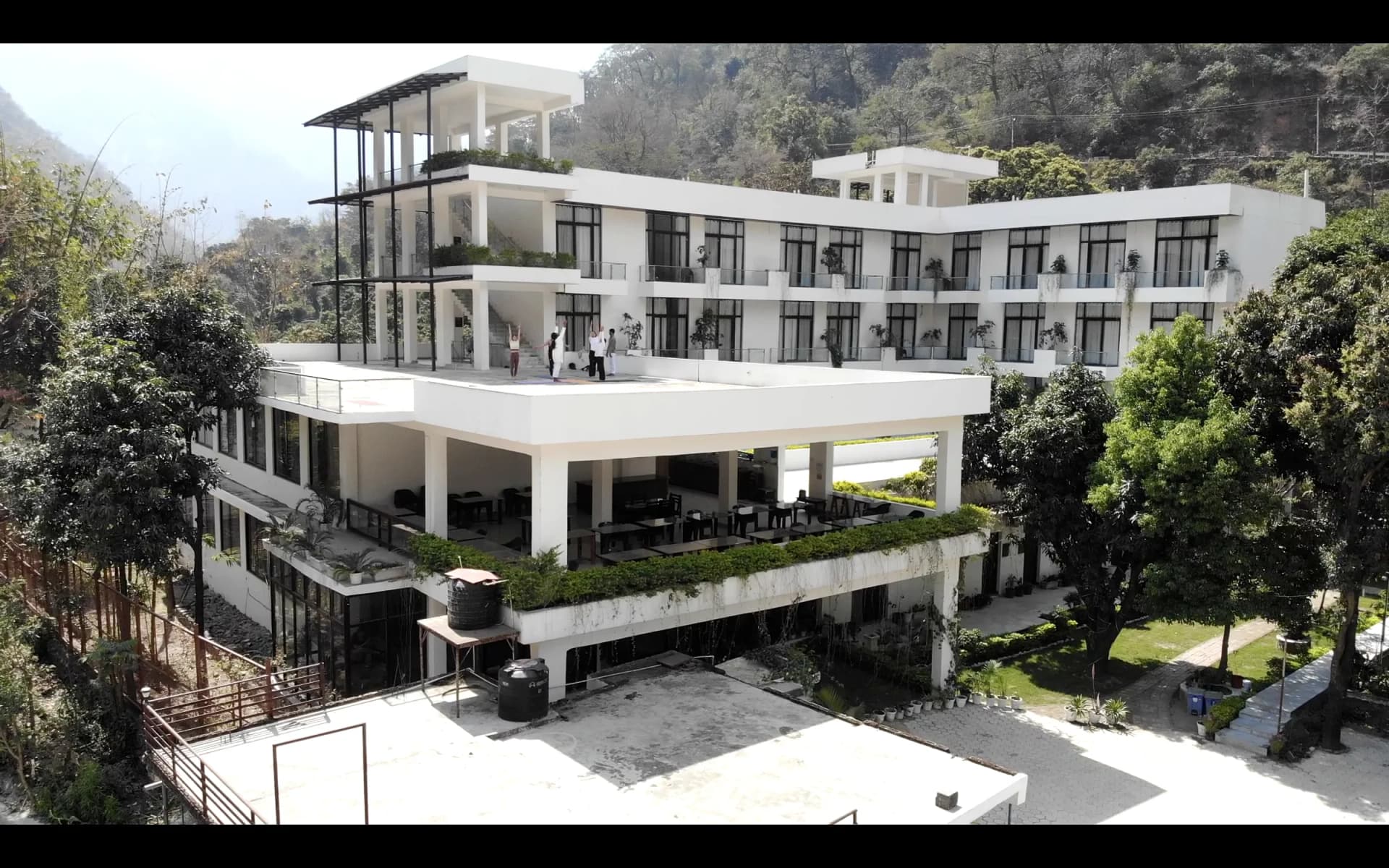
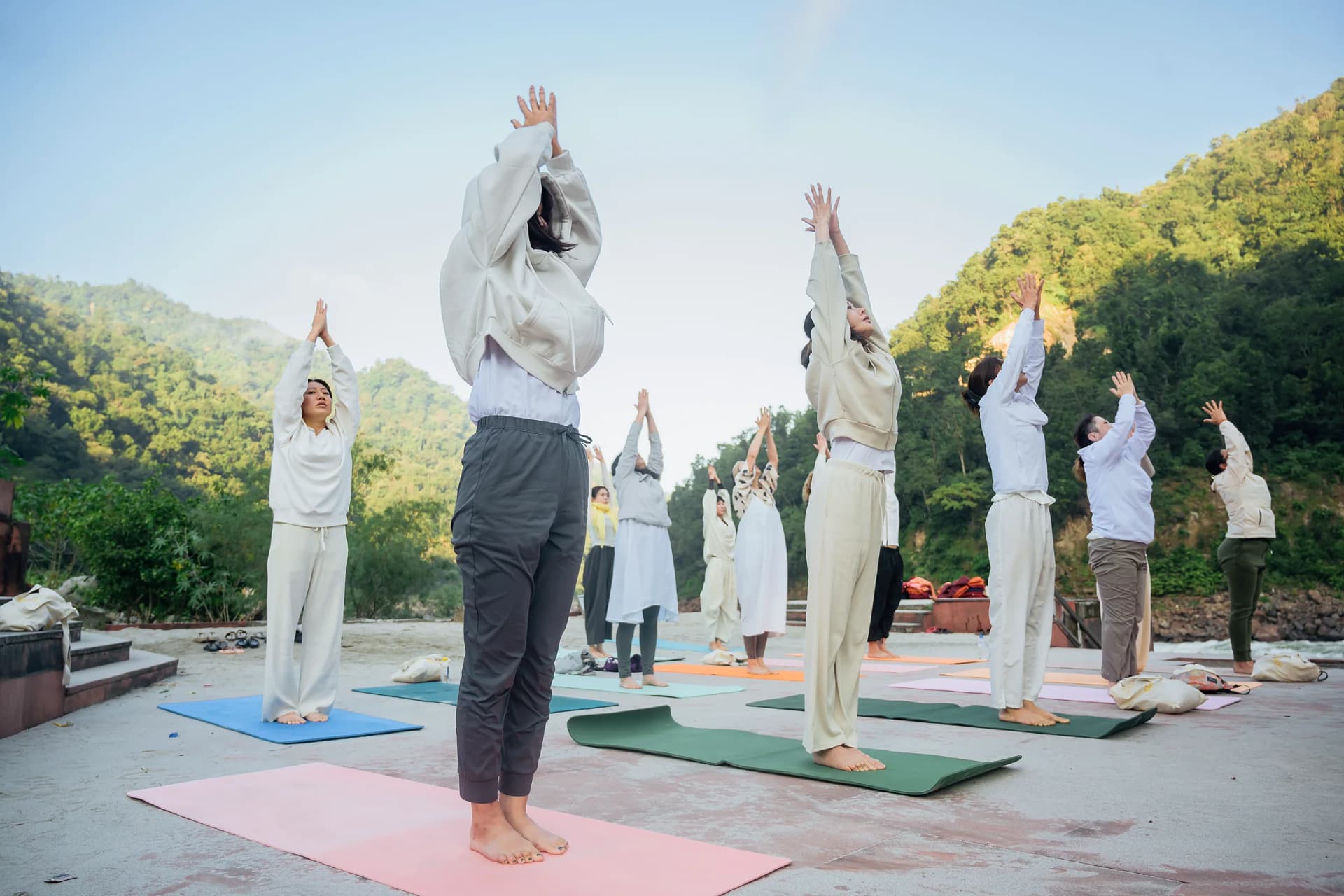
Practice on the terrace above the Ganga
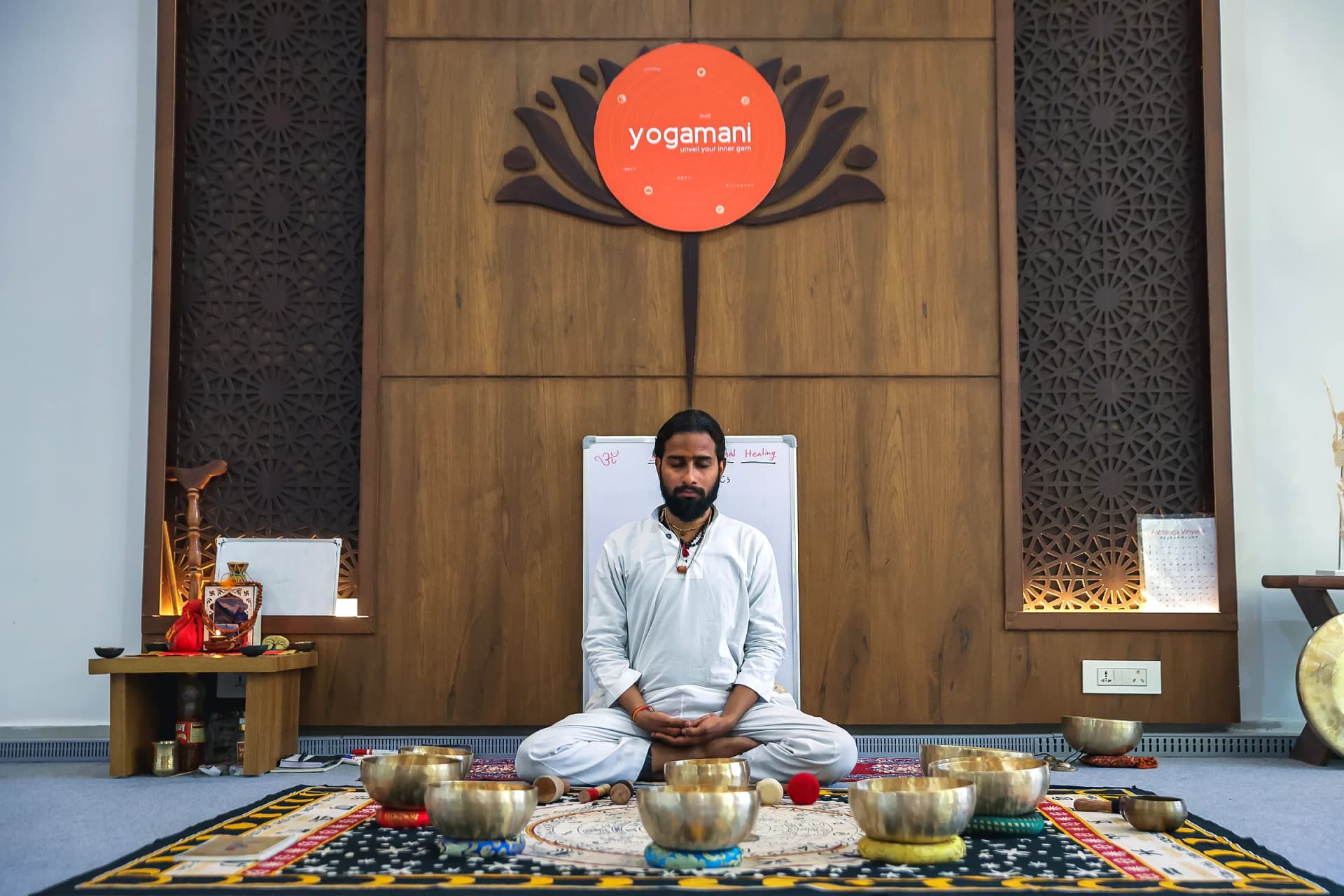
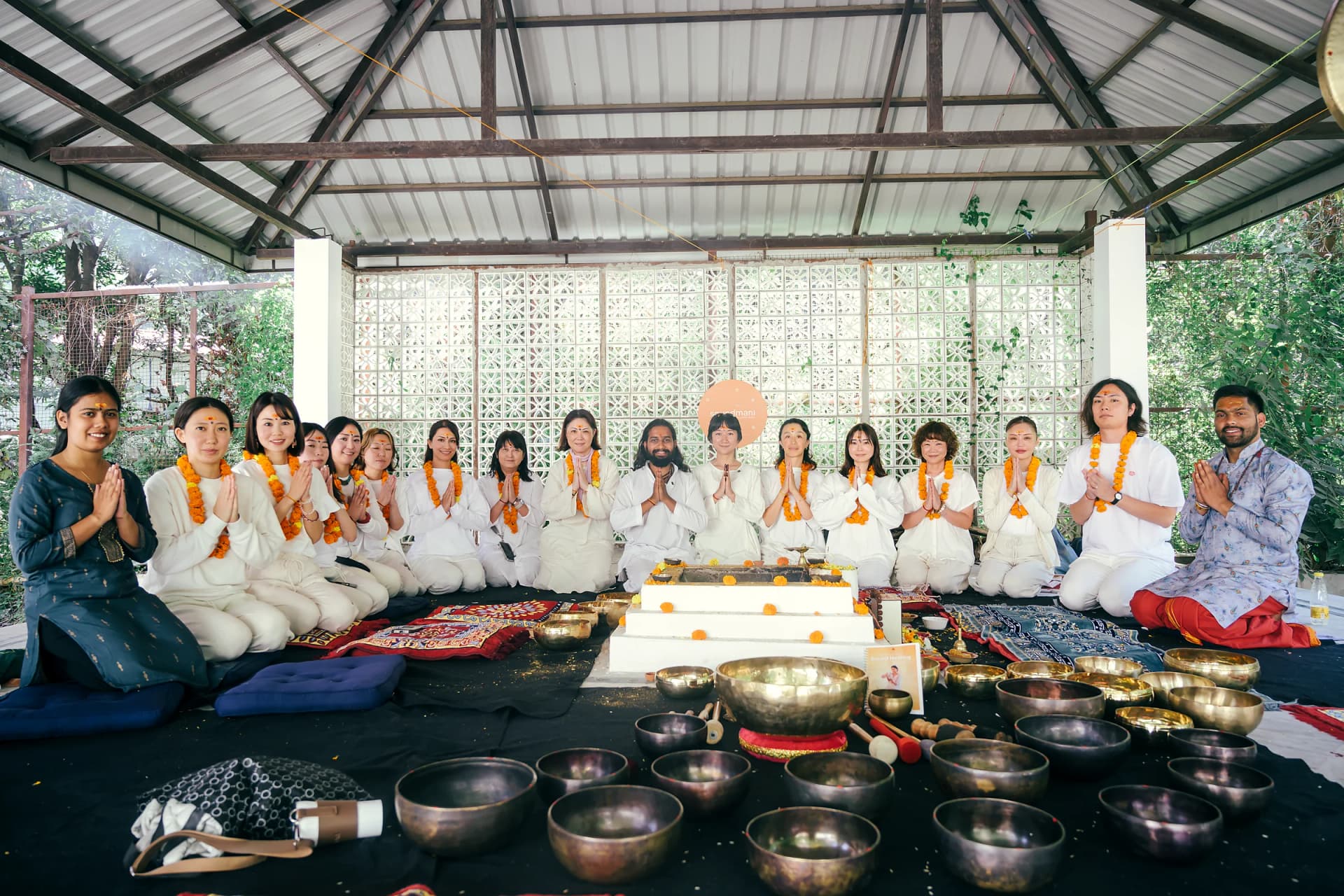
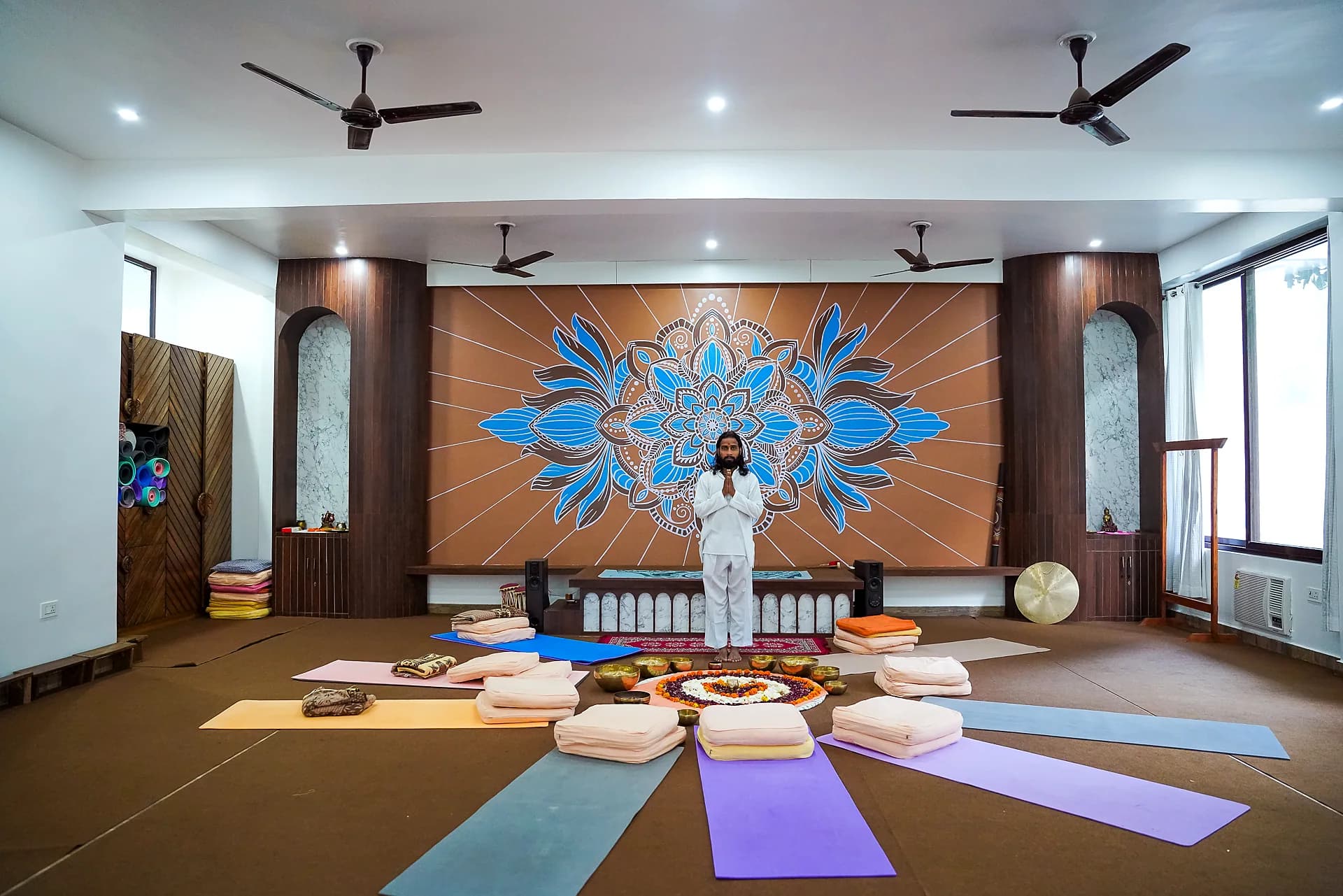
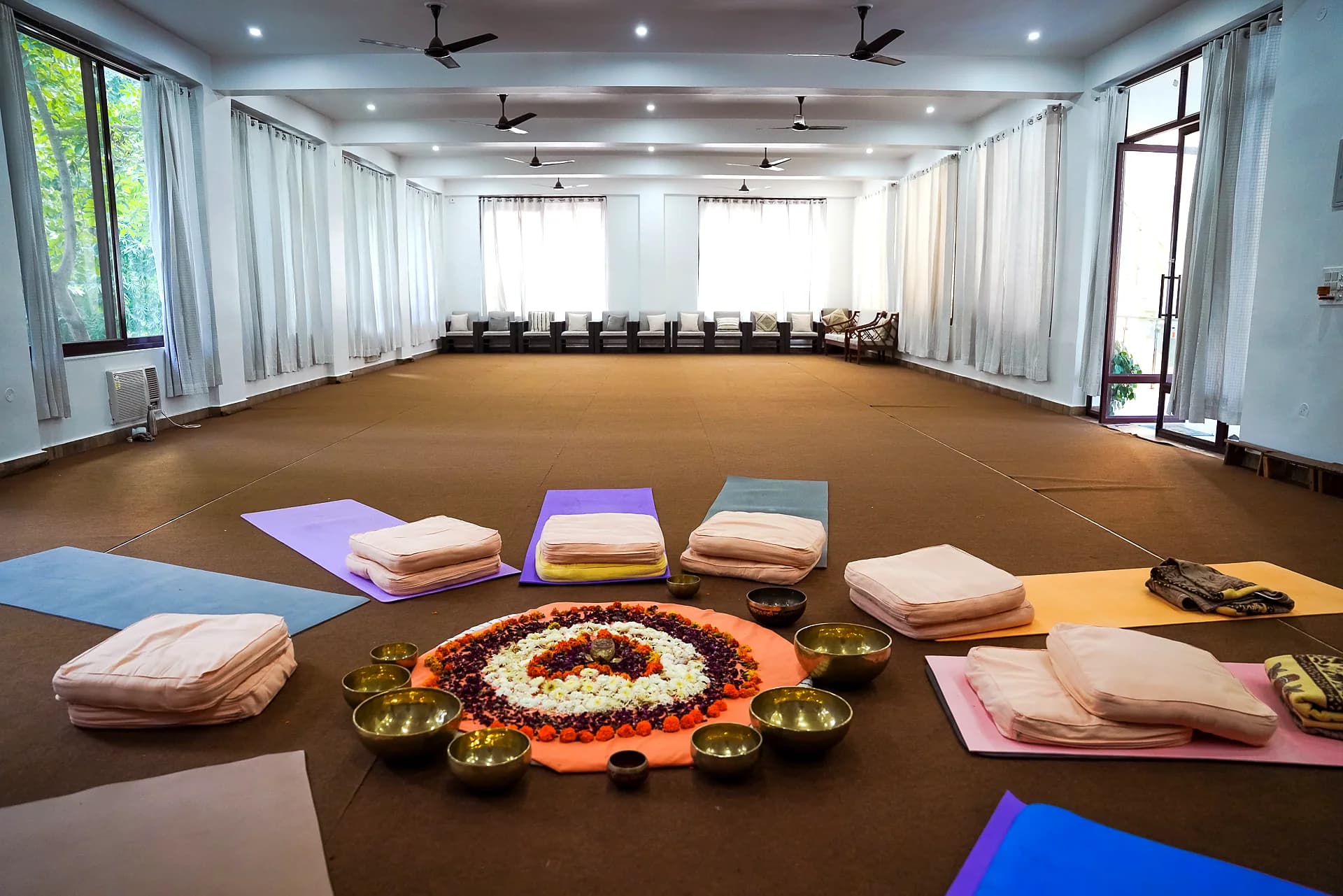
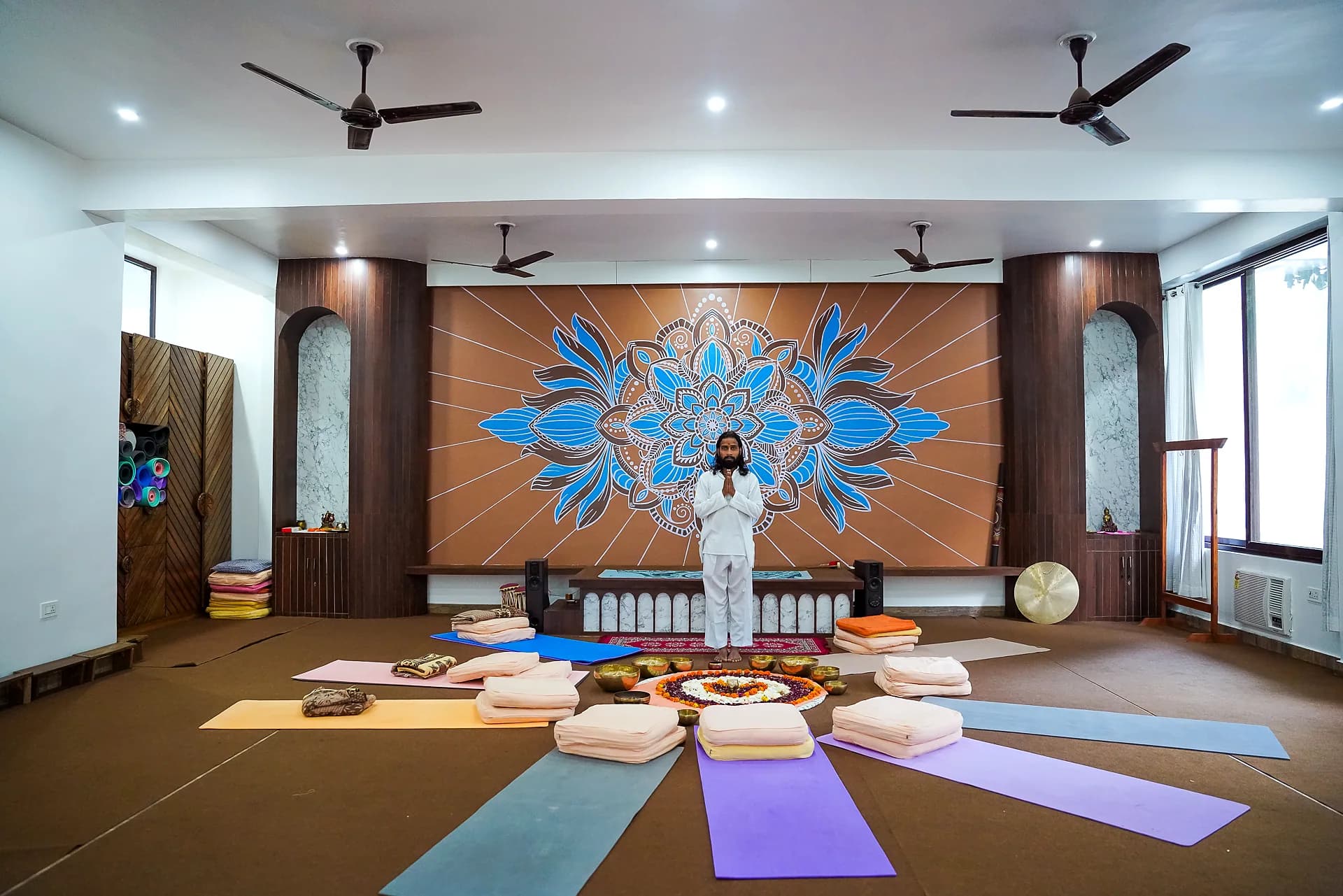
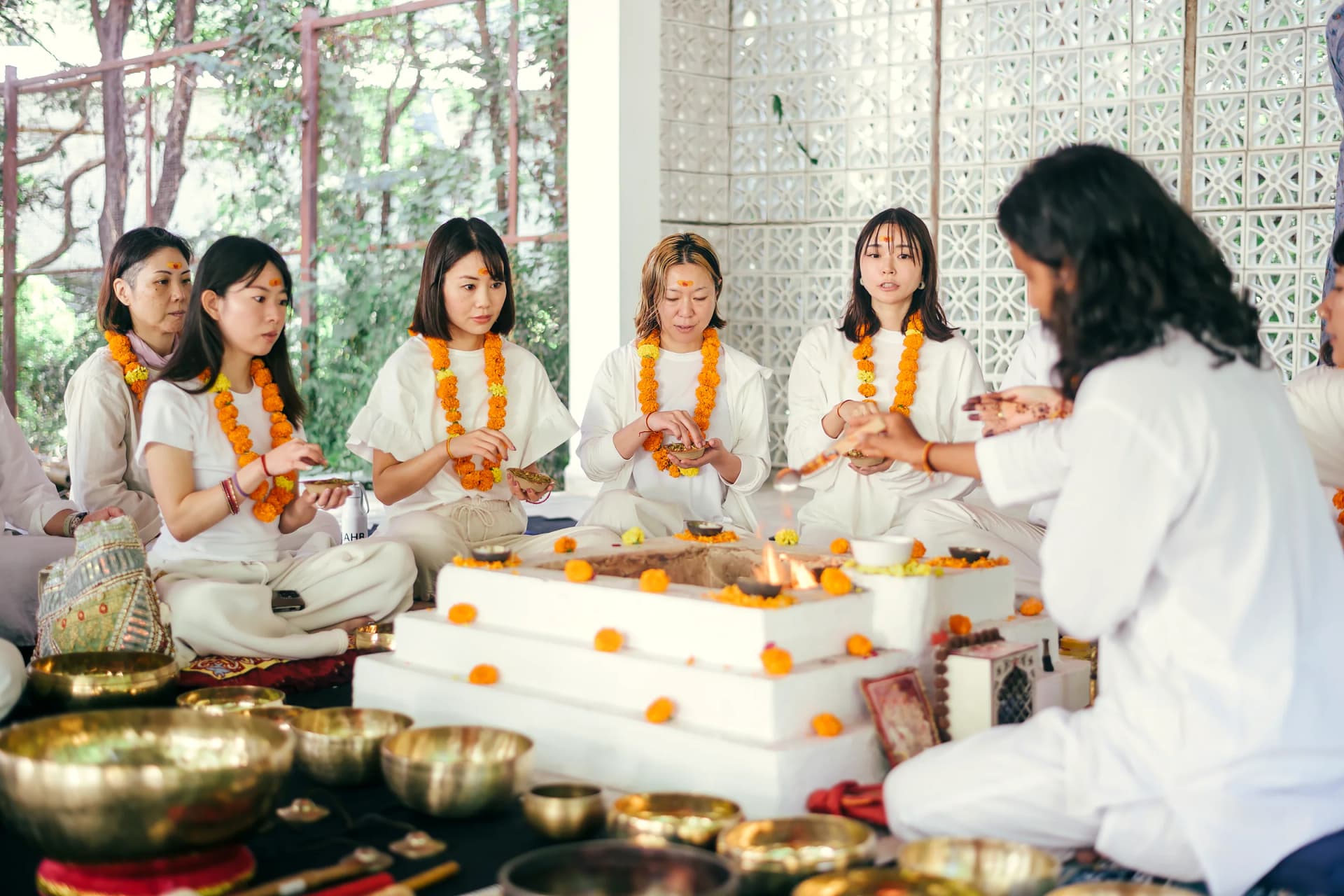
An opening ceremony with the singing bowls

Teacher training · Phool Chatti Ashram

200 Hour Yoga Teacher Training in Rishikesh

60 hours online and 15 days in person: a residential immersion in Rishikesh. Build a strong foundation in traditional yoga, teaching methodology, anatomy, philosophy, pranayama and meditation. All levels welcome, including complete beginners.

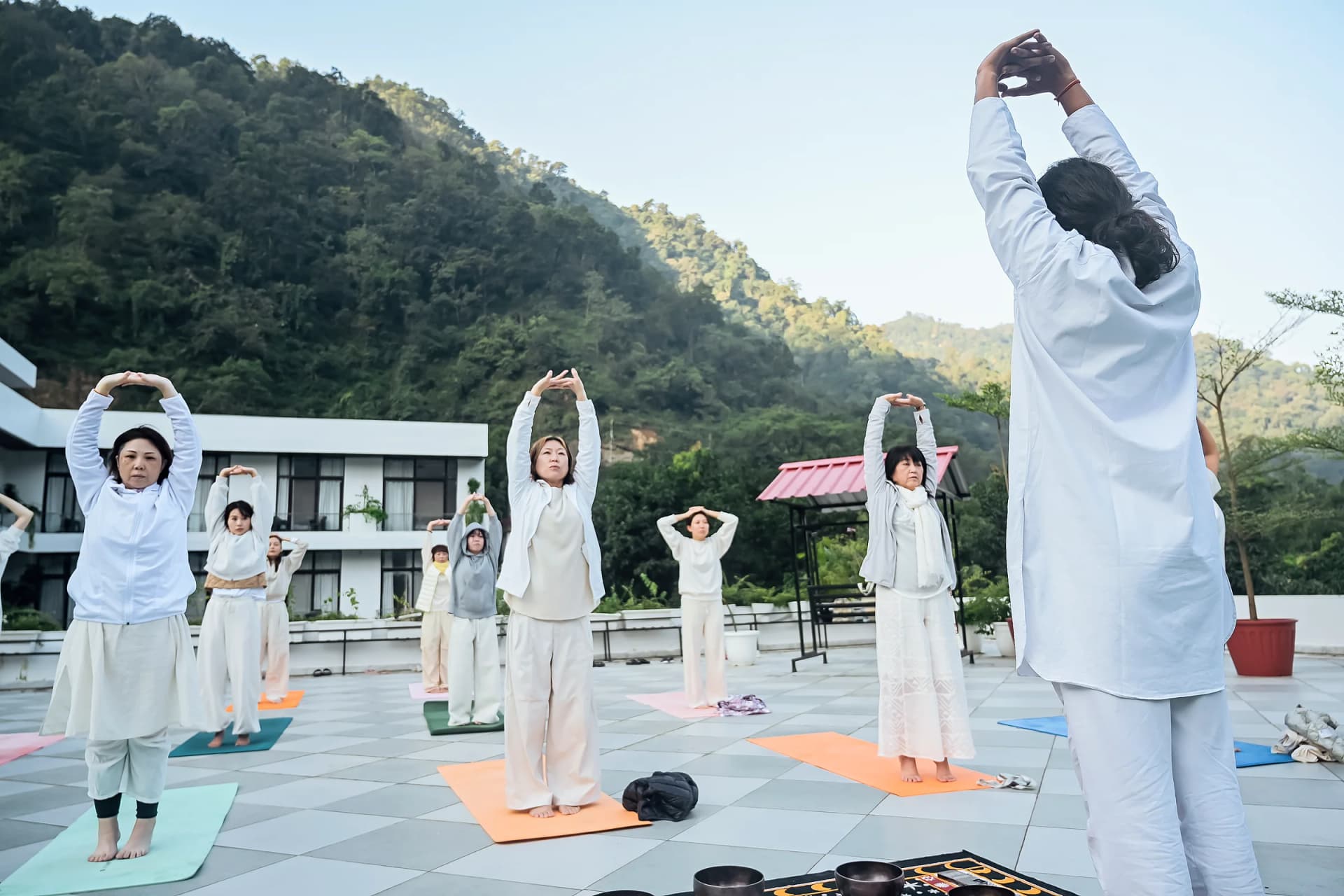
Morning class on the ashram terrace
  • Certificate from an RYS 200 school
  • 60 hours online + 140 in the ashram
  • 8 to 12 students
  • $1,450

At a glance

The training at a glance

Hours
200: 60 online, 140 in the ashram
In-person length
15 days, residential
Place
Phool Chatti Ashram, on the Ganga
Group size
8 to 12 students
Level
All levels; beginners welcome
Language
English
Certificate
Issued by Rishikesh Niketan School, RYS 200
Fee
$1,450 USD, double sharing
Deposit
$300 USD to hold your place
Next batches
2–16 of every month (15 days, 14 nights)

Definition

What is the 200 hour teacher training?

A 200 hour yoga teacher training is a structured programme that takes you from learning yoga to understanding how to practise and teach it.

At Yogamani it combines online study with an immersive residential experience in an ashram in Rishikesh. You study traditional practices alongside philosophy, anatomy and teaching methodology, while building your own daily practice.

It suits complete beginners as well as experienced practitioners who want to deepen their understanding and learn to teach.

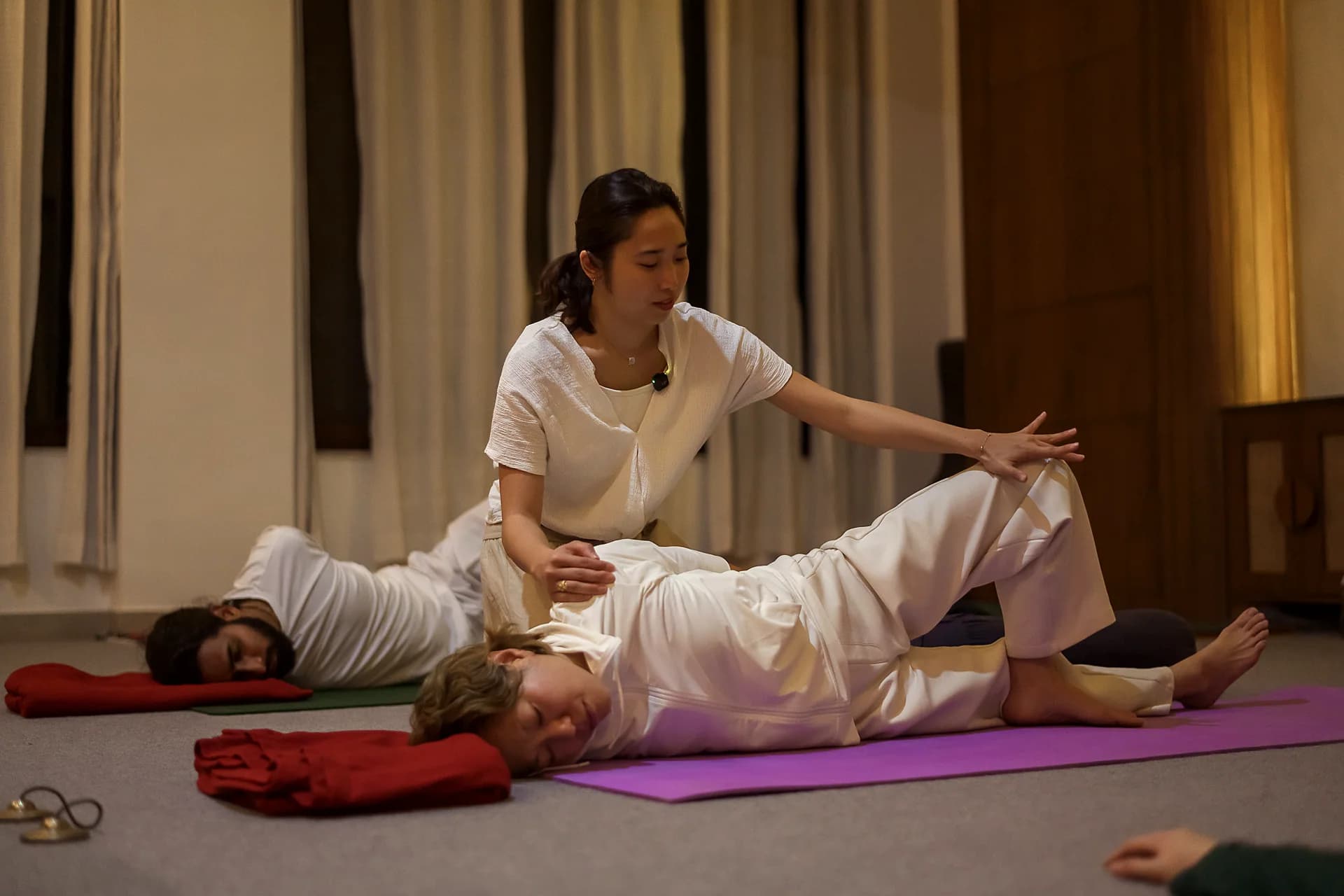
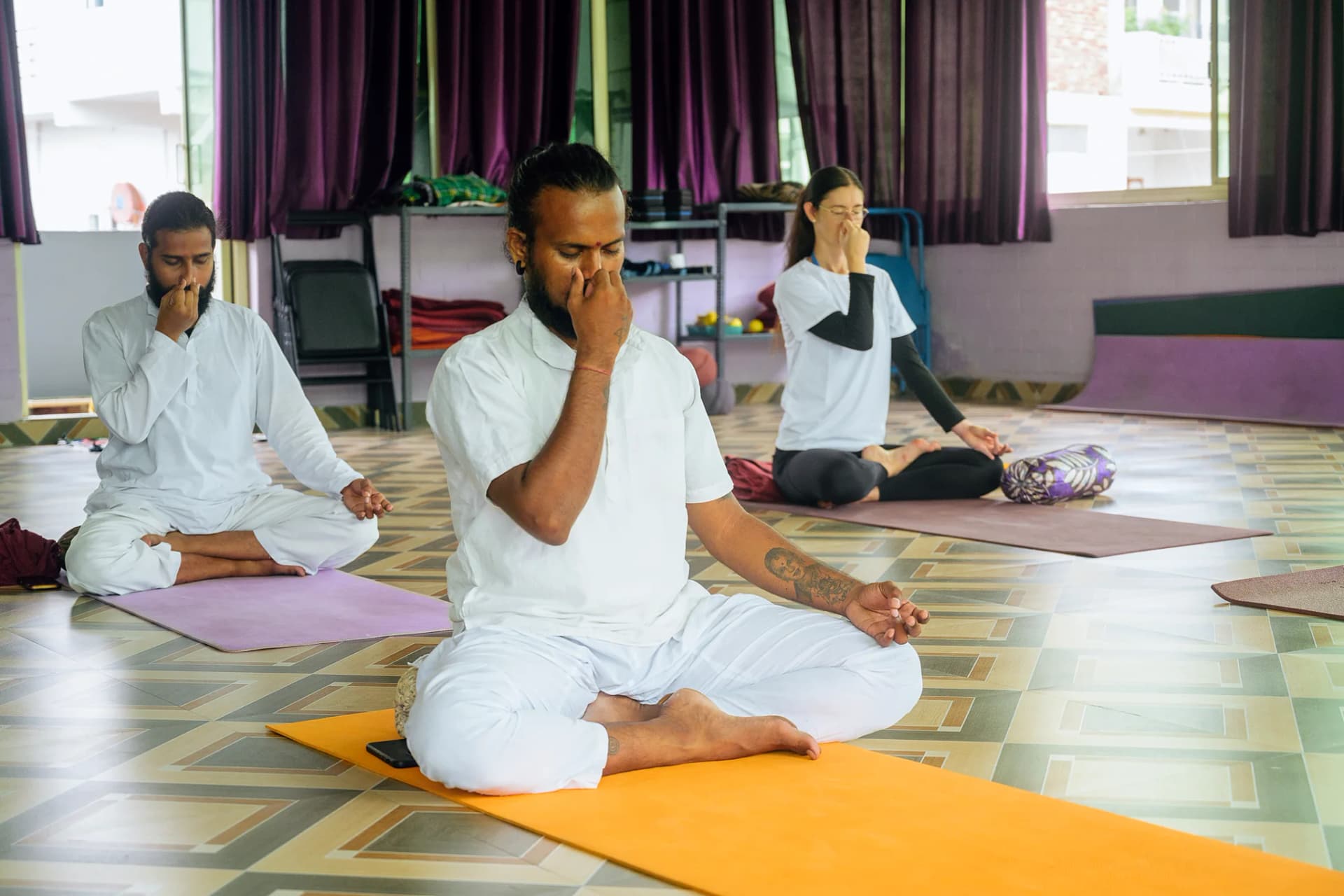
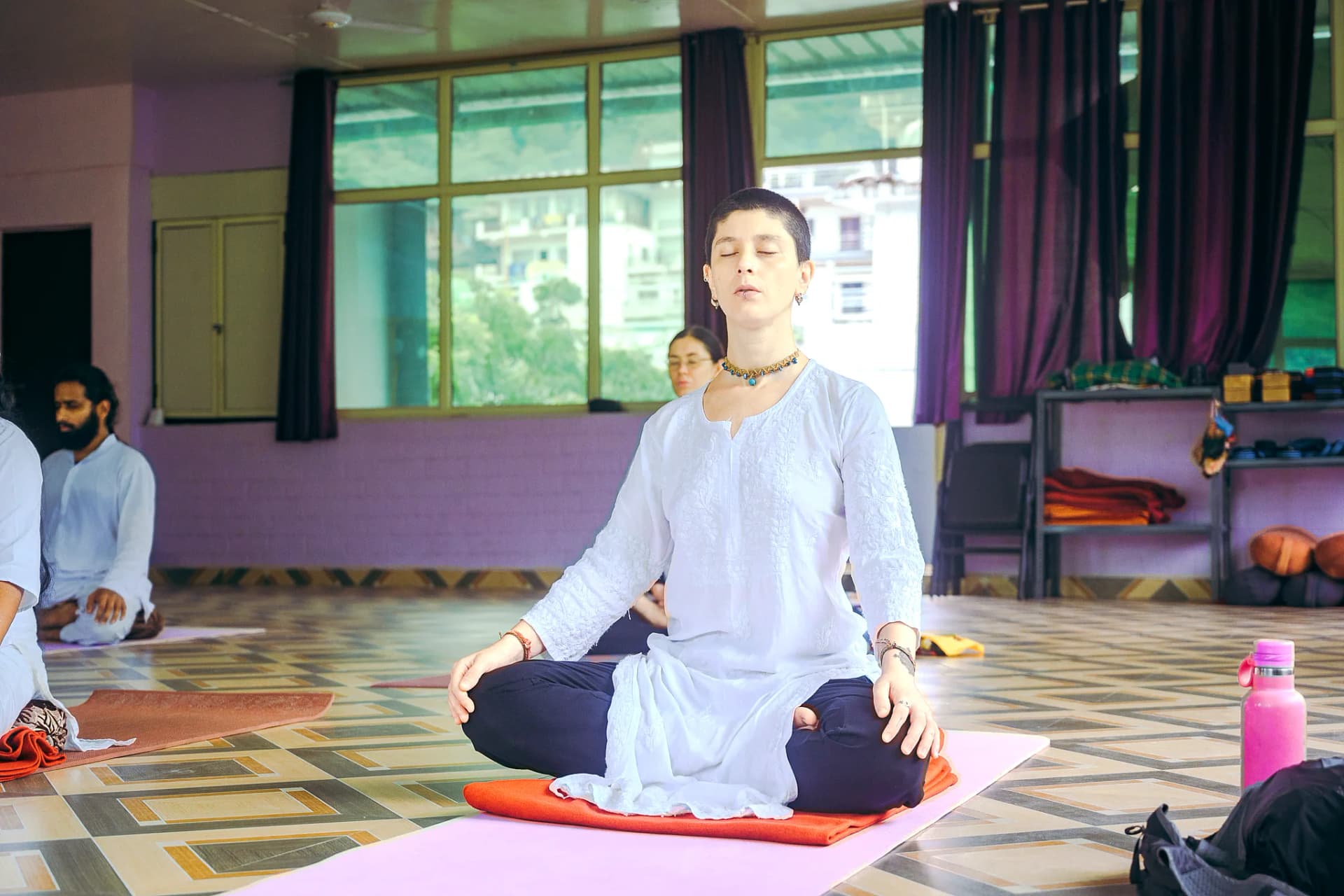
200 hour yoga teacher training class in Rishikesh

Structure

Your training: 60 hours online + 15 days in person

Before you arrive

60 hours online

The online programme gives you the foundation, at your own pace.

  • Yoga philosophy
  • Anatomy
  • Teaching methodology
  • Foundational practices
  • Pranayama and meditation
  • Supporting study material
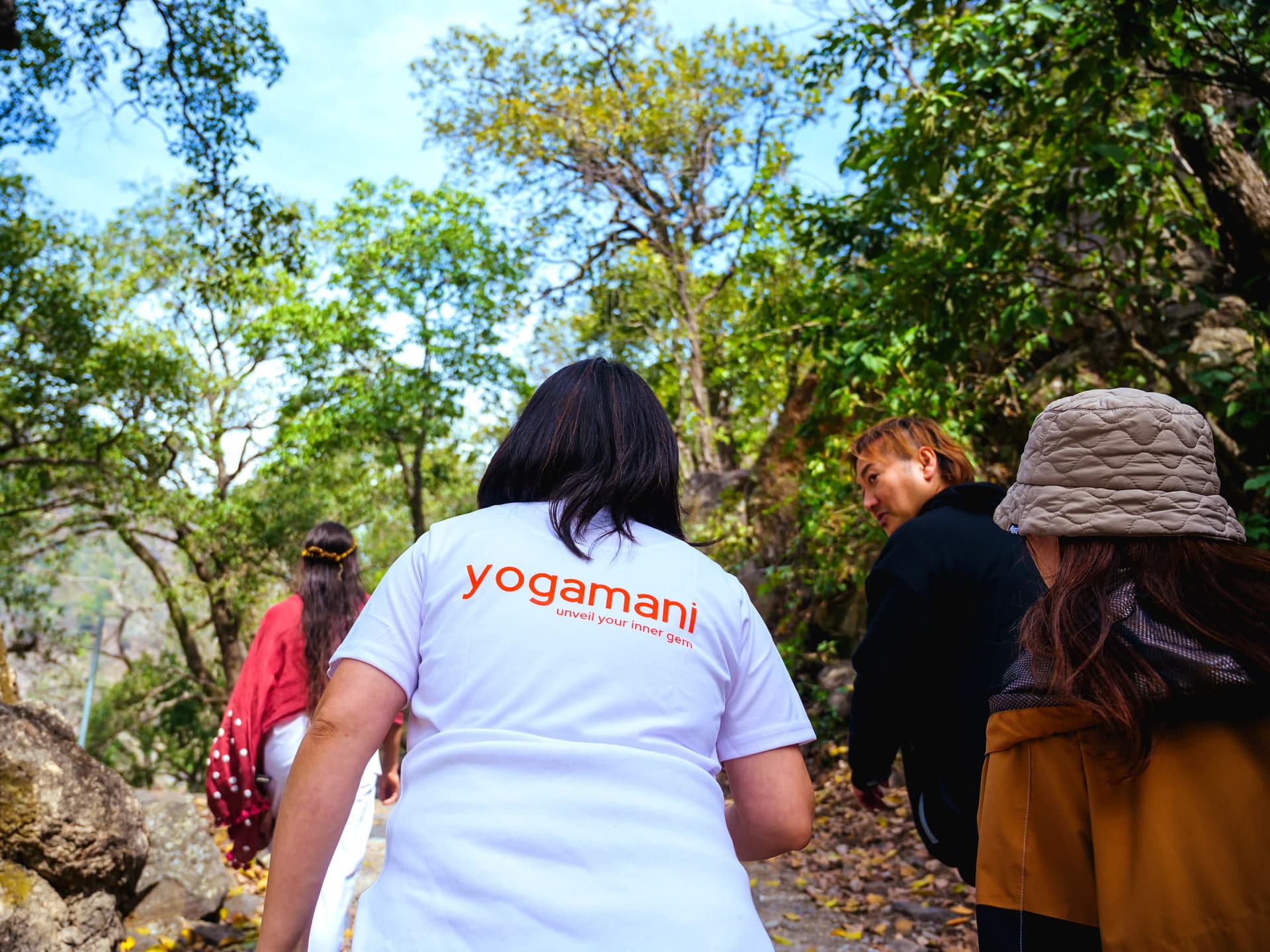
15 days in Rishikesh

15 days in the ashram

Where your learning becomes experiential.

  • Hatha and Ashtanga yoga
  • Pranayama and meditation
  • Yoga philosophy and anatomy
  • Teaching methodology and practice
  • Yogic lifestyle and daily discipline
  • Guidance from your teachers

60 hours online. 15 days in the ashram. One 200 hour journey.

Week by week

Your training, day by day

Sixty hours online before you arrive, followed by 15 days in the ashram. The in-person programme moves from foundations and daily practice into teaching, integration and assessment.

Before you arrive · Online · 60 hours

Online

  • Live Zoom sessions covering the online part of the curriculum. If you cannot attend a live lecture, recorded lectures are available.
Days 1–3

Foundations

  • Daily practice, pranayama, meditation, Hatha and Ashtanga foundations, anatomy, philosophy and introduction to teaching methodology.
Days 4–6

Deepening

  • Deeper practice, corrections, teaching methodology, philosophy, anatomy and guided teaching practice.
Days 7–10

Teaching & integration

  • Practice, sequencing, adjustments, teaching practice, feedback and integration of the main subjects.
Days 11–13

Developing confidence

  • Continued practice, teaching in pairs and groups, corrections, questions and refinement.
Days 14–15

Assessment & completion

  • Final teaching practice, revision, feedback, assessment, closing practice and certificate ceremony.

Daily rhythm

Daily rhythm

The exact focus changes by day, but the programme follows a steady rhythm of practice, theory, rest and evening activities.

Early morning at the Yogamani ashram
Early morning
  • 6:00–9:00Practice & Theory
Morning at the Yogamani ashram
Morning
  • 9:00Breakfast
  • 9:30Nature Walk
  • 11:30Practice & Theory
Afternoon at the Yogamani ashram
Afternoon
  • 1:00Lunch
  • 1:30Rest
  • 4:00Practice & Theory
Evening at the Yogamani ashram
Evening
  • 6:30Āratī, Kīrtan & Evening Activities
  • 7:30Dinner
  • 8:30Evening Stillness

Curriculum

What you'll study

Practice Techniques, training and practice, 75 hTeaching Teaching methodology and practicum, 50 hAnatomy Anatomy and physiology, 30 hPhilosophy Philosophy, ethics and lifestyle, 30 hElectives Electives across the pillars, 15 h

60 hours online before you arrive, 15 days here. 200 in total.

Grouped as Yoga Alliance groups the hours.

Hatha
30 h

Hatha

Classical postures held with the breath, as taught in Rishikesh.

  • Sun salutations and the core classical asanas
  • Alignment, breath and drishti in each posture
  • Holding, counter-poses and safe progression
Ashtanga
30 h

Ashtanga

The primary series, led and in Mysore style.

  • Vinyasa counting and the breath-movement link
  • Bandhas and the tristhana method
  • Modifications for beginners and stiff bodies
Pranayama
20 h

Pranayama

The breathing practices, and how to teach them safely.

  • Nadi shodhana, kapalabhati, bhastrika, ujjayi
  • Bandhas and breath retention basics
  • Contraindications and step-by-step teaching
Meditation
20 h

Meditation

Daily sitting practice and the tools to guide others.

  • Trataka, mantra japa and breath awareness
  • Yoga Nidra: practising and leading it
  • Building a daily practice that lasts
Yoga Philosophy
20 h

Yoga Philosophy

The texts behind the practice, in plain language.

  • The Yoga Sutras of Patanjali
  • The Bhagavad Gita and the paths of yoga
  • The eight limbs, koshas and gunas
Anatomy
20 h

Anatomy

How the body moves in practice, and how not to injure it.

  • Muscles, joints and the spine in asana
  • The physiology of the breath
  • Common injuries, props and prevention
Teaching Methodology
20 h

Teaching Methodology

From your own practice to leading a full class.

  • Sequencing a class for different levels
  • Cueing, voice and hands-on adjustment
  • Teaching practicum with feedback
Practicum
20 h

Practicum

Teaching practice that brings the training together.

  • Sequencing and leading complete classes
  • Practice teaching with corrections and feedback
  • Final teaching assessment
Yogic Lifestyle
20 h

Yogic Lifestyle

Diet, routine and ethics, as lived in the ashram.

  • Ayurveda basics and a sattvic diet
  • Shatkarma: jala neti and cleansing
  • Yama, niyama and the ashram day

Beyond the mat

Activities & excursions

The practice is the heart of the day. These are part of the rest of the ashram experience.

Aarti & Kirtan, yoga ashram activity Rishikesh

Aarti & Kirtan

Daily evening puja and kirtan with other ashram and international guests, as part of the day rather than a separate visit.

Ganga Aarti, yoga ashram activity Rishikesh

Ganga Aarti

Occasionally, especially on the closing ceremony day, the group takes part in Ganga Aarti.

Havan, yoga ashram activity Rishikesh

Havan

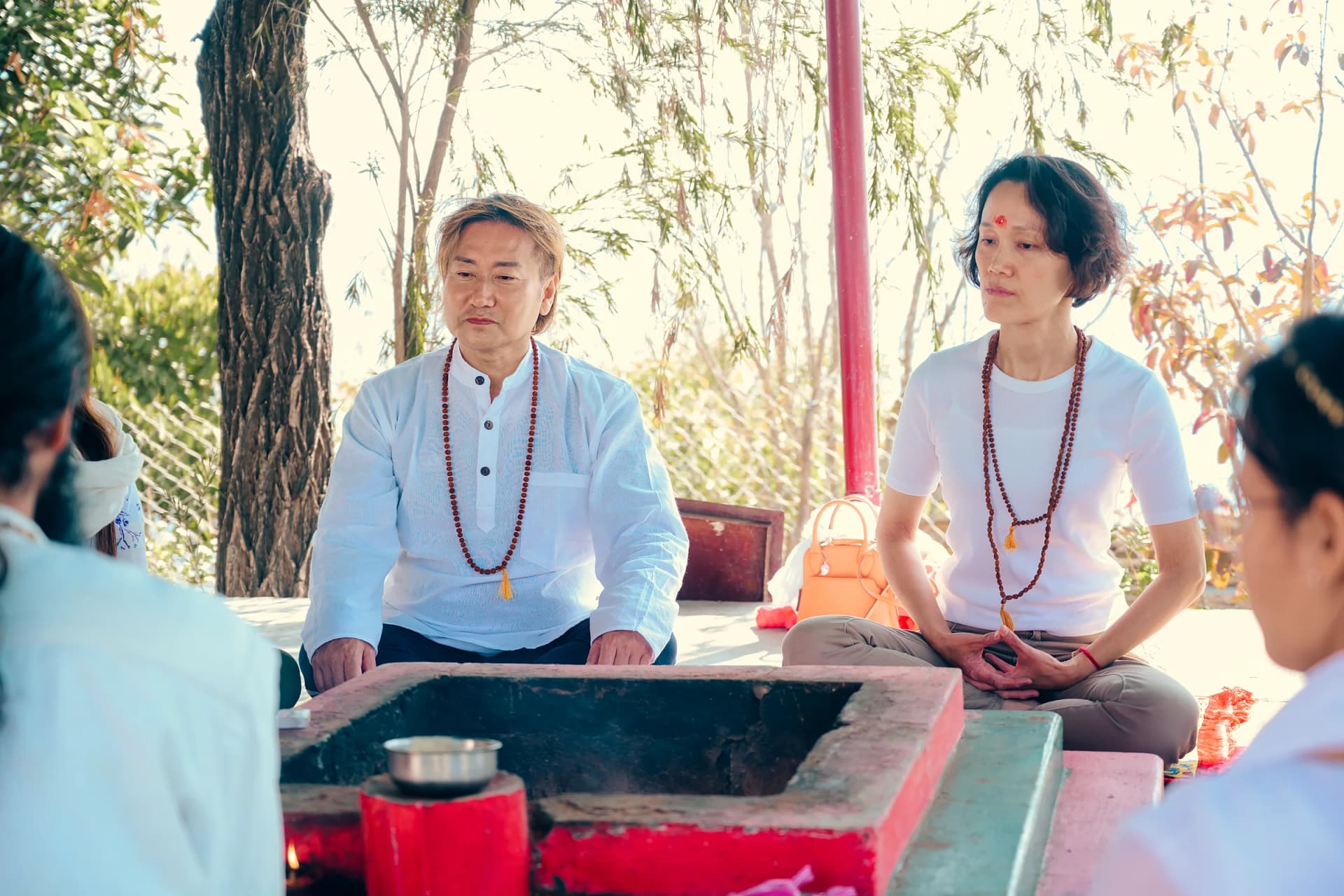
The fire ceremony: offerings, mantra and a quiet circle around the flame.

Ganga & nature walks, yoga ashram activity Rishikesh

Ganga & nature walks

Walks along the river, and time to sit by the water.

Waterfall, yoga ashram activity Rishikesh

Waterfall

A forest walk to a waterfall near the ashram.

Viewpoints, yoga ashram activity Rishikesh

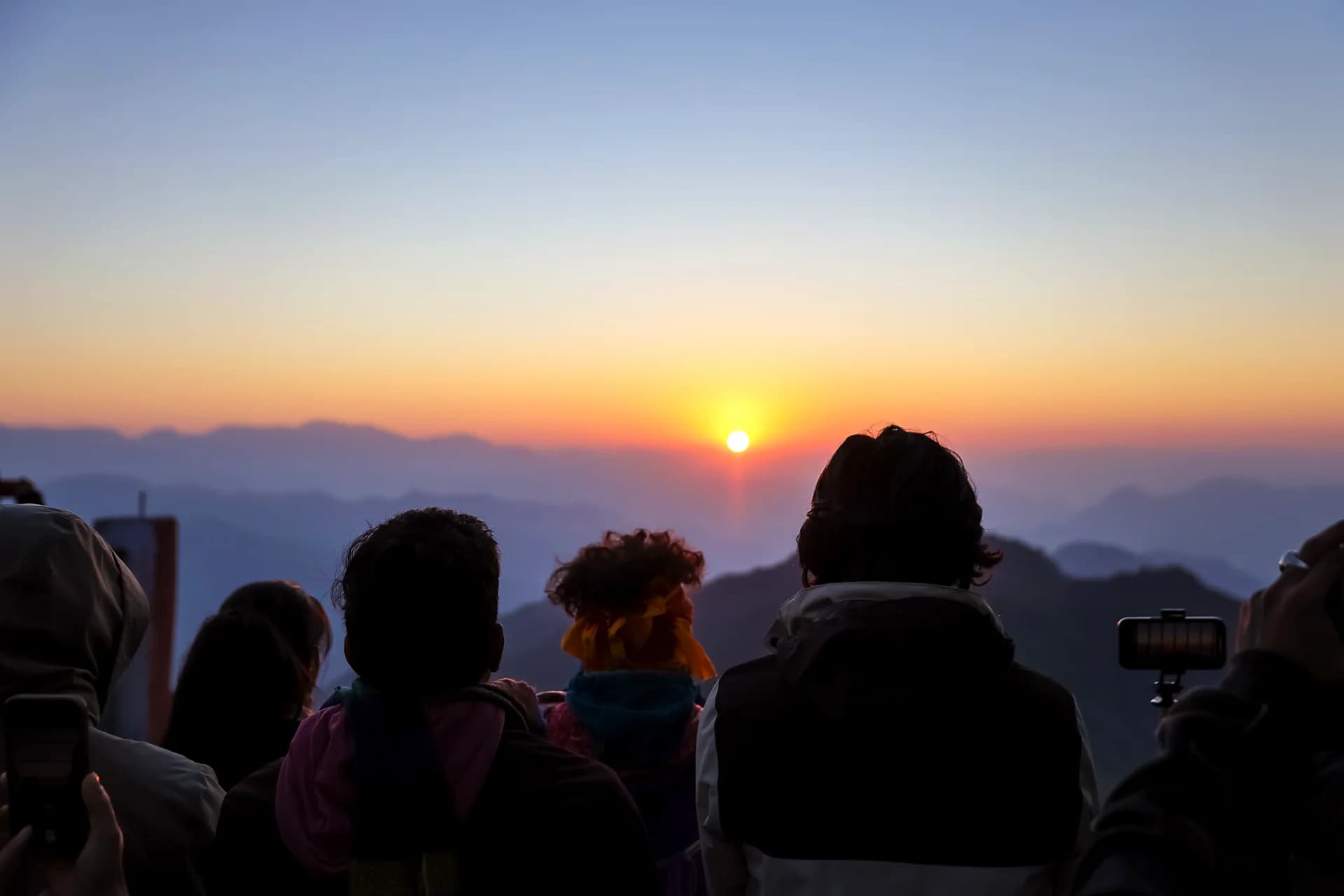
Viewpoints

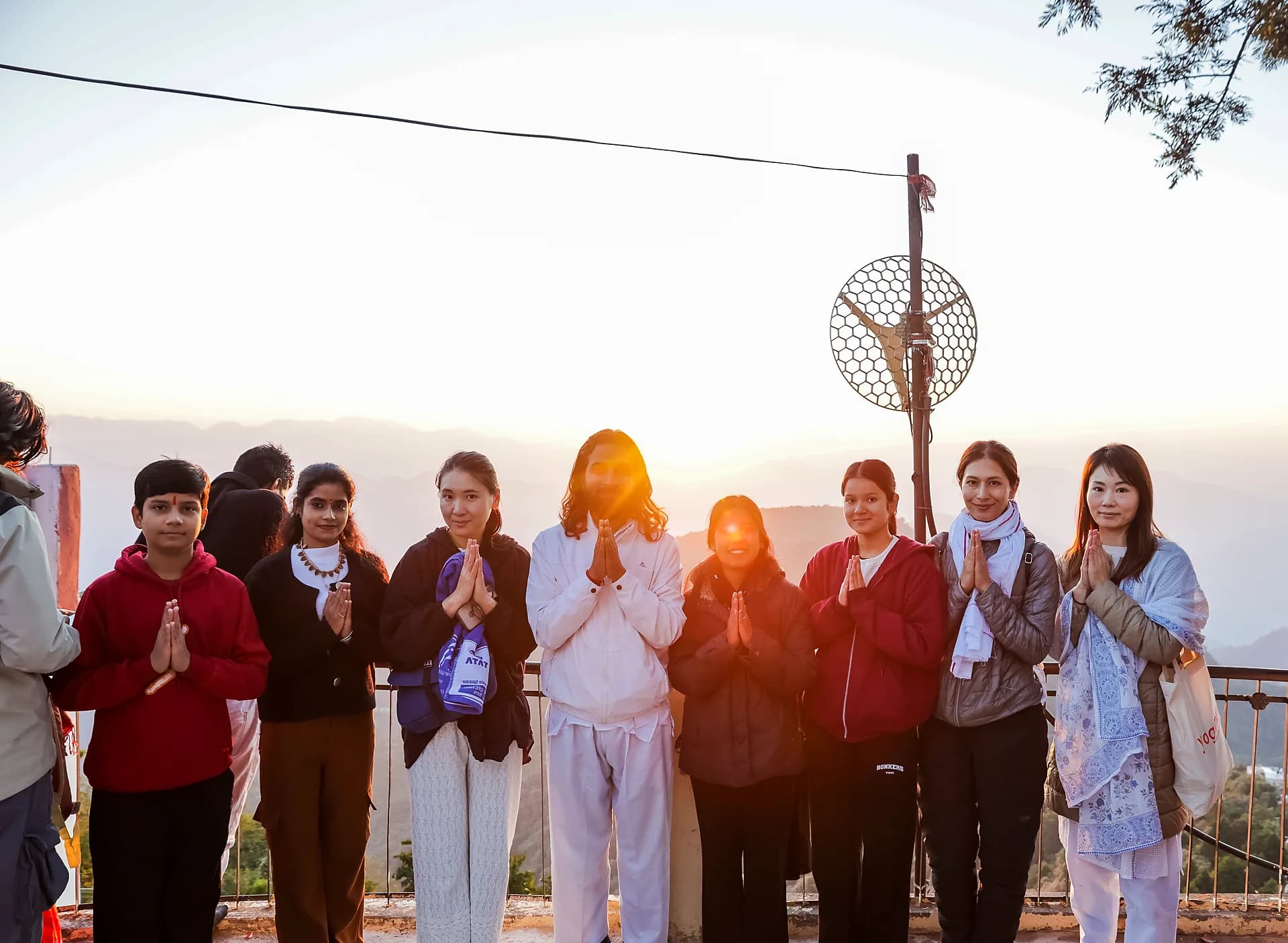
Sunrise and sunset from the hills above the valley.

Pottery, yoga ashram activity Rishikesh

Pottery

Working with clay at the ashram: slow, quiet and hands-on.

Festivals, yoga ashram activity Rishikesh

Festivals

When a festival falls during your dates, you are part of it.

Bonfire ceremony, yoga ashram activity Rishikesh

Bonfire ceremony

A shared evening around the fire as part of the ashram experience.

Sari wearing, yoga ashram activity Rishikesh

Sari wearing

A cultural experience of learning to wear a sari.

Ganga dipping, yoga ashram activity Rishikesh

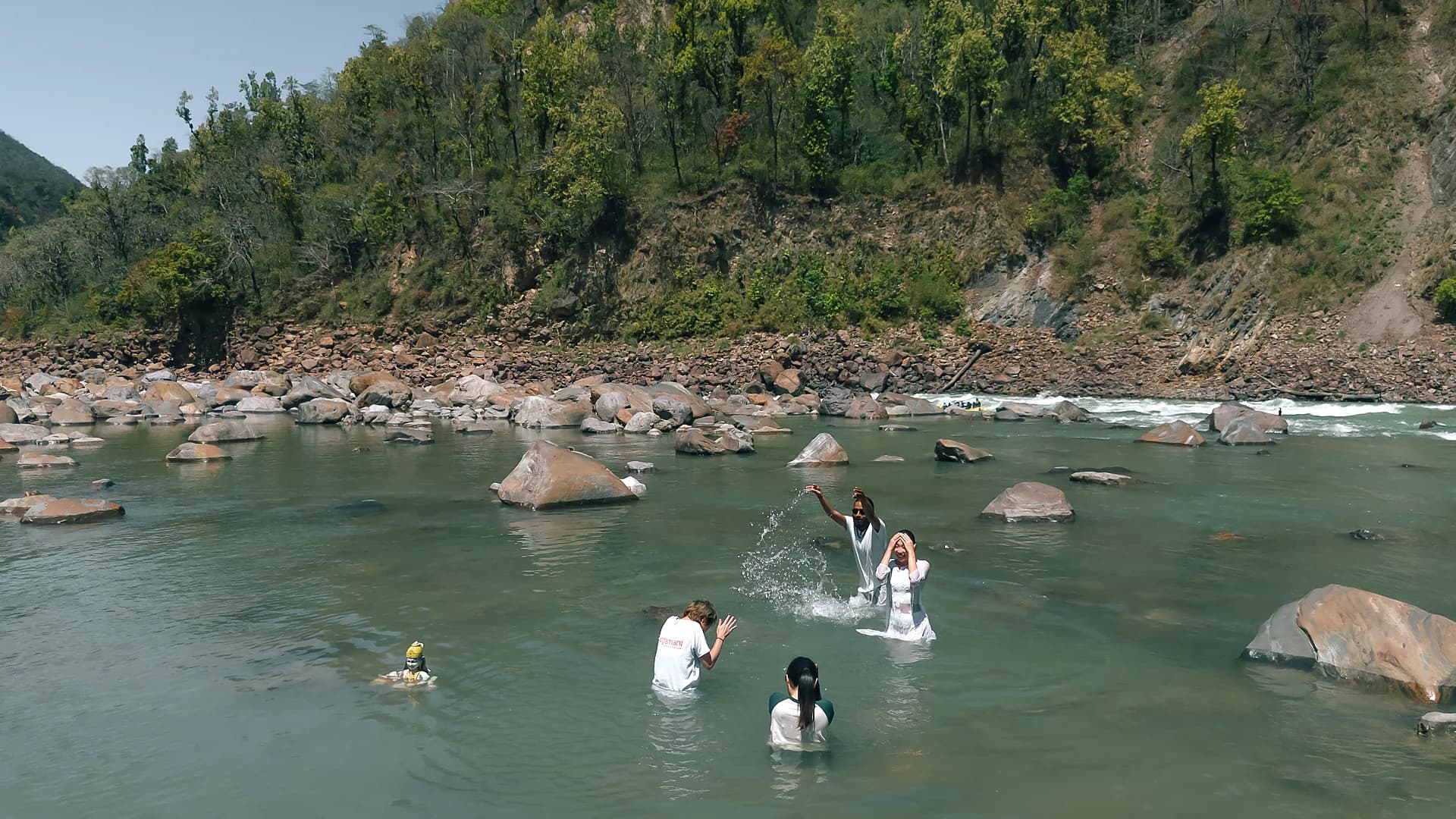
Ganga dipping

Time to experience a traditional dip in the Ganga.

Indian dance, yoga ashram activity Rishikesh

Indian dance

An introduction to Indian dance as part of the cultural activities.

Weekly excursion, yoga ashram activity Rishikesh

Weekly excursion

A weekly excursion to the market or to a well-known place around Rishikesh, such as Kunjapuri, Vasishta Cave or Balkumari Temple.

Where you will live

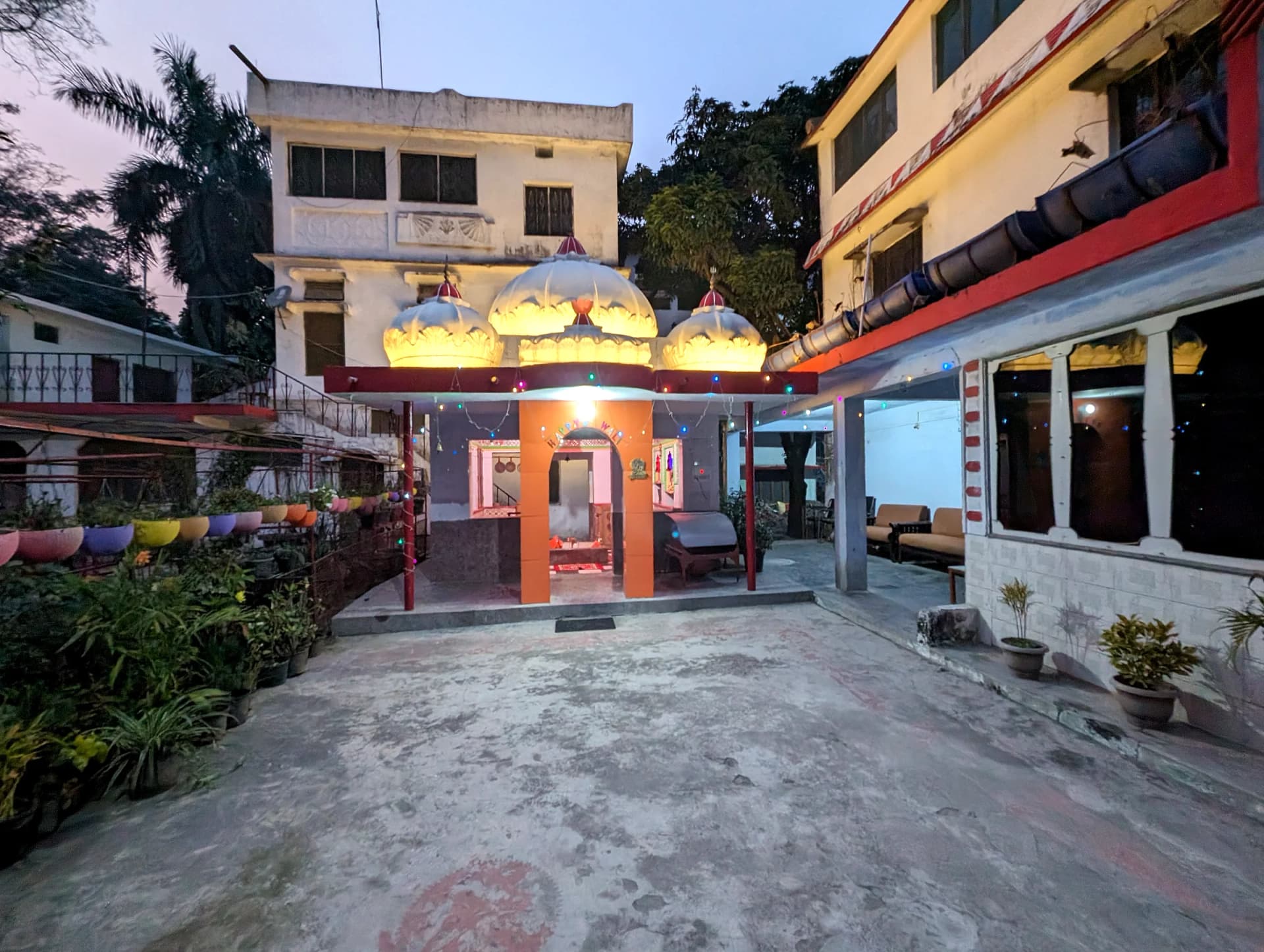
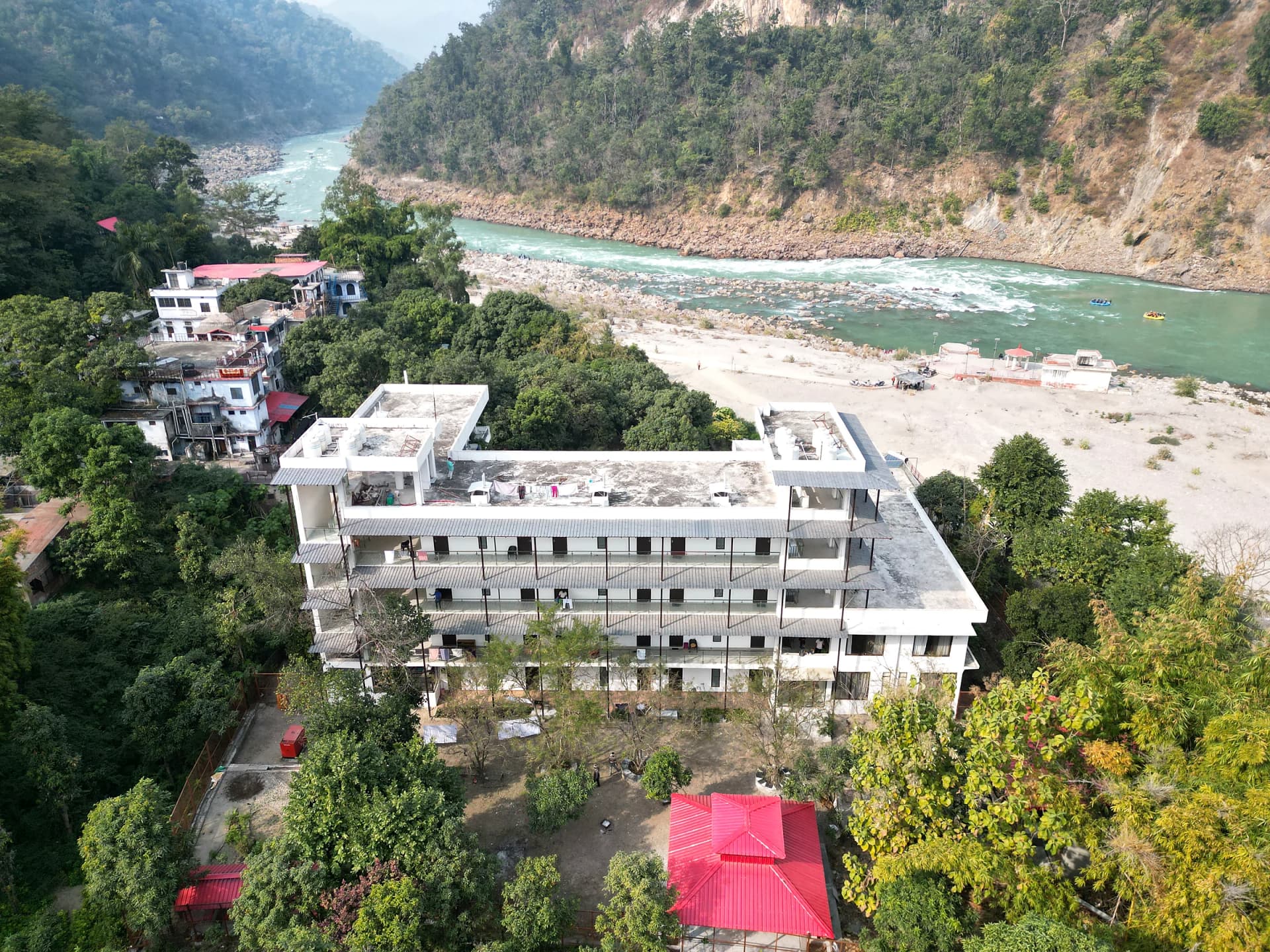
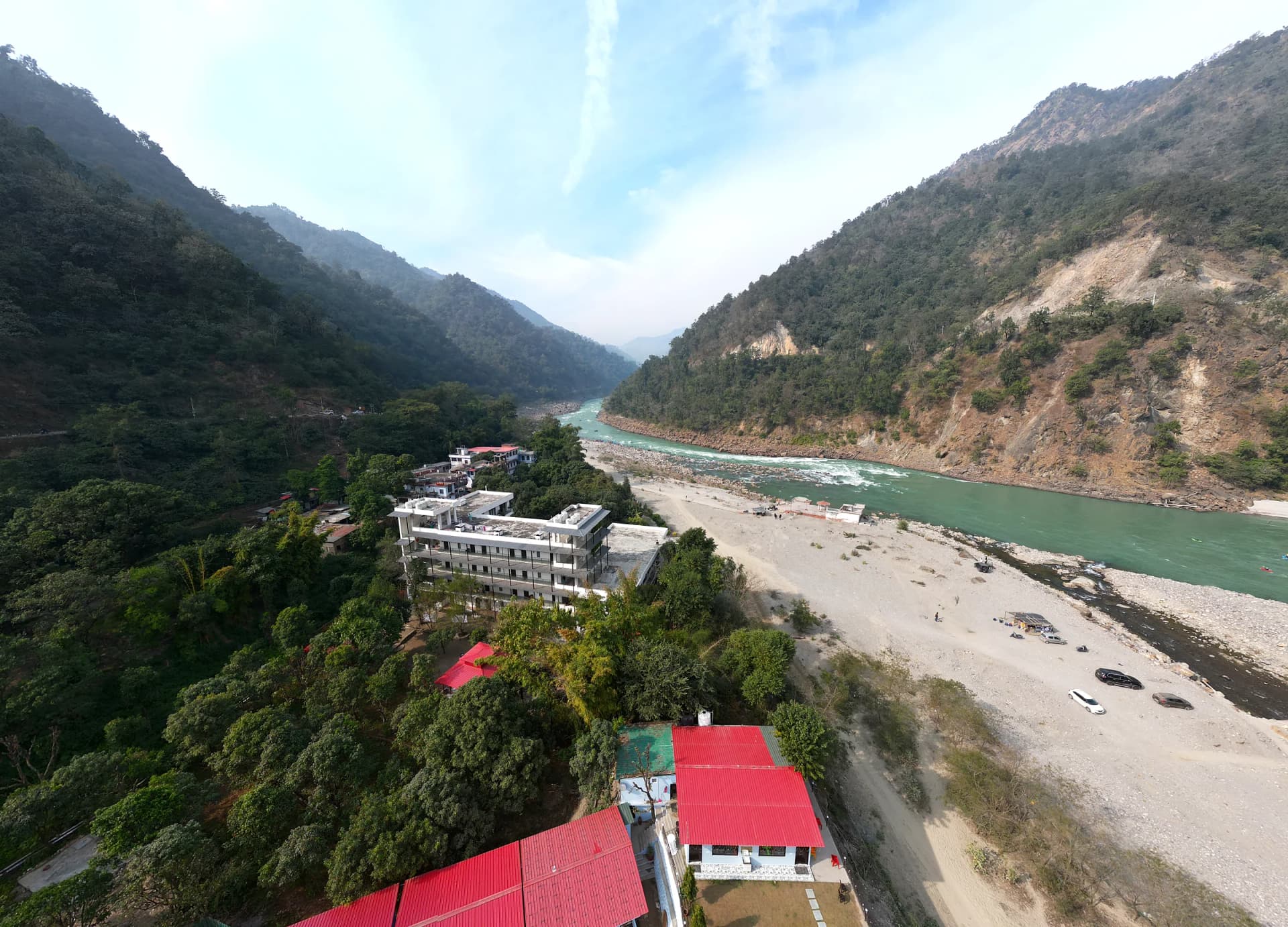
Life at Phool Chatti Ashram on the Ganga, since 1885

Phool Chatti Ashram on the Ganga
Since 1885

One of the oldest ashrams on the Ganga, with forest on three sides and no town around it.

1885Founded
15km upstream of Rishikesh
3sides of forest
140years of practice

Phool Chatti Ashram sits where the Ganga leaves the hills, about 15 km upstream of Rishikesh. What you hear in the morning is the river and the birds. For over 140 years it has been a place of practice, carried by a lineage of swamis. It is a working ashram, not a resort: modern facilities, but the day follows the ashram rhythm.

Rooms

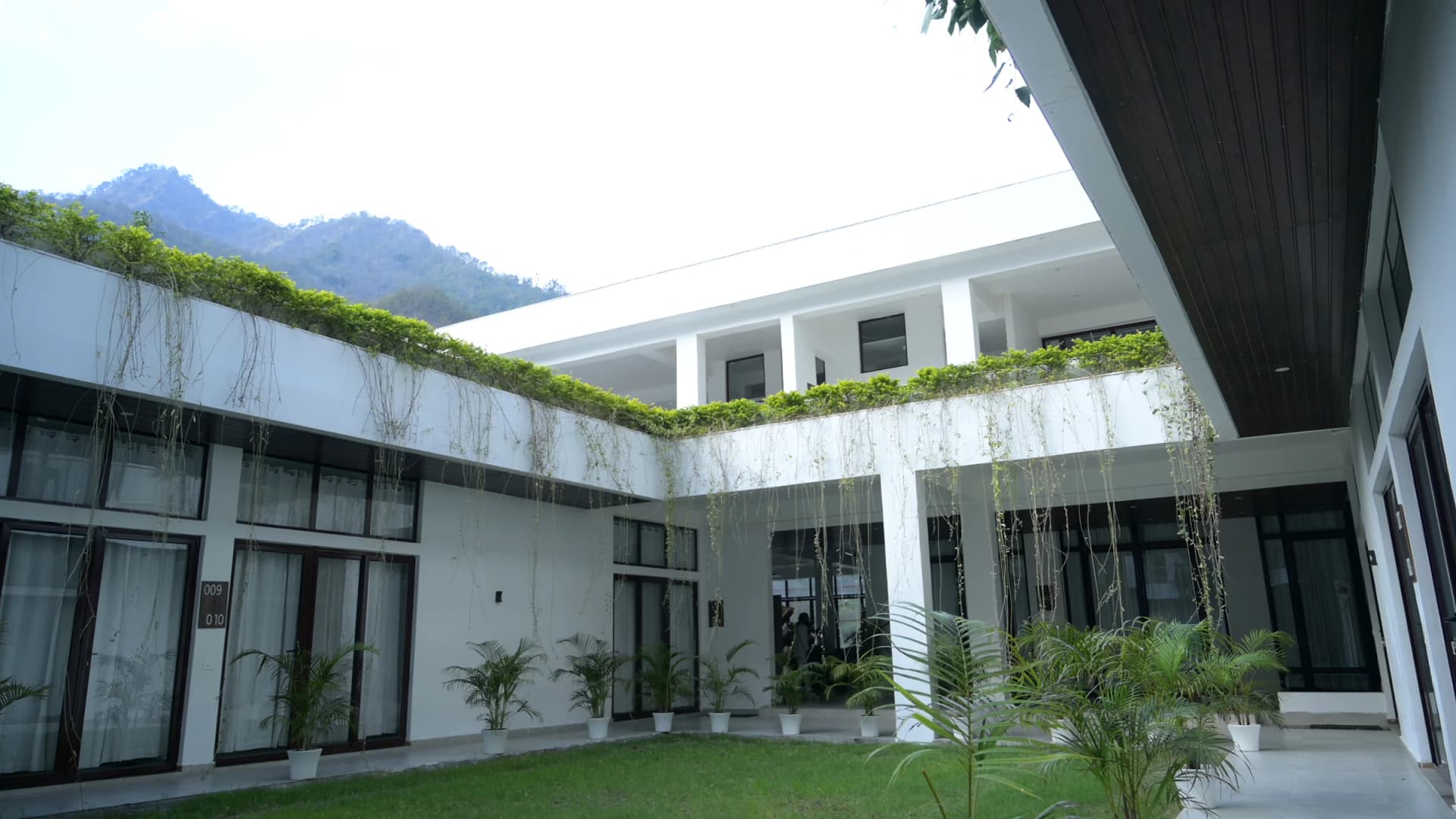
Simple guest rooms

Clean private and shared rooms with attached bathrooms, bedding and towels.

Food

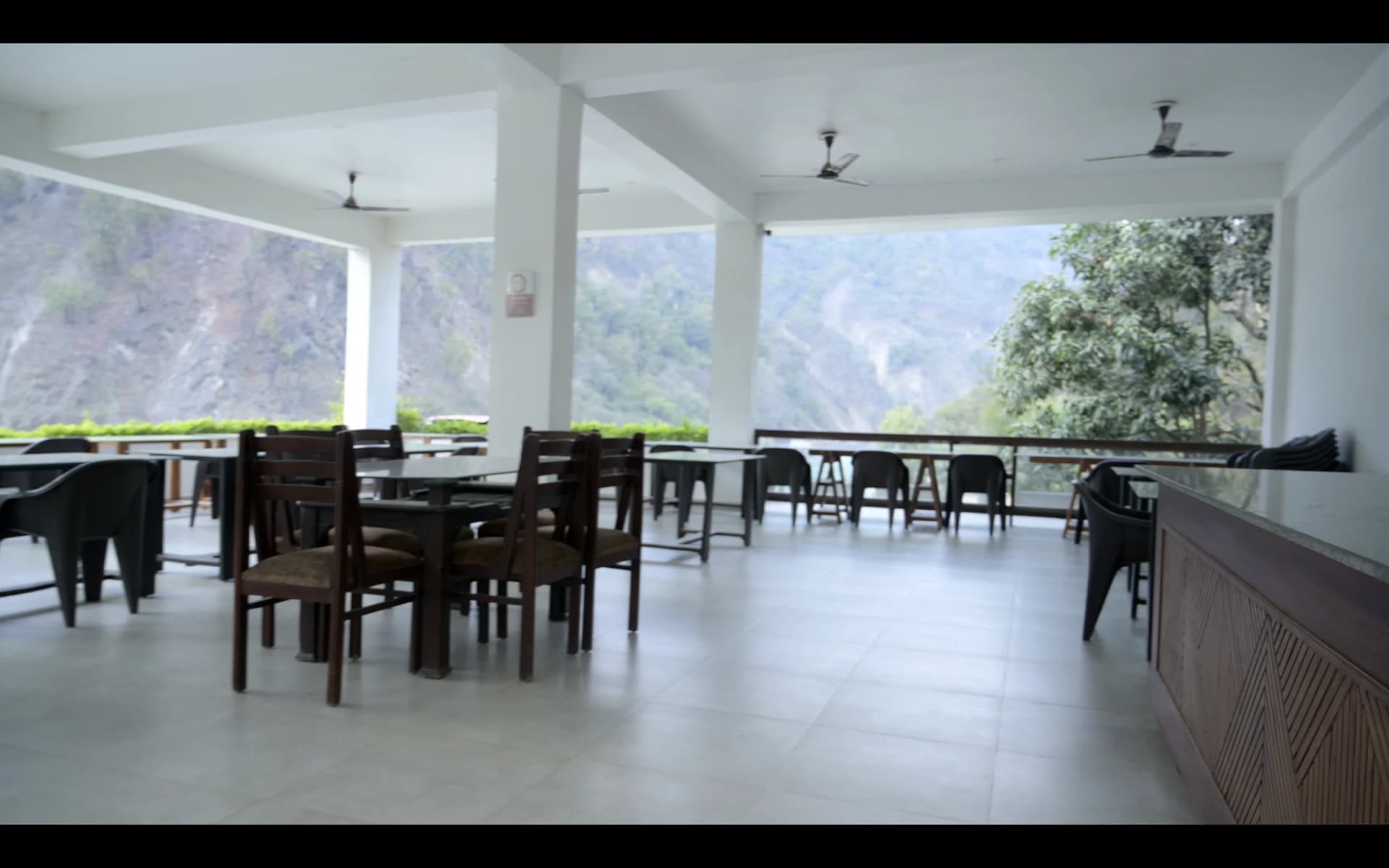
Three sattvic meals

Vegetarian, freshly cooked, served in the dining hall overlooking the Ganga.

Yoga halls

Spacious halls

Bright halls for asana, pranayama, meditation and sound.

Ayurveda

Ayurvedic massage

Traditional Ayurvedic massage, on request, to rest the body between practices.

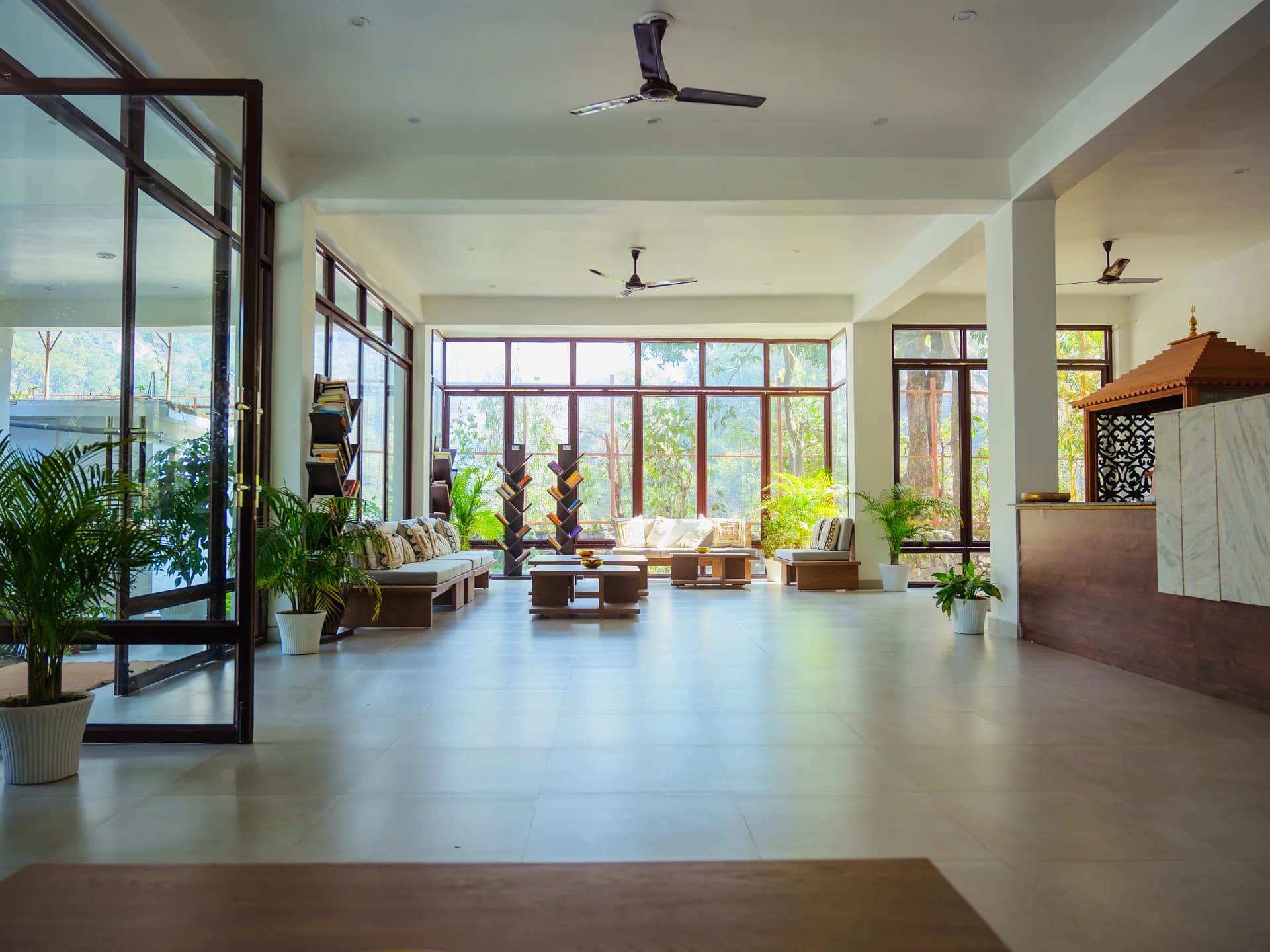
Library

The ashram library

Books on yoga, philosophy and the tradition, to read in the quiet afternoons.

Ganga

Ganga rituals & kirtan

Aarti and kirtan by the river.

Fees

What's included

Course fee, double sharing$1,450

USD, everything below included

Deposit to reserve$300

USD, held inside the total

Balance$1,150

USD, due on arrival

Included

  • 200 hours of training: 60 online, 140 in the ashram
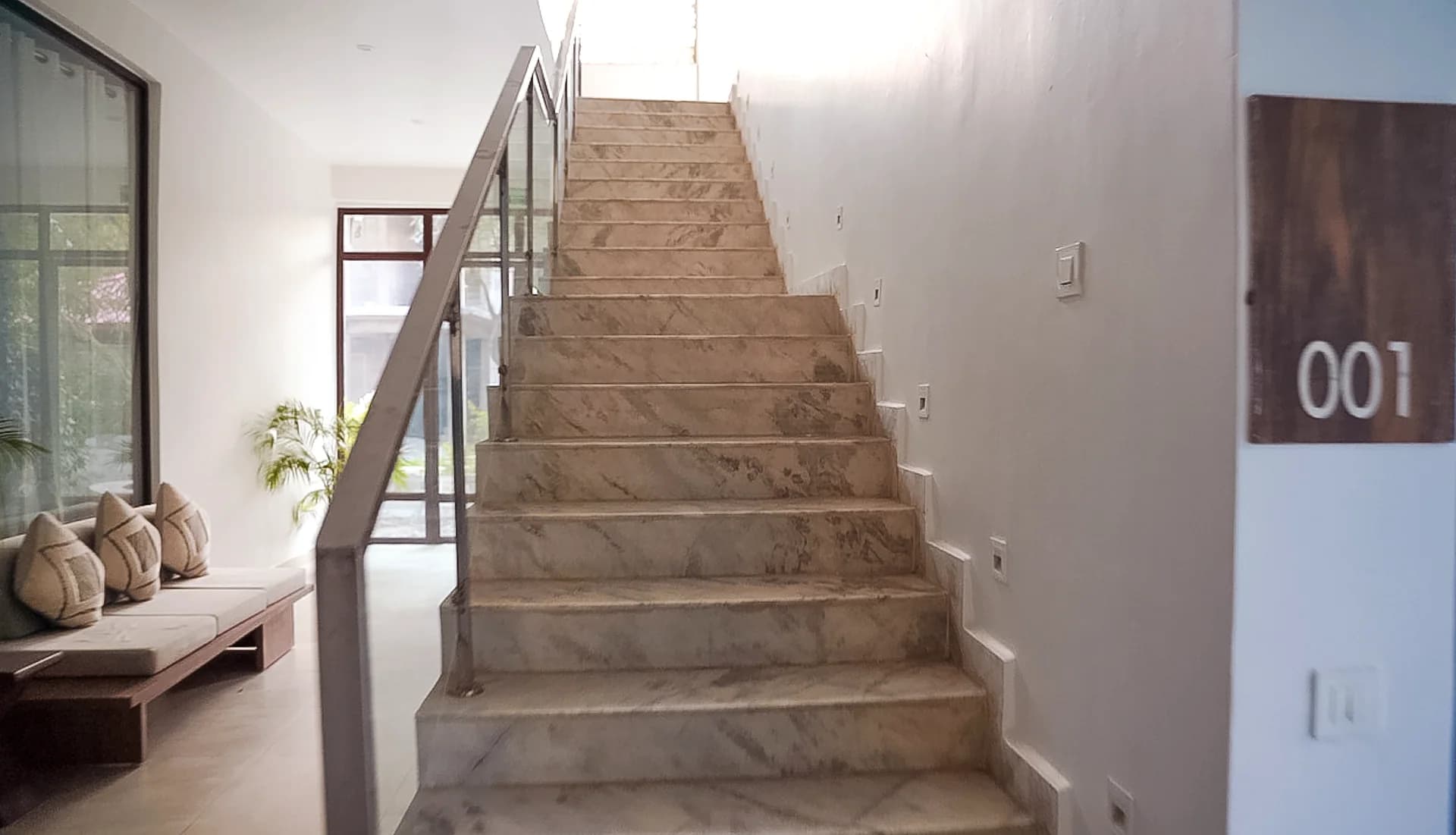
  • 14 nights' accommodation, double sharing
  • Three vegetarian meals a day, plus tea
  • Course manual and study material
  • The excursions and activities above
  • Certificate, issued by Rishikesh Niketan School
  • Pickup from Dehradun airport

Not included

  • Flights and travel to Rishikesh
  • Visa fees
  • Travel insurance (recommended)
  • Laundry
  • Extra nights before or after the course
  • Personal expenses, therapies, massage
  • Single room: $250 USD extra

Batches

Upcoming batches and how to reserve

15 days, 14 nights · Phool Chatti Ashram · April 2026 to March 2027

Next2–16 Nov 2026
MonthStart dates · 15 days, 14 nights

April to October 2026: completed

November 2026
December 2026
January 2027
February 2027
March 2027

Tap a date to book it on WhatsApp, or to ask how many seats are left.

  1. Send your application

    On WhatsApp or the form below.

  2. We confirm availability

    On WhatsApp.

  3. Pay the deposit

    $300 USD holds your place.

  4. Pay the balance

    Pay the balance on arrival.

  5. Start online

    Begin the 60 online hours whenever you are ready.

Who should join

Who is this training for?

People come for different reasons. All of them leave with a practice of their own and the skills to share it.

01

Complete beginners

02

Practitioners going deeper

03

Future teachers

04

Wellness professionals

05

Seekers

Eligibility

Eligibility

Criteria, not reassurance.

Complete beginners are welcome, as are experienced practitioners. You do not need to be able to do advanced postures, and you do not need to intend to teach.

  • Open to beginners. No prior teacher training and no particular flexibility is needed.
  • Minimum age 18. Under-18s are not accepted.
  • Classes are taught in English and Hindi; you need enough English to follow a lecture.
  • The certificate requires attending 90% of the hours.
  • Tell us before you book about injuries, pregnancy, heart conditions, recent surgery or medication.
  • Group size: 8 to 12 students.

Why 200 hours

Why 200 hours?

A few days can introduce you to yoga. 200 hours give you the time to go deeper: to learn, practise, teach and be corrected, rather than move from one topic to the next.

Whether you want to deepen your own practice or build a foundation for teaching, the programme gives you the time and structure to make it meaningful.

Why us

Why Yogamani?

The focus is on learning yoga through practice, study and experience.

A complete 200 hour journey
01

A complete 200 hour journey

60 hours online and 15 days of ashram training in Rishikesh.

Small groups
02

Small groups

8 to 12 students, so you practise, ask and are guided.

Traditional yoga
03

Traditional yoga

Hatha, Ashtanga, pranayama, meditation, philosophy, anatomy and methodology.

Learn in an ashram
04

Learn in an ashram

A simpler daily rhythm centred on practice and study.

Experienced teachers
05

Experienced teachers

A team who guide you through practice and theory.

Rishikesh

Why learn in Rishikesh?

Rishikesh has been a place of yoga, meditation and spiritual practice for generations. Here yoga is not limited to the classroom: your training happens alongside ashram life, the Ganga, the temples and the everyday rhythm of the town.

You are not just coming to Rishikesh to study yoga. You are coming to experience it.

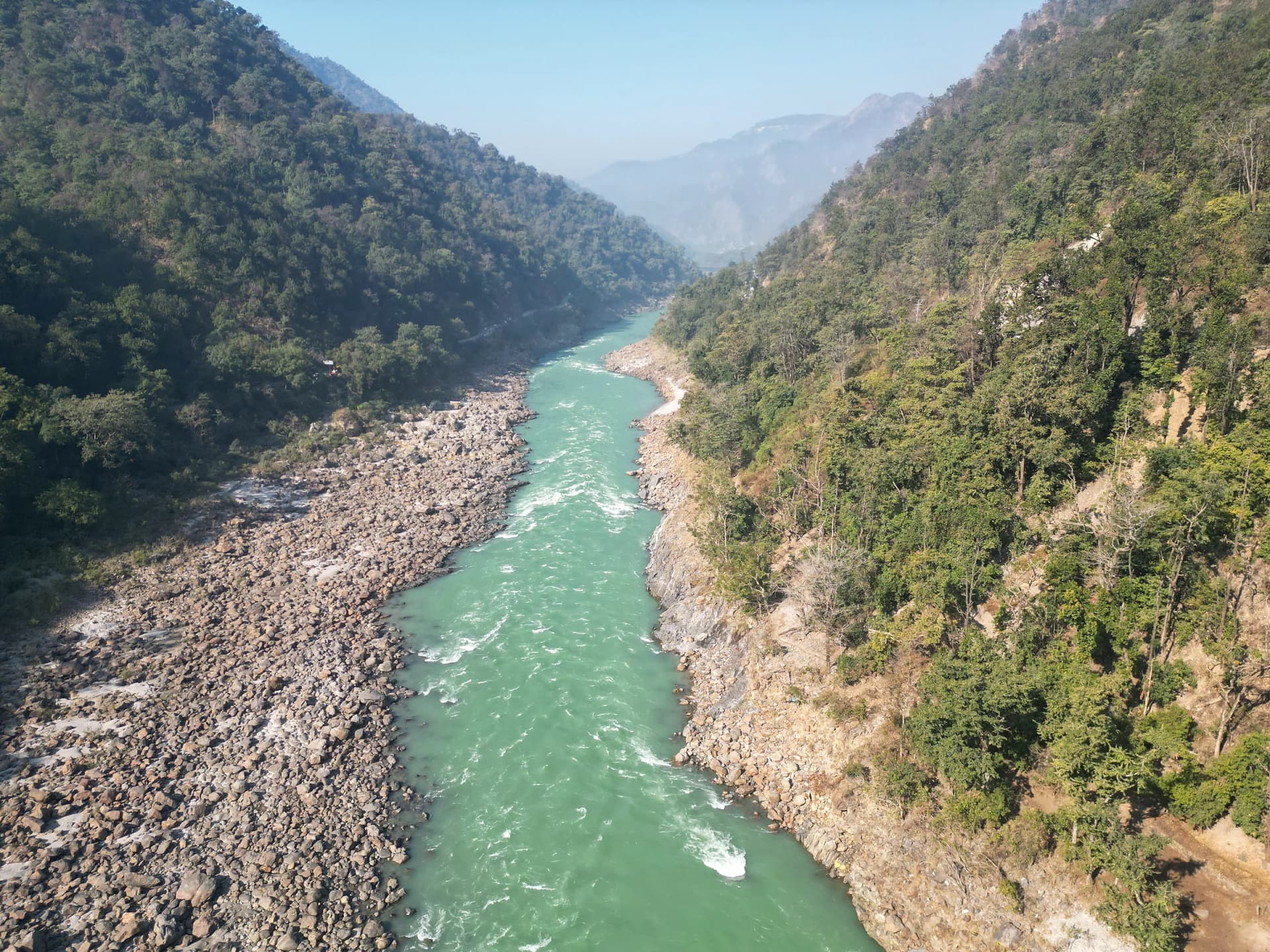
The Ganga and the Himalayan foothills at Rishikesh

Getting here

Getting to Rishikesh: visas, flights and arrival

  1. Visa

    A tourist e-visa is what most students need. Apply 4 weeks ahead.

  2. Flying in

    Delhi (DEL) is the main international gateway, about 6 hours by road. Dehradun (DED) is the nearest airport, about 45 minutes away.

  3. Arriving

    Come the day before your course starts. Check-in from 12 noon, check-out by 10 am.

  4. Pickup

    We can arrange a pickup from Dehradun airport (free on the 200 hour training), or book a taxi from Delhi for about ₹6,500.

  5. What to bring

    Warm layers for the mornings, a shawl for the hall, a torch, a water bottle. December and January are cold.

What to bring

What to bring

Pack light. Course materials are provided.

  • Comfortable yoga clothes
  • Light, modest clothing for the ashram
  • Yoga mat (mats are also provided)
  • Towel and personal toiletries
  • Comfortable walking shoes
  • Personal medicines and essentials
  • Reusable water bottle
  • Small backpack for excursions

Teachers

Who leads the training?

Portrait of Yogaacharya Manish

Yogaacharya Manish

Founder · Hatha, sound, meditation

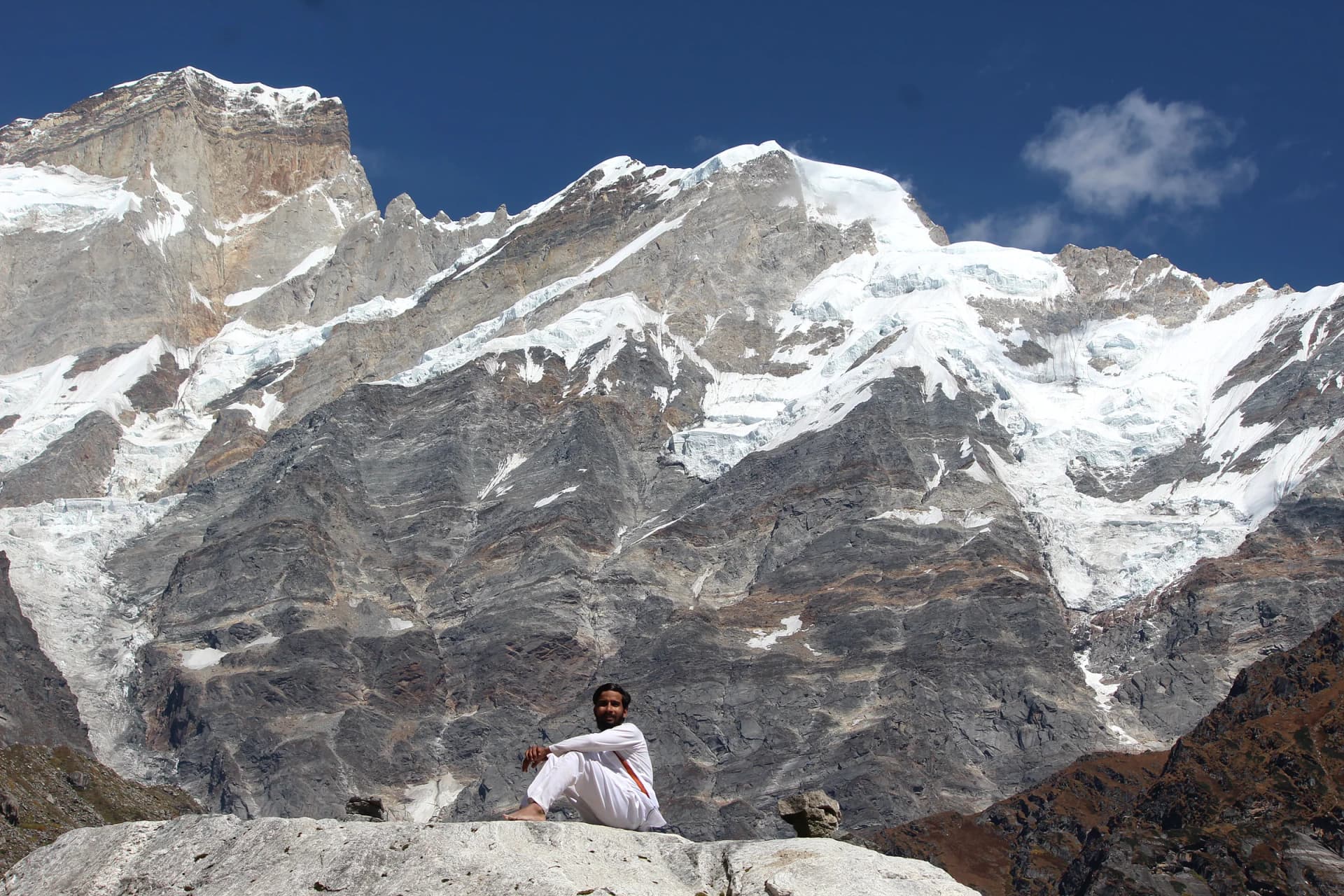
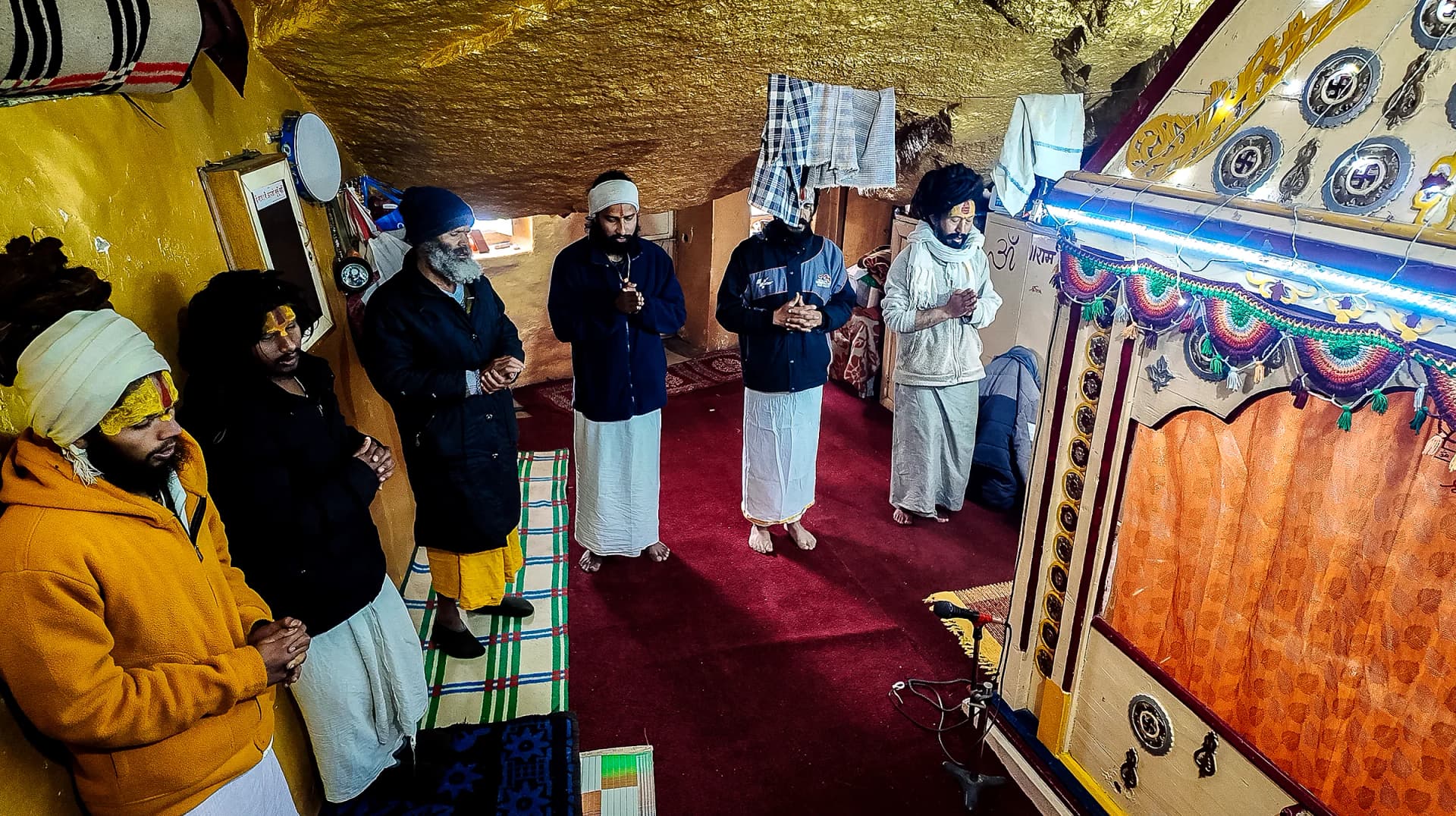
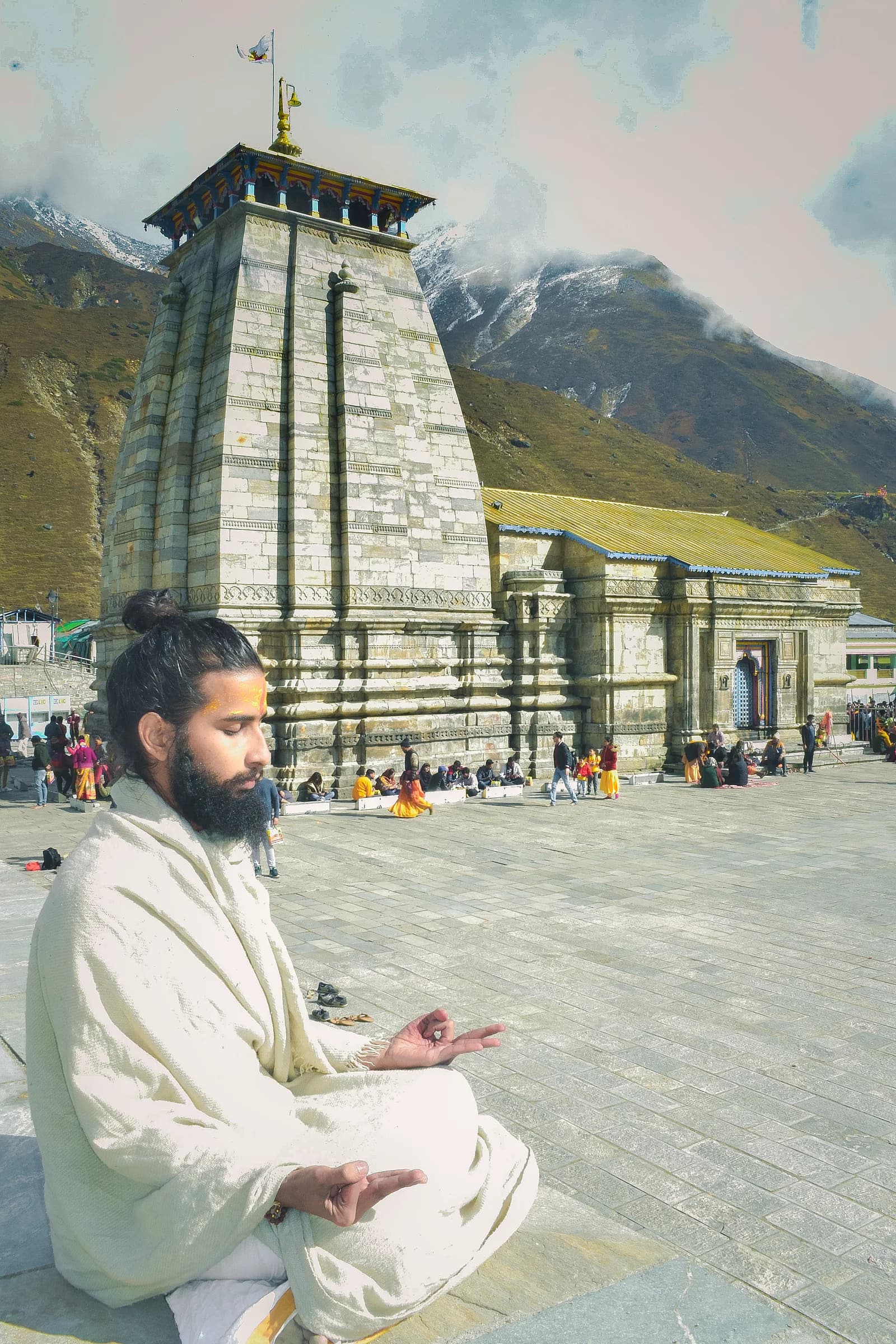
Grew up in Brij Kshetra and spent almost three years in sadhana at Kedarnath before founding Yogamani. Over 25 years of practice.

Hindi, English, Japanese

Latika Ji

Ashtanga Vinyasa · 200 hour

Teaches the 6:30 morning Ashtanga class, led and Mysore style, and the asana practice on the teacher training.

English, Hindi

Shubhashini

Hatha · alignment · 200 hour

Teaches traditional Hatha and alignment, and guides teaching practice on the 200 hour training.

English, Hindi

Subhash

Anatomy · teaching methodology

Teaches anatomy and the method of teaching a class on the 200 hour training.

Hindi, English

Who you will study with

The teacher, the lineage and the practice

The lineage
01

The lineage

Yogaacharya Manish grew up in Uttarakhand and learned yoga through his guru and Himalayan traditions. His teaching is rooted in traditional practice, with an emphasis on sādhanā, discipline and lived experience.

Experience
02

Experience

Over 9 years of teaching, with students from India and internationally.

Teaching in the Himalayas
03

Teaching in the Himalayas

His connection with the Himalayan tradition comes through years of practice and teaching in Uttarakhand and the wider Himalayan region.

Beyond Yogamani
04

Beyond Yogamani

Alongside teaching at Yogamani, he has worked with partner schools and ashrams in Rishikesh and conducted workshops in Japan, including Tokyo and Osaka.

Experienced Teachers & Acharyas
05

Experienced Teachers & Acharyas

You will learn from experienced yoga teachers and acharyas who bring different areas of practice into the training. The programme combines traditional knowledge with practical teaching, corrections and direct guidance.

A Living Teaching Tradition
06

A Living Teaching Tradition

The training is not only classroom study. Practice, philosophy, pranayama, meditation, teaching methodology and daily ashram life come together to help you understand yoga as a lived practice.

Certification

Certification & Yoga Alliance

Certificate issued by Rishikesh Niketan School · registered with Yoga Alliance USA as an RYS 200

On successful completion you receive a certificate issued by Rishikesh Niketan School, registered with Yoga Alliance USA as an RYS 200. This makes you eligible to register as an RYT 200 with Yoga Alliance.

Yogamani runs and teaches the training; the certificate and the registration are Rishikesh Niketan School's.

Reviews

What students say on Google

Read what students say about Yogamani on Google Maps.

Reviews on Google

GGoogle Business Profile
Read what students say about Yogamani on Google, and share your own experience.

Reviews from our Google Business Profile.

Questions

Questions about the training

No. The training welcomes complete beginners as well as experienced practitioners. You start with 60 hours of guided online learning at your own pace, then join 15 days in the ashram.

Yes. On completion you receive a certificate issued by Rishikesh Niketan School, registered with Yoga Alliance USA as an RYS 200, which makes you eligible to register as an RYT 200.

A hybrid: 60 hours of online learning before your in-person dates, then a 15-day residential immersion of 140 hours at Phool Chatti Ashram.

14 nights at the ashram in a double-sharing room, three vegetarian meals a day, the online course, manuals, the excursions and activities, and the certificate. Travel, visas and personal expenses are not included.

You can transfer to a different batch. Your deposit and fees are held for your future training.

Yes. You can register as an RYT 200 and begin teaching. Many students take the training for their own practice.

A $300 USD deposit secures your place. Refunds are not available, but you can reschedule to any future batch without losing your fees or deposit.

Between 8 and 12.

Comfortable, modest clothing, warm layers for the mornings, a shawl for the hall, a torch, a water bottle and a journal. Mats are provided. A full packing list is sent once you register.

Policy

Rescheduling and refunds

Plans change. If you cannot attend your batch, you can transfer your place to a future batch.

Full refund and cancellation policy

  • No refunds after payment
  • Your booking can move to a future batch
  • Tell us as early as possible
  • Transfers depend on availability

Talk it through before you apply

Not sure whether this is right for you, or which batch to join? Book a free consultation, or message us on WhatsApp.

Payment details are confirmed with you personally. Payment can be made at the shala or through available online/UPI options.

Syllabus

The full syllabus

Every subject of the 200 hours, in detail. Open any subject to see what it covers.

Open any subject to see what it covers. Every subject is taught in English, with Hindi support.

01Hatha YogaThe classical postures, held with a steady breath, as taught in the Himalayan tradition.Practice

Hatha is the foundation of the training. You learn each posture slowly, with its preparation, alignment and counter-pose, so that you can practise it safely in your own body and later guide others into it.

You will practise

  • Pawanmuktasana series 1, 2 and 3 (joint and energy freeing)
  • Surya Namaskar and Chandra Namaskar
  • Standing, kneeling and seated postures
  • Forward bends, back bends and twists
  • Balancing postures and preparation for inversions
  • Supine and prone postures
  • Meditative sitting postures
  • Relaxation postures and conscious rest

You will learn

  • Principles and history of Hatha Yoga
  • The classical texts: Hatha Yoga Pradipika, Gheranda Samhita
  • Breath, drishti and stillness in each posture
  • Modifications, props and safe progression
  • Yoga as therapy: when to adapt and when to rest
02Ashtanga VinyasaBreath and movement joined in a set sequence, practised led and in Mysore style.Practice

Ashtanga teaches discipline and flow. You learn the opening sequence and the first part of the primary series, how breath, bandha and gaze work together, and how to offer simpler versions to beginners.

You will practise

  • Surya Namaskar A and B
  • Fundamental standing sequence
  • Introduction to the primary series
  • Seated forward bends, hip openers and twists
  • Core strength and first arm balances
  • Gentle back bends
  • The finishing sequence and rest

You will learn

  • History and lineage of Ashtanga Vinyasa
  • Tristhana: breath, bandha and drishti
  • Ujjayi breath and the vinyasa count
  • Led class and Mysore-style practice
  • Common mistakes and safe adjustments
03Vinyasa FlowCreative sequences that move with the breath, and how to build them yourself.Practice

Vinyasa Flow is the style most students meet in studios around the world. You learn to link postures smoothly, to plan a class with a clear peak, and to keep transitions safe.

You will practise

  • Breath and movement together
  • Standing flows and balance flows
  • Hip, twist and core sequences
  • Preparation for arm balances and inversions
  • Cooling down and closing the class

You will learn

  • How Vinyasa differs from Hatha
  • Sequencing a class with a peak posture
  • Safe transitions and pacing
  • Planning beginner and mixed-level classes
04PranayamaThe breathing practices of yoga, learnt step by step over the weeks.Practice

Pranayama is more than breathing exercises: it is the work with prana, the life force carried by the breath. Week by week you go from the natural breath to the classical techniques and, gently, to breath retention.

You will practise

  • Full yogic breath and abdominal breathing
  • Nadi Shodhana and Anuloma Viloma
  • Kapalabhati and Bhastrika
  • Bhramari, Ujjayi, Sheetali and Sheetkari
  • Breath retention (kumbhaka), introduced safely
  • Breathing with chakra awareness

You will learn

  • What prana is and how it moves
  • The five vayus and the three gunas
  • Sitting positions and preparation
  • Benefits, cautions and who should wait
  • How to teach pranayama to a group
05Meditation & Yoga NidraConcentration first, then meditation; plus guided deep relaxation you can lead.Practice

You build a daily sitting practice from the ground up: posture, breath, concentration, then meditation. Alongside, you learn yoga nidra well enough to guide a full session.

You will practise

  • Breath awareness and counting
  • Trataka (candle gazing)
  • Mantra japa with a mala
  • Nada (sound) meditation
  • Silent sitting and walking meditation
  • Yoga nidra: practising and leading it

You will learn

  • What meditation is, and what it is not
  • Traditions of meditation in India
  • Sitting well and relaxing into stillness
  • Lifestyle, diet and sleep for a steady mind
  • Building a practice that lasts
06Mantra ChantingDaily chanting, with the meaning and correct sound of each mantra.Practice

Each day opens and closes with mantra. You learn what mantra is, how sound and vibration work on body and mind, and how to use a short chant to settle a class.

You will practise

  • Om and the breath
  • Guru mantra and Gayatri mantra
  • Mahamrityunjaya and Shiva mantras
  • Opening and closing chants for a class
  • Kirtan: call and response

You will learn

  • Sanskrit sounds and pronunciation
  • The meaning of each mantra
  • Japa: repeating a mantra with a mala
07Mudra & BandhaHand gestures and energy locks that refine practice and meditation.Practice

Mudras and bandhas are the subtle tools of yoga. You learn the main hand mudras and the three bandhas, with the preparations that make them safe.

You will practise

  • Jnana, Chin, Anjali and Dhyana mudras
  • Mudras for meditation and pranayama
  • Mula, Uddiyana and Jalandhara bandha
  • Agnisara as preparation for Uddiyana
  • Maha bandha, introduced

You will learn

  • The five elements in the hand
  • How bandhas direct and hold energy
  • Benefits, cautions and when to avoid them
08Shatkarma (cleansing)The traditional yogic cleansing practices, learnt with care.Lifestyle

Hatha yoga begins with cleansing. You learn the purpose of each kriya, who should and should not practise it, and how to do the simple ones safely.

You will practise

  • Jala neti (nasal cleansing with water)
  • Sutra neti, introduced
  • Trataka for the eyes
  • Kapalabhati as a cleansing breath
  • Agnisara for digestion

You will learn

  • The six classical kriyas
  • Preparation and aftercare
  • Benefits, risks and contraindications
09Yoga PhilosophyThe texts and ideas behind the practice, explained in plain language.Philosophy

Yoga philosophy is a philosophy of life. You study the Yoga Sutras of Patanjali chapter by chapter, meet the Bhagavad Gita and the Upanishads, and talk about how these ideas show up on the mat and off it.

You will study

  • History of yoga and its main paths
  • The six schools of Indian philosophy
  • Yoga Sutras: the four chapters
  • The eight limbs, yamas and niyamas
  • The mind and its control
  • The Bhagavad Gita: karma, bhakti and jnana yoga
  • Chakras, nadis and kundalini
  • Three bodies, five koshas and three gunas
  • The theory of the five elements

You will learn

  • Weekly satsang and questions
  • Ethics for teachers
  • Living the yamas and niyamas day to day
10Anatomy & PhysiologyHow the body moves in practice, and how to keep students safe.Anatomy

Anatomy is what lets a teacher keep people safe. You study the physical body as it moves in asana and the subtle body that yoga works with.

You will practise

  • Body planes and movements
  • The skeleton, joints and the spine
  • Shoulder girdle, pelvis and legs
  • Muscles, tendons and ligaments
  • Nervous and respiratory systems
  • Common injuries and how to avoid them

You will learn

  • Nadis, chakras and kundalini
  • The five koshas and five elements
  • Anatomy of the breath in pranayama
  • Working with stiff, hypermobile and older bodies
11Alignment & AdjustmentSeeing a body in a posture, and guiding it safely, with words, hands and props.Teaching

You learn to see. Region by region, from feet to head, you study what good alignment looks like and how to help a student find it, with or without touch.

You will practise

  • Alignment of feet, knees and hips
  • Spine, shoulders, head and neck
  • Verbal cues that work
  • Hands-on adjustment and consent
  • Using blocks, straps, bolsters and the wall
  • Self-adjustment in your own practice

You will learn

  • Why alignment prevents injury
  • Levels of adjustment
  • Safety rules before you touch a student
12Teaching Methodology & PracticumFrom your own practice to leading a full class, with feedback.Teaching

This is where practitioners become teachers. You learn to plan, sequence and lead a class, and you teach real classes to your group with feedback from your teachers.

You will practise

  • Structuring and sequencing a class
  • Clear instructions and demonstration
  • Voice, pace and holding the room
  • Teaching mixed levels and beginners
  • Practice teaching in pairs and small groups
  • Leading a full class at the end of the course

You will learn

  • Qualities and ethics of a yoga teacher
  • Planning classes for different needs
  • The business of teaching: classes, retreats, online
13Yogic Lifestyle & AyurvedaDiet, routine and the ashram day, as part of the training.Lifestyle

Yoga is lived, not only practised. You follow the ashram routine and learn the basics of Ayurveda and a sattvic diet that support a steady practice.

You will practise

  • The daily routine (dinacharya)
  • Sattvic food and mindful eating
  • Seva (selfless service)
  • Silence and early nights

You will learn

  • Ayurveda basics: the three doshas
  • Seasons, sleep and digestion
  • Bringing the ashram day home
14Evaluation & CertificationHow you are assessed, and the certificate you receive.Certificate

At the end of the course you are assessed on what you have learnt and how you teach. Students who complete the training receive their certificate and can register with Yoga Alliance.

You will practise

  • Practical teaching assessment
  • Written test (short answers)
  • Attendance and participation

You will learn

  • Yoga Alliance RYT 200 registration, explained

Languages

Learn in multiple languages

  • EnglishAll programmes
  • हिंदीAll programmes
  • 日本語On selected programmes

The 200-hour Yoga Teacher Training is conducted in English.
Selected programmes may also be available in Hindi or Japanese. Ask us about language availability for your chosen programme.

Practising yoga at home with a laptop

Online

Prefer to learn from home?

Deep Dive, Pranayama, Meditation and Yoga Nidra are also taught online, live, by the same teachers.

See online courses