Nada yoga is the yoga of sound. It uses sound as the object of attention: first the sound you can hear, such as a chant, a bell or a singing bowl, and then, in deeper meditation, the quiet inner sound the tradition says is always there. Its aim is a steady, quiet mind. You only need to listen.
This guide explains what Nada yoga is, where it comes from, what a practice looks like, how it differs from sound healing, and how you can begin at home with ten minutes a day.
What is Nada yoga? Struck sound and unstruck sound
The tradition speaks of two kinds of nāda, or sound. Āhata nāda is struck sound: anything made by one thing meeting another, like a voice, a drum, a bowl or a gong. It comes and goes. Anāhata nāda is unstruck sound: an inner sound not made by anything, heard only when the mind becomes very still.
In Nada yoga you begin with the first and move towards the second. Outer sound gives a restless mind something simple to hold. As attention settles on it, the mind grows quieter, and the listening slowly turns inward. That movement, from outer sound to inner silence, is the whole path in one line.
Begin with what you can hear. The listening itself is the practice.
Where does Nada yoga come from?
Sound has always been part of yoga in India. Mantra, kirtan and the chanting of Om are all ways of working with sound, and they are still heard every evening at aarti by the Ganga in Rishikesh. The Hatha Yoga Pradipika, one of the classical texts of Hatha yoga, describes listening to the inner sound as a way to still the mind and treats it as a method of meditation in its own right.
So Nada yoga is not a modern wellness trend. It is an old, quiet strand of practice that sits alongside asana, pranayama and meditation, and supports all three. Many students find that the yoga of sound is the first practice that lets their mind settle without a struggle.
What does a Nada yoga meditation look like?
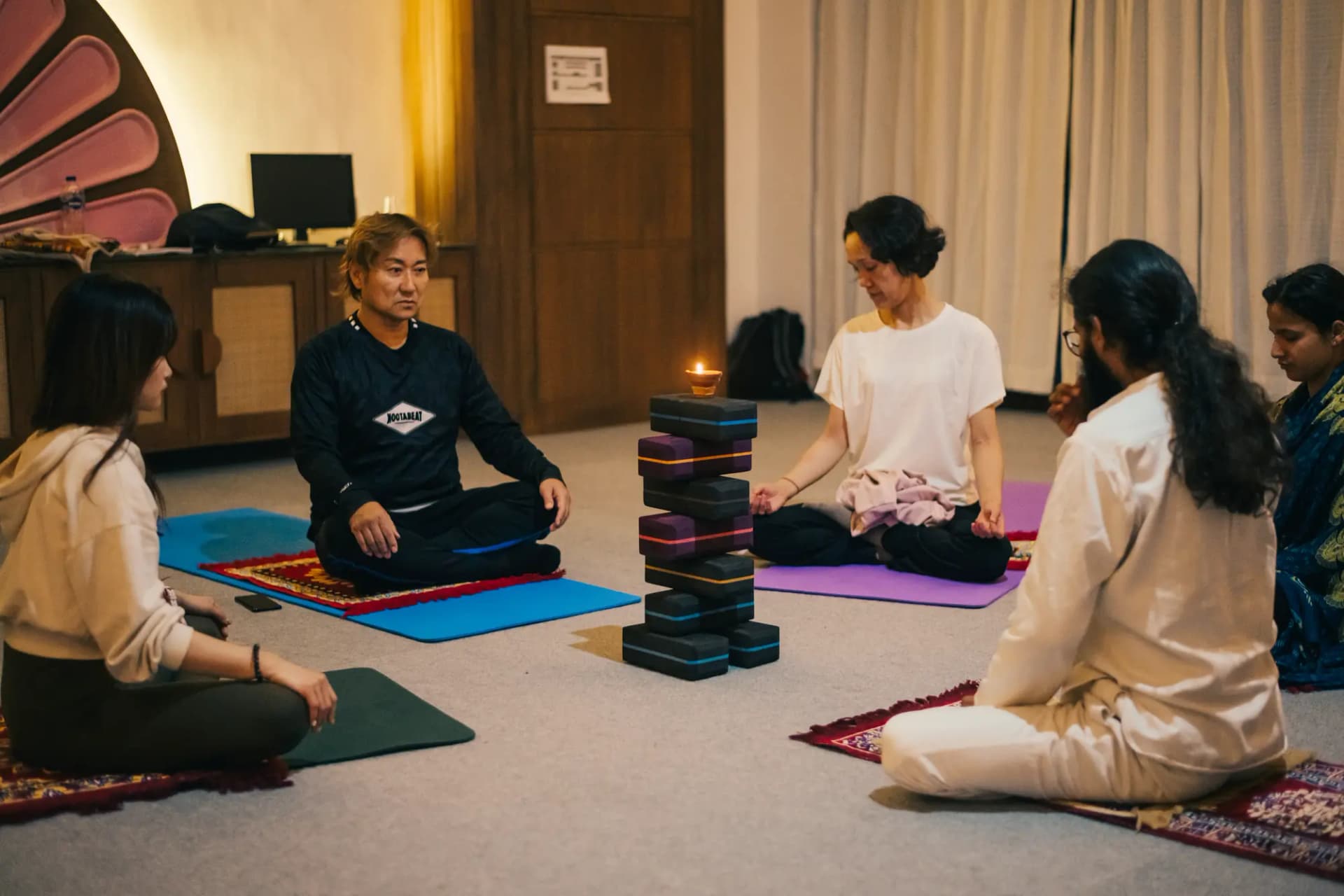
A simple Nada yoga meditation moves from the body and breath, to the voice, to listening. A typical sequence includes:
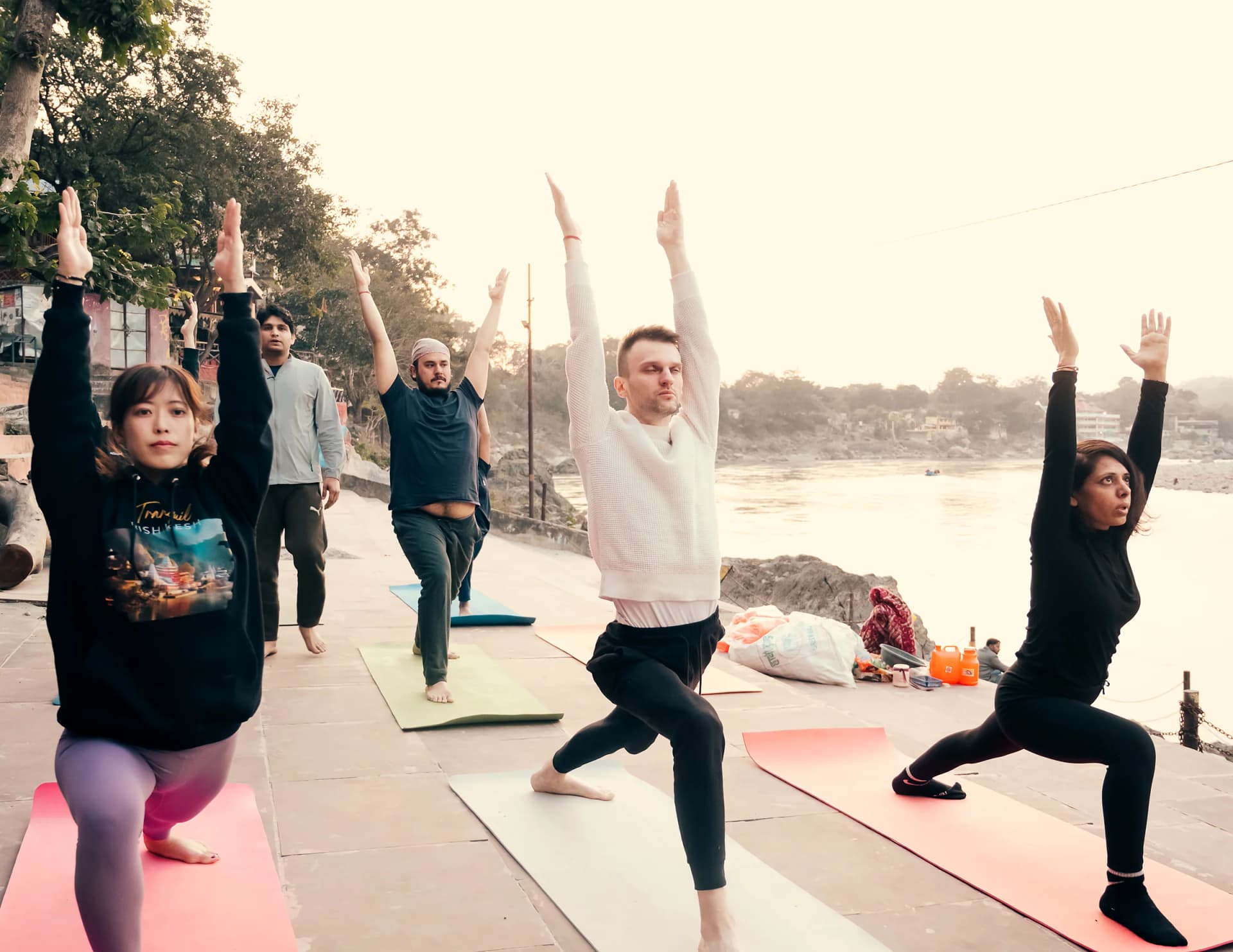
- A few minutes of gentle movement or a short asana practice to settle the body.
- Slow breathing, then Bhramari, the humming bee breath, humming softly on the out-breath.
- Chanting Om or a simple mantra, alone or with a group.
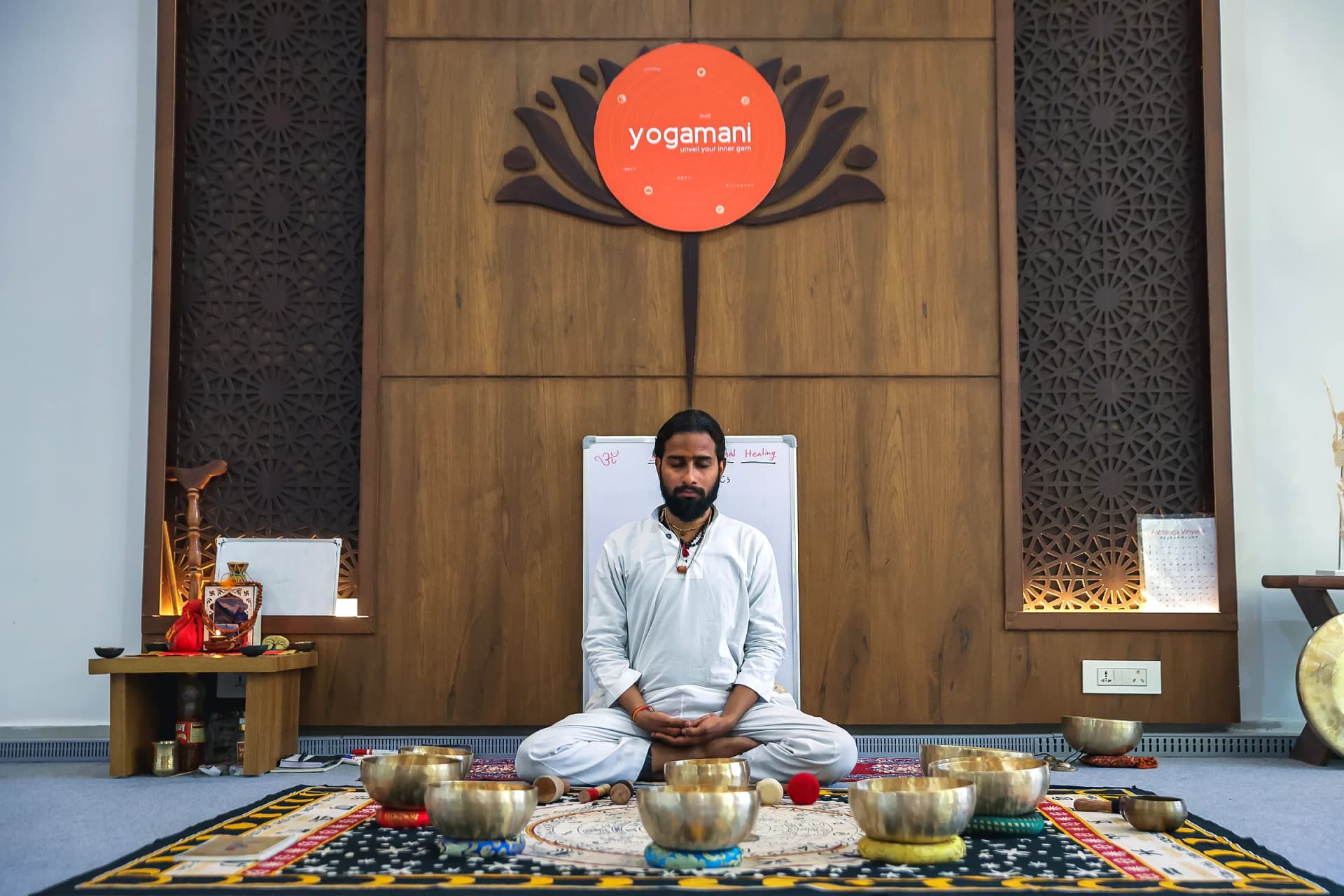
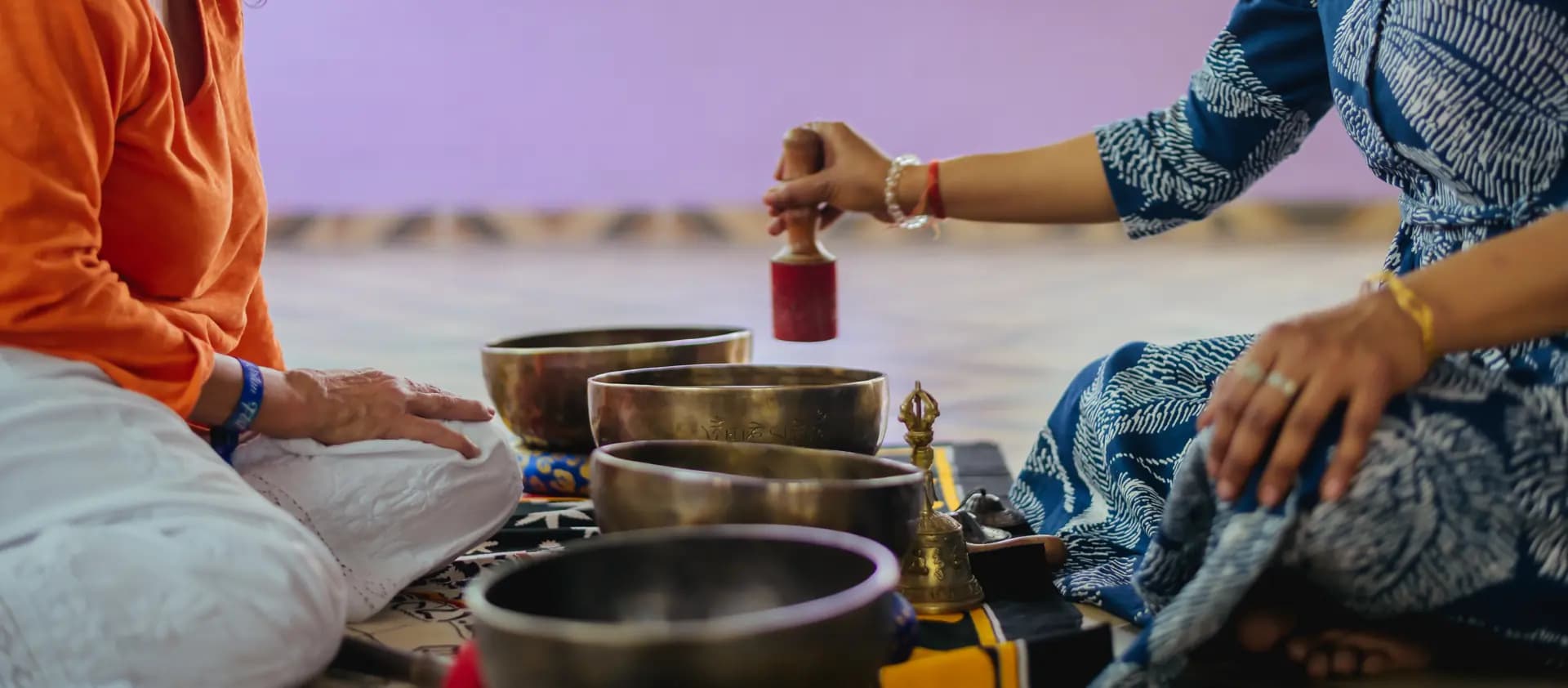
- Listening to a sustained sound, such as a singing bowl, until it fades completely.
- Sitting in silence afterwards, noticing what remains when the sound has gone.
The silence at the end matters as much as the sound. Much of Nada yoga happens in the moment just after a tone disappears, when the mind is still following it and has not yet found something new to think about.
What is the difference between Nada yoga and sound healing?
People often ask how the two relate. Sound healing uses sound and vibration, usually from singing bowls, gongs and the voice, to bring the body and mind into deep rest. A session is received lying or sitting while a practitioner plays. It can support wellbeing and relaxation; it is not a medical treatment and does not replace one.
Nada yoga is the wider practice that sound healing grows out of. In a sound healing session you mostly receive; in Nada yoga you take part, through breath, voice and attention. At Yogamani the two are taught together: you learn the instruments, and you also chant, breathe and listen inward, so that what you later offer to others comes from your own practice rather than from technique alone.
How to practise Nada yoga at home: a 10-minute routine
You can start Nada yoga for beginners with no instruments at all. Try this for ten minutes a day for a week:
- Sit comfortably with a straight back, in a quiet place, at the same time each day.
- Take five slow breaths, making the out-breath a little longer than the in-breath.
- Do five to ten rounds of Bhramari: breathe in through the nose, then hum gently as you breathe out.
- Stop humming and sit for a few minutes, simply listening to the sounds around you without naming them.
- Finish by sitting in silence for one more minute.
Keep the sound soft and the effort light. If you feel dizzy or strained, stop and breathe normally. If you have a health condition, check with your doctor before starting any new breathing practice. After a week, notice whether the silence at the end feels longer or easier; that is the first sign Nada yoga is working.
Learning Nada yoga in Rishikesh
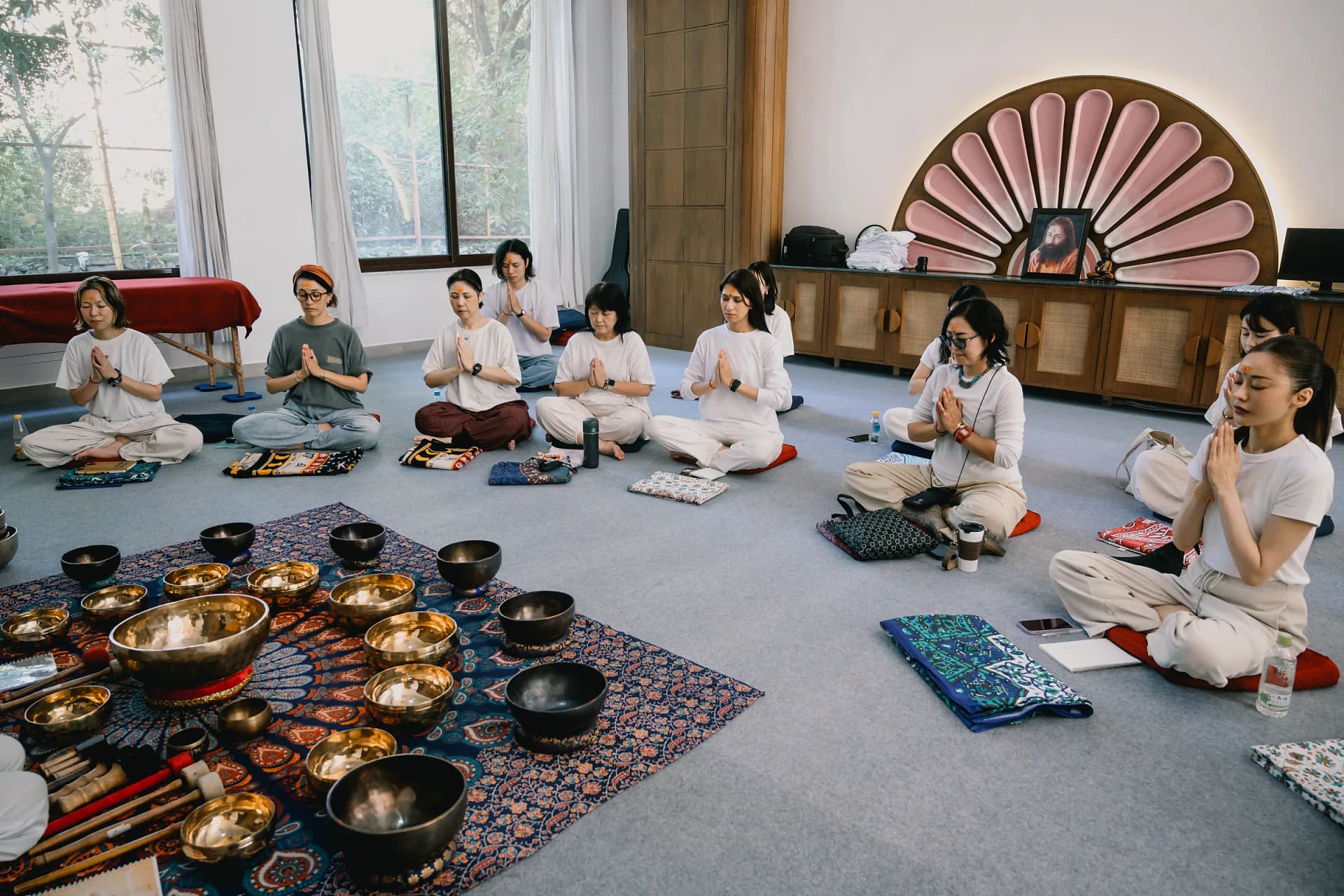
If you would like to go further, Yogamani teaches Nada yoga in Rishikesh in two ways. The Sound Healing and Nāda Yoga Teacher Training is a one-week, 50-hour course led by Yogaacharya Manish. It moves day by day from listening, through the singing bowls, gong and chakra work, to leading a full sound bath yourself, with mantra, Bhramari and yoga nidra woven through the week. It runs at the Tapovan studio, with editions at Phool Chatti Ashram on the Ganga.
If you would rather experience the yoga of sound as part of a quiet week, the 7 Day Yoga Retreat at Phool Chatti Ashram includes sound healing, mantra, kirtan and a period of silence, alongside Hatha yoga, pranayama and meditation. It is open to all levels, including beginners.
Frequently asked questions about Nada yoga
Do I need to be musical to practise Nada yoga?
No. Nada yoga is about listening, not performing. You hum, chant softly and listen; no singing voice, musical training or instrument is needed to begin.
Is Nada yoga the same as sound healing?
Not quite. Sound healing is usually received while a practitioner plays bowls or gongs. Nada yoga is the wider practice of working with sound yourself, through breath, chanting and listening, as a path of meditation.
How long should a Nada yoga practice be?
Ten minutes a day is enough to begin. Regular short practice at the same time each day does more than an occasional long session.
Can beginners learn Nada yoga?
Yes. It suits beginners well because sound gives the mind a clear, gentle focus. Start with Bhramari and simple listening, and add chanting when it feels natural.
Where can I learn Nada yoga in Rishikesh?
Yogamani teaches it in Tapovan, Rishikesh, through the one-week Sound Healing and Nāda Yoga Teacher Training, and as part of the 7 Day Yoga Retreat at Phool Chatti Ashram on the Ganga.
Related reading
- Your first yoga class in Rishikesh: what to bring and what to expect
- Weekend yoga retreat from Delhi: 3 days in Tapovan, Rishikesh
- Ashram on Ganges: a forest ashram on the Ganga, since 1885
Ask a teacher
If you are not sure whether the training or the retreat suits you, or you have a question about Nada yoga itself, send Yogamani a message on WhatsApp. A teacher will reply and help you find the right place to begin.