Mysore style is a way of practising Ashtanga Vinyasa yoga in which each student moves through the sequence at their own pace and breath, while the teacher walks the room and helps each person one by one. Nobody calls the postures from the front. It is one of the most traditional ways to learn Ashtanga, and it suits beginners well.
This guide explains where Mysore style comes from, how a Mysore class differs from a led class, why it works for beginners, what happens in your first class, and how to build a steady practice in Tapovan, Rishikesh.
What is Mysore style Ashtanga, and where does the name come from?
The name comes from the city of Mysore in southern India, where this method of teaching Ashtanga Vinyasa yoga took shape and where students have long gone to learn it. Mysore style describes how the class is taught, not a different kind of yoga. The postures, the breath and the order of the sequence are the same as in Ashtanga everywhere; only the shape of the class changes.
Ashtanga itself is a set sequence of postures linked by breath and movement. Each movement has its breath, and the gaze, or drishti, rests on a fixed point. Because the sequence does not change from day to day, the student slowly learns it by heart, and the practice becomes something they carry with them rather than something they follow.
What is the difference between a led class and a Mysore class?
Ashtanga is usually taught in two ways. Knowing the difference between led and Mysore class teaching helps before you come to Rishikesh.
- Led class: the teacher counts the breath and names each posture, and the whole group moves together. It is a good way to learn the rhythm and counting.
- Mysore style class: each student practises the part of the sequence they know, at the pace of their own breath. The teacher gives postures, corrections and help to each person in turn.
- In a led class everyone does the whole sequence, or as much as the teacher sets. In a Mysore class each practice is as long as the student is ready for, and it grows over time.
Many students use both: led classes to learn the count, and Mysore style practice to make the sequence their own.
Is Mysore style good for beginners?
Yes. Many beginners feel they must keep up with a group before they try Ashtanga. In Mysore style the opposite is true: there is no group to keep up with. A new student may be given only the first few postures on day one, practise them with care, and then rest. The next day a little more is added, when the teacher sees the student is ready. That is why Ashtanga for beginners often starts best in a Mysore room.
- You move at the speed of your own breath, not someone else's.
- The teacher sees your practice closely and helps with what you actually need.
- The sequence is learnt slowly, so it stays with you.
- Strong and experienced students practise in the same room, each at their own place in the sequence.
In a Mysore style room nobody is ahead and nobody is behind. Each student is simply where their practice is today.
What happens in your first Mysore class?
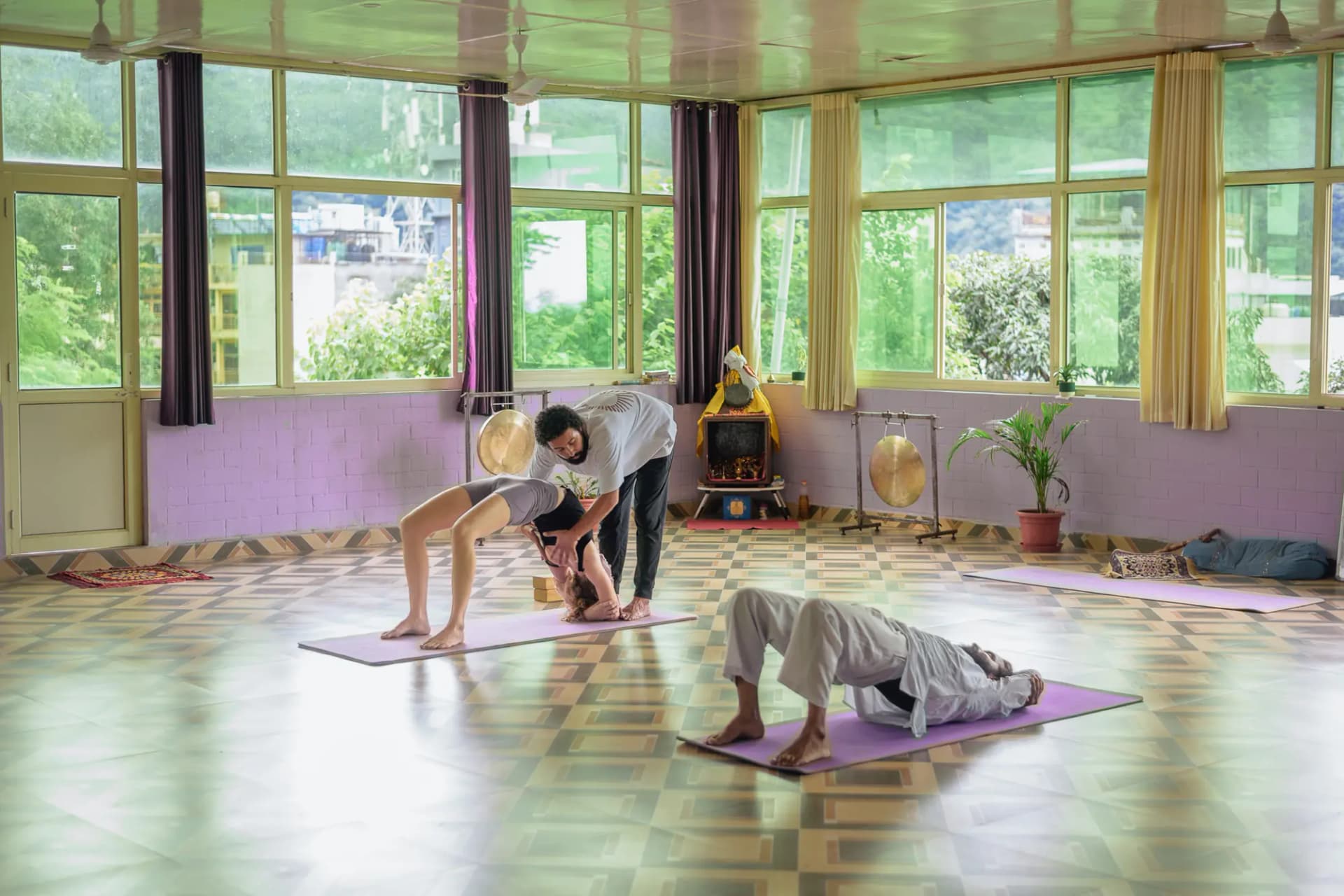
Tell the teacher when you arrive that you are new to Ashtanga, or new to Mysore style, and mention any injury before you begin. The teacher will show you where to start, usually with the sun salutations, and stay close while you learn them. When you have done what you were given, you finish with the closing postures and rest. Your first Mysore class may be short. That is normal, and it is how the method is meant to work.
- Come on a light stomach, two to three hours after a meal.
- Wear clothes you can move and breathe in, with a shawl for cool Tapovan mornings in winter.
- Mats and props are provided, though you are welcome to bring your own.
- Arrive a few minutes early so the teacher has time to meet you.
- Practise in silence and keep your attention on your own mat and breath.
How often should I practise Mysore style?
Mysore style works best when it is repeated. One class gives you a taste; a week of mornings begins to change how the sequence feels in the body; a month starts to turn it into a practice of your own. The traditional advice is to practise regularly, at a similar time each day, rather than very hard once in a while. Even three mornings a week, kept steadily, builds more than one long weekend session.
Where to practise Ashtanga in Rishikesh
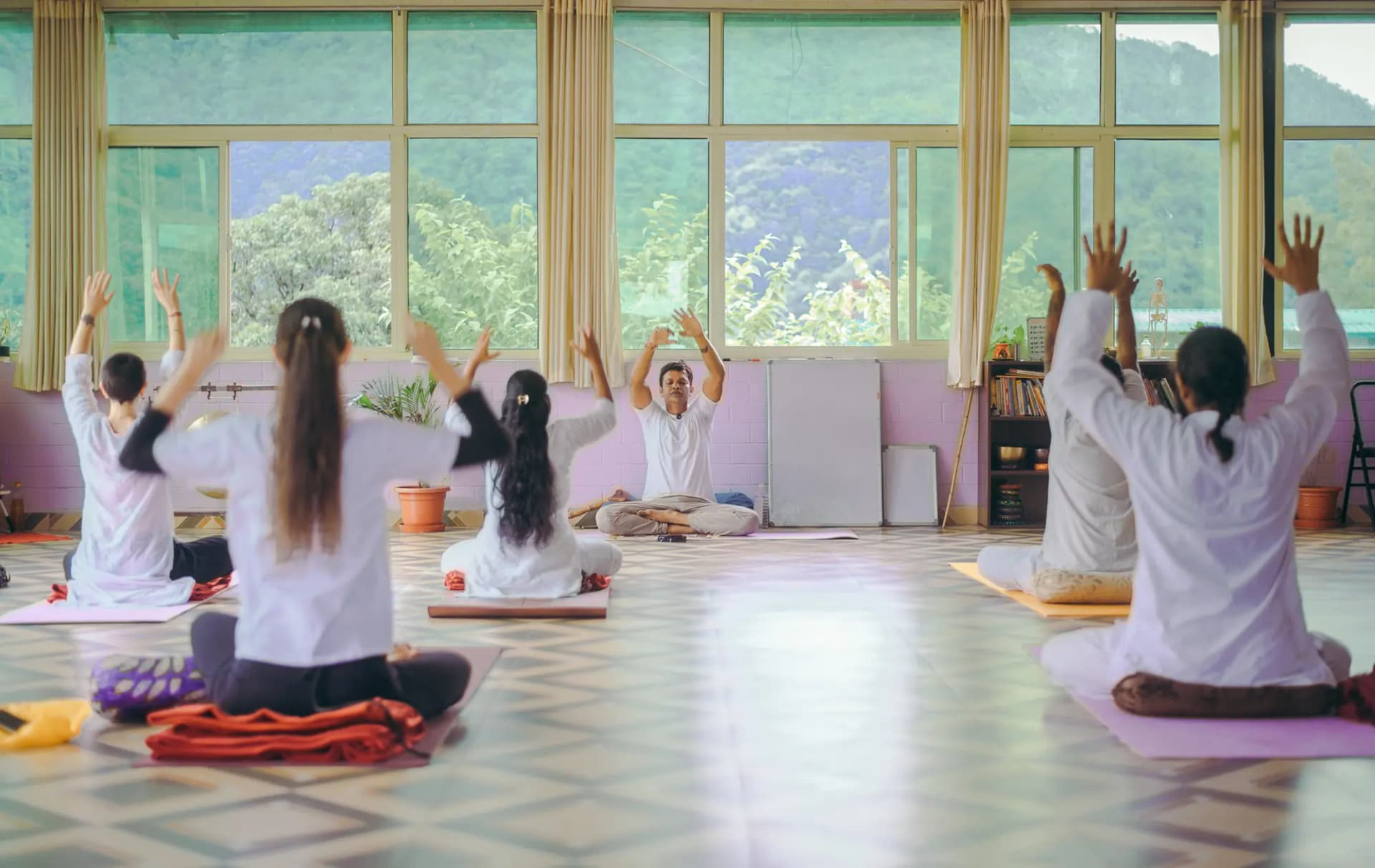
At Yogamani in Tapovan, Ashtanga Vinyasa is part of the regular daily classes, including Mysore style mornings, which you can join as a drop-in for a single class or return to every day of your stay. To study the method in depth, the Yoga Deep Dive Courses offer Ashtanga as one subject for one to four weeks, taught by Latika Ji, with practice and study that build week by week. For those who wish to teach, there is also a one-week Ashtanga Vinyasa Teacher Training among the specialised courses.
Frequently asked questions about Mysore style
Do I need to know the Ashtanga sequence before a Mysore class?
No. The teacher gives you the first postures and adds more as you are ready. You learn the sequence step by step in Mysore style, which is why it suits complete beginners.
Is Mysore style harder than a led class?
Not necessarily. It can feel gentler, because you practise only what you have been given, at your own breath. A led class moves the whole group at one pace, which some beginners find faster.
How long is a Mysore practice for a beginner?
Often short at first, sometimes just the sun salutations and a few standing postures, followed by the closing sequence and rest. It grows naturally as you learn more of the sequence.
Can I join a Mysore class in Rishikesh as a drop-in?
Yes. Ashtanga Vinyasa is part of Yogamani's daily classes in Tapovan, and you can join as a drop-in. Ask on WhatsApp which mornings are Mysore style and which are led.
Related reading
- Drop-in yoga classes in Rishikesh: how they work and how to choose one
- Your first yoga class in Rishikesh: what to bring and what to expect
- 200 hour yoga teacher training in Rishikesh: how to prepare
Ask before you come
Class times change with the season, so message Yogamani on WhatsApp to ask which mornings are Mysore style and which class is the best place for you to start. Come with an open mind and a light stomach; the sequence will meet you where you are.