Yes, you can walk a winter yatra. From November to April the high temples of Kedarnath, Badrinath, Gangotri and Yamunotri close, and snow shuts their routes. But the mountains stay open. Lower paths, forest temples and quiet valleys remain walkable, and Yogamani walks them as off-season yatras: Kalpeshwar, Kasar Devi, Kumaon and, further south, Braj.
A winter yatra is shorter and gentler than the summer journeys, and for many people it is the easier way to begin. This guide explains why the high temples close, which routes stay open, what a day looks like and how to prepare for the cold.
Why do the high Himalayan temples close in winter?
The great Himalayan shrines sit at altitudes where winter brings deep snow, very low temperatures and paths that cannot be walked safely. Each year, around the start of winter, the doors are closed with ritual and the temples rest until spring. Opening and closing dates move by a few days from year to year, so it is always worth asking before you plan.
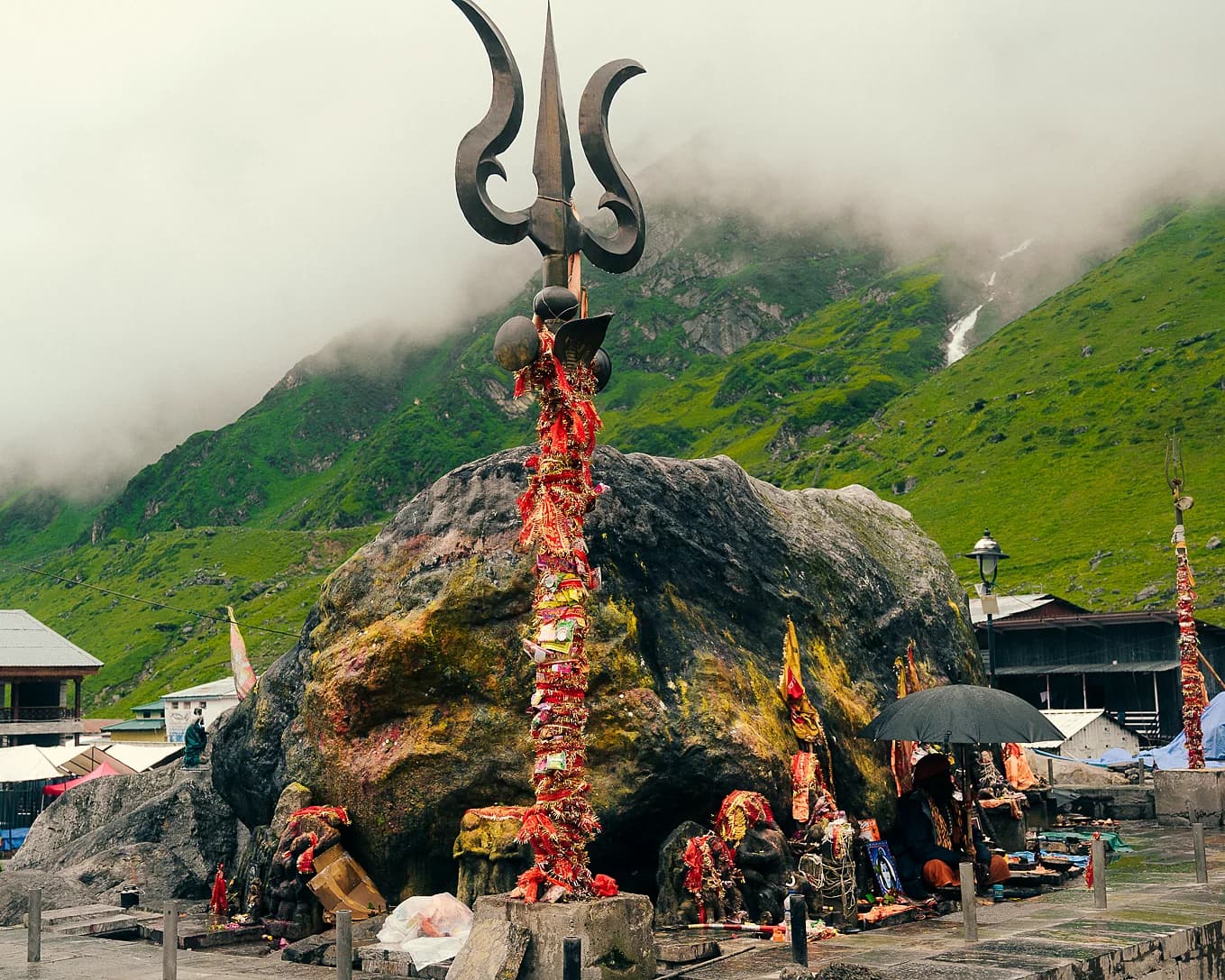
In the tradition, the deity does not disappear for the winter. Worship moves down the mountain to a winter seat and continues there until the high temple opens again. The best-known example is Kedarnath, whose winter worship is held at Ukhimath. A winter yatra is, in a quiet way, following the gods down to where they spend the cold months.
Which temples are open in winter? Kalpeshwar
Of the five Panch Kedar temples of Shiva, four close in winter. Kalpeshwar, the fifth, stays open all year. It sits at about 2,200 metres, much lower than the others, and the walk to it is about 3 km. In the Panch Kedar story it is where the hair of Shiva appeared, and it is the last temple in the traditional order.
For a taste of the Panch Kedar in the off-season, Kalpeshwar is the natural winter yatra: a real Himalayan temple and a real walk, without the long climbs of the summer routes.
Kasar Devi and Kumaon: a winter pilgrimage in Uttarakhand
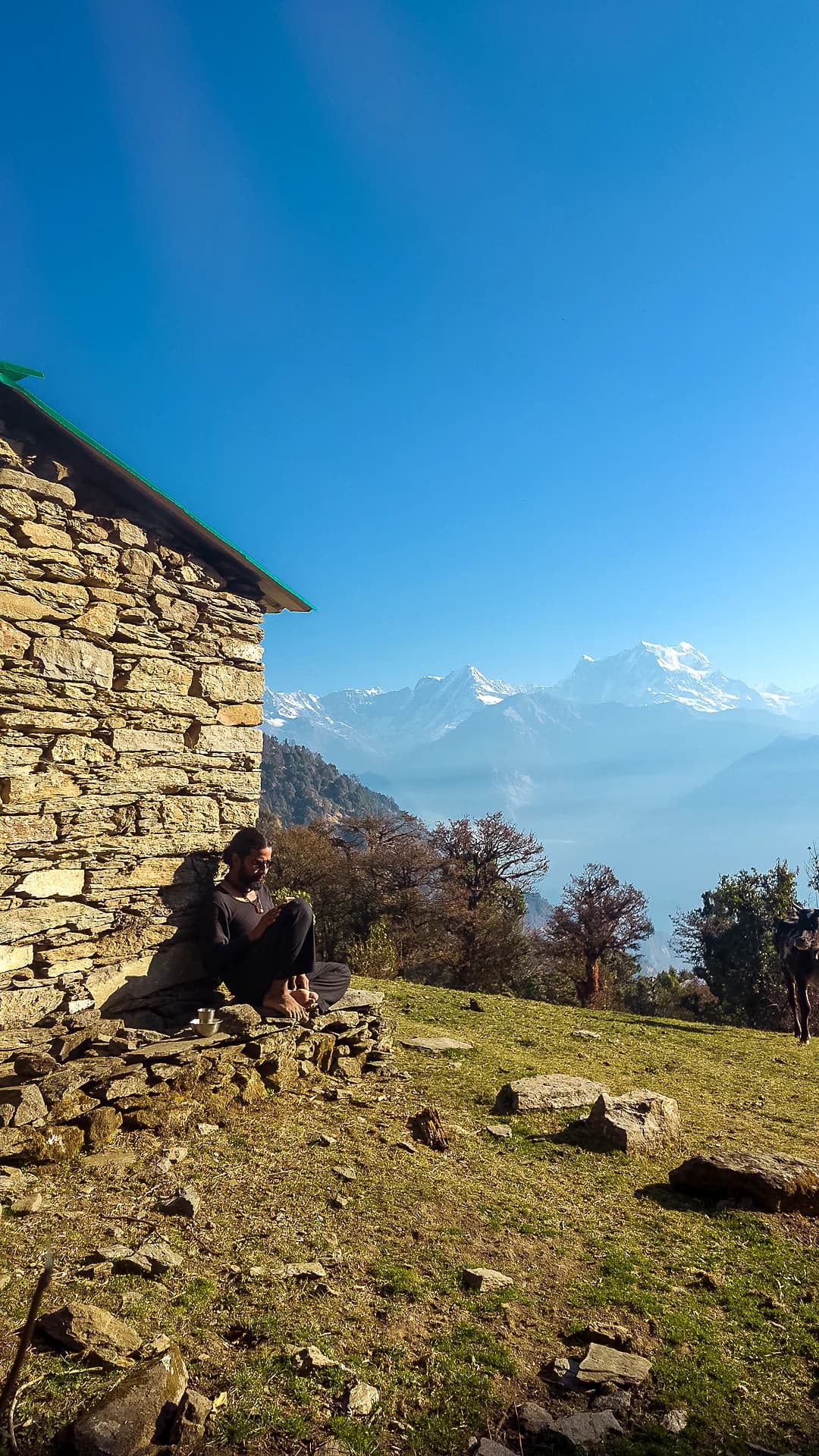
Kumaon, in the eastern part of Uttarakhand, is a region of forested ridges, lakes and old temples, many of them small and rarely visited. Its lower hills are walkable through much of the off-season, which is why so much of Yogamani's winter walking happens here.
- Kasar Devi: a trek ending at a temple to the goddess, set above the lakes of Kumaon.
- Kumaon pilgrimage: about five days of temples and hidden shrines, walked at an unhurried pace.
These are not high-altitude treks like Kedarnath or Rudranath. A winter yatra in Kumaon still means steady walking on hill paths, so basic fitness matters, but these routes suit people who are new to pilgrimage walking.
Braj: a winter yatra in the land of Krishna
Not every winter yatra is in the mountains. Braj, the country around Mathura and Vrindavan, is the land of Krishna and the place where Yogaacharya Manish grew up. The Braj yatra runs for about seven days and is a journey of devotion rather than altitude: kirtan, the old temples and the stories still sung there. The cooler months are a pleasant time on the plains of north India, which makes Braj a fitting winter yatra while the high Himalaya rests.
What does a winter yatra day look like?
The rhythm is the same as on the summer journeys, adjusted to shorter days and colder mornings. A winter yatra day usually holds:
- An early start with tea, then pranayama and meditation, often near a shrine.
- Breakfast, then walking through the day with local guides, often in silence.
- Rest and a simple vegetarian meal.
- Yoga, meditation and japa in the late afternoon.
- Aarti at the day's temple, dinner and an early night.
As the Yogayatra page puts it, this is sadhana in motion: the practice is in the walking, the breathing and the attention you bring to each place, not only on the mat.
Winter yatra or summer yatra: how to choose
Both seasons have their place. The right choice depends on your fitness, your dates and what you hope the journey will give you.
- Choose a winter yatra if you want gentler walking, quieter paths and fewer crowds, or if you are new to pilgrimage.
- Choose a summer yatra if your heart is set on Kedarnath, the full Panch Kedar or the Char Dham, which open only from spring to autumn.
- If you are in India between November and April, a winter yatra lets you walk now and plan a high-temple journey for the next season.
Many pilgrims do both: a winter yatra first, to learn the rhythm of walking and practice, then a longer summer route once they know how the body responds to the mountains.
What to pack for a winter yatra
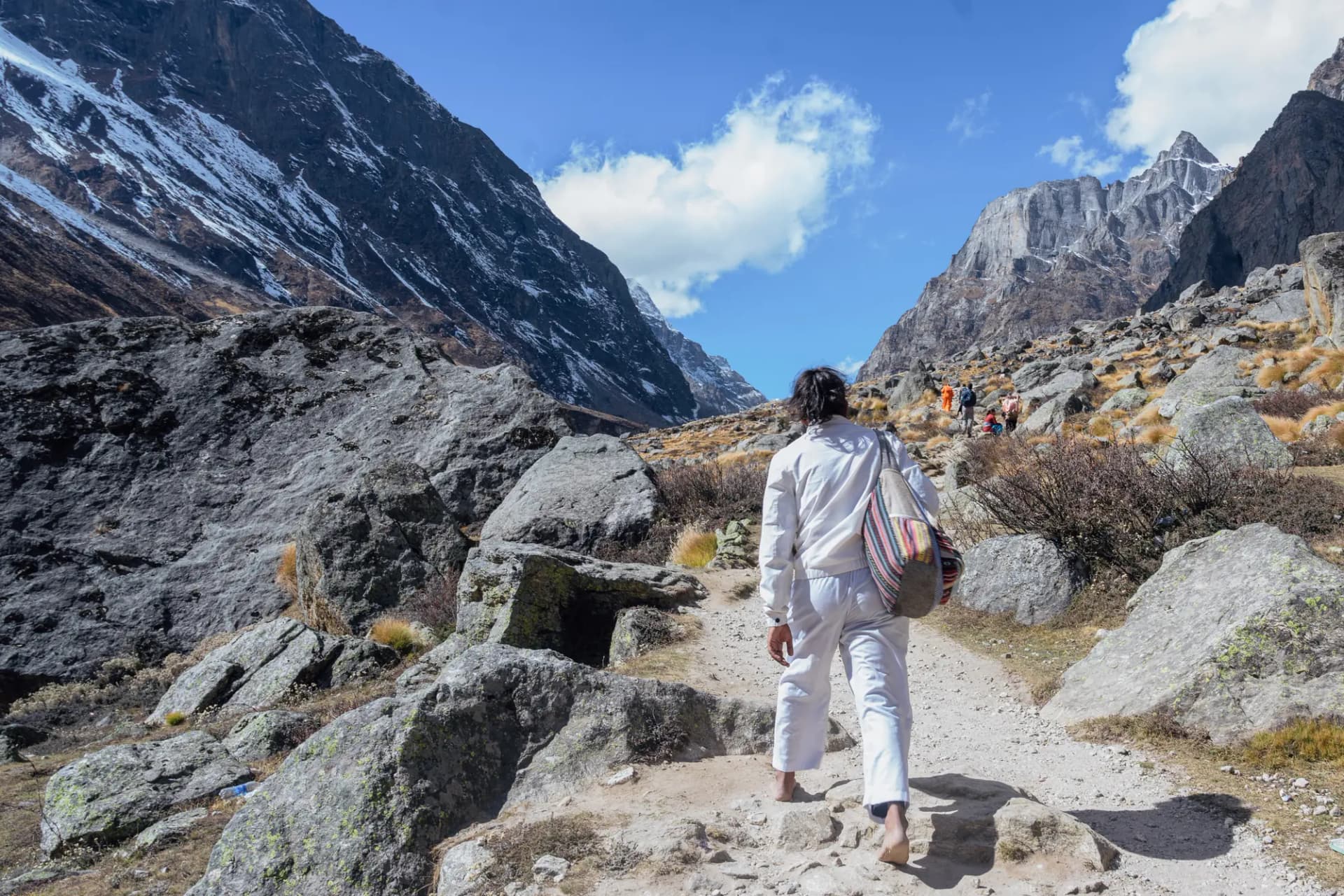
A Himalayan trek in winter is bright and clear on good days, and properly cold at night and in the early morning. A little preparation makes the journey far more comfortable.
- Warm layers you can add and remove through the day, plus a warm hat and gloves.
- Broken-in walking shoes with good grip, as paths can be frosty in the shade.
- A small daypack, a reusable water bottle and rain protection.
- Your personal medicines. If you have a heart, lung or blood-pressure condition, speak to your doctor before any yatra.
- Regular walking, including uphill, in the weeks before you come.
If weather or conditions make a route unsafe, the plan changes. In the mountains, safety comes before completing the itinerary.
Frequently asked questions about a winter yatra
Is a winter yatra suitable for beginners?
Yes, for most people with basic fitness. Winter routes such as Kalpeshwar, Kasar Devi and Kumaon are lower and gentler than the summer high-altitude treks, so they are a good first pilgrimage.
Which Panch Kedar temple is open in winter?
Kalpeshwar. It is the only one of the five Panch Kedar temples that stays open all year, at about 2,200 metres with a walk of around 3 km.
How cold does it get on a winter yatra?
Days are often bright and pleasant, but nights and early mornings are properly cold in the hills. Warm layers, a hat and gloves make a big difference.
Are winter yatra dates fixed?
No. Yogayatras are not fixed tour departures. Dates are announced or arranged, and which routes run depends on the season and the conditions that year.
Can you do a yatra in winter?
Yes. The high temples close from about November to April, but lower routes stay open. Kalpeshwar, Kasar Devi, Kumaon and Braj all make a good winter yatra.
What should I pack for a winter yatra?
Pack warm layers, a hat and gloves, broken-in shoes with good grip, a small daypack, a water bottle, rain protection and your personal medicines.
Related reading
- Panch Kedar yatra: the five temples of Shiva and how to walk them
- Ashram on Ganges: a forest ashram on the Ganga, since 1885
- Weekend yoga retreat from Delhi: 3 days in Tapovan, Rishikesh
Plan your winter journey
Tell Yogamani on WhatsApp when you will be in India and how much walking you would like to do. You will hear which winter yatra routes are running during your dates and which one suits you best.