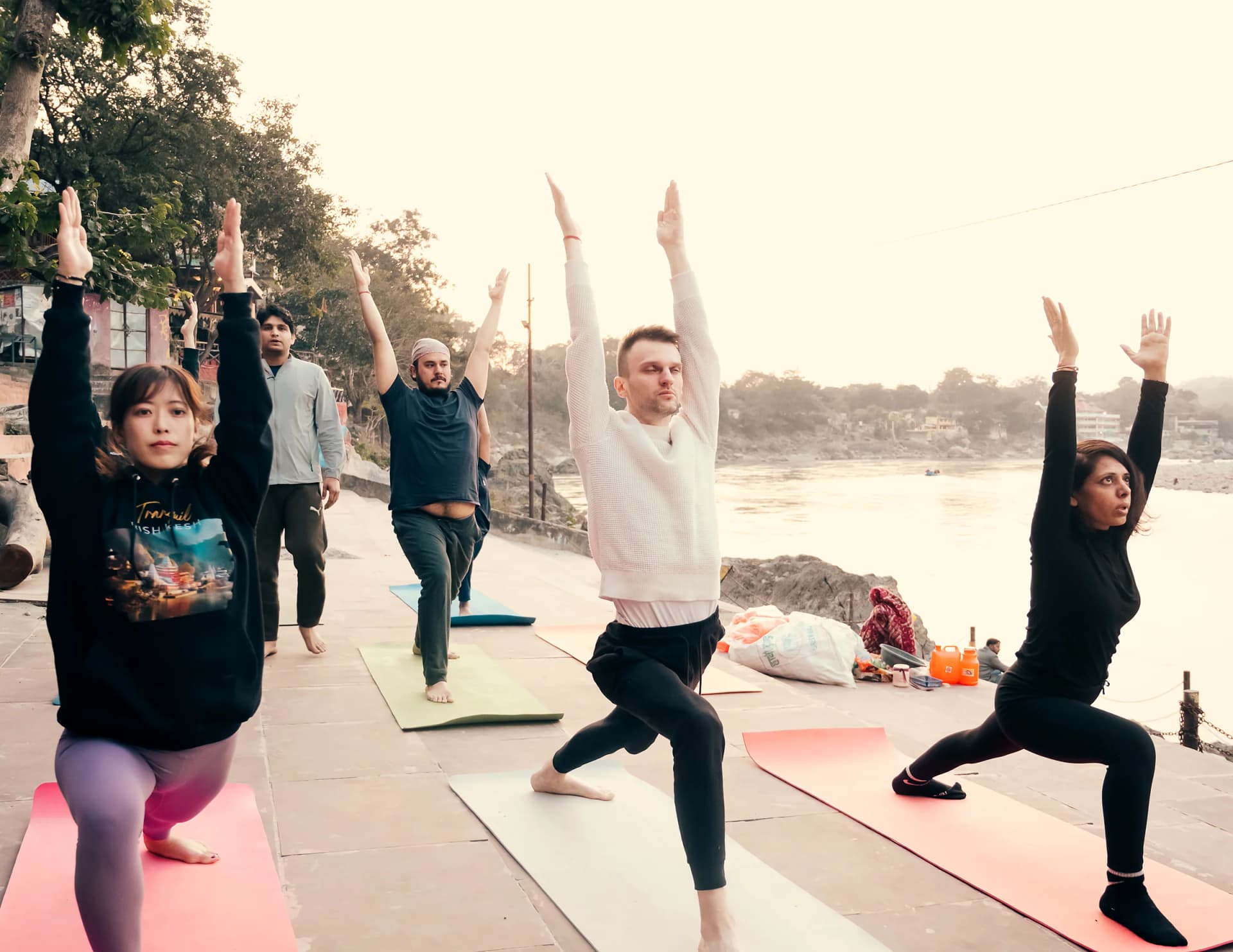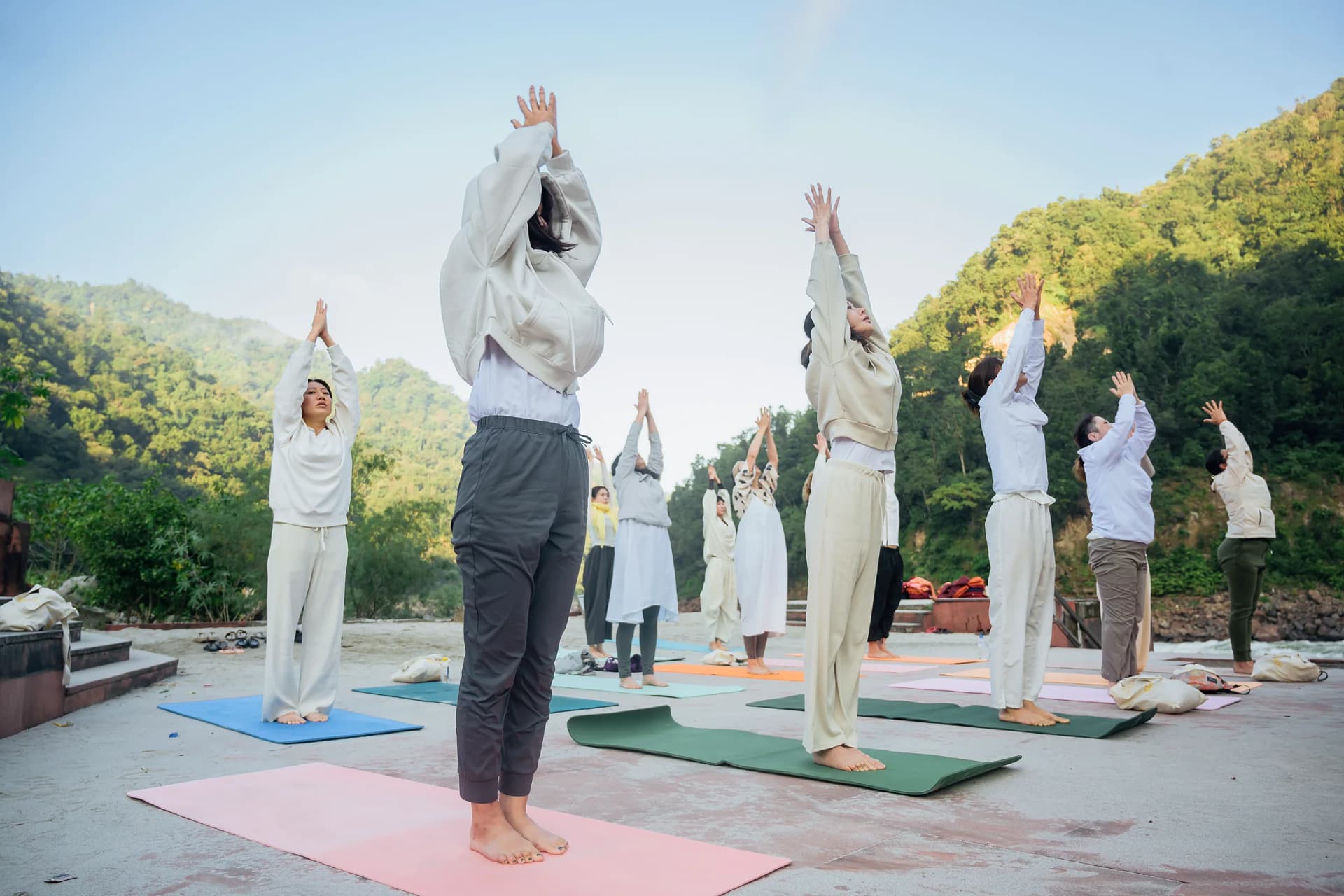
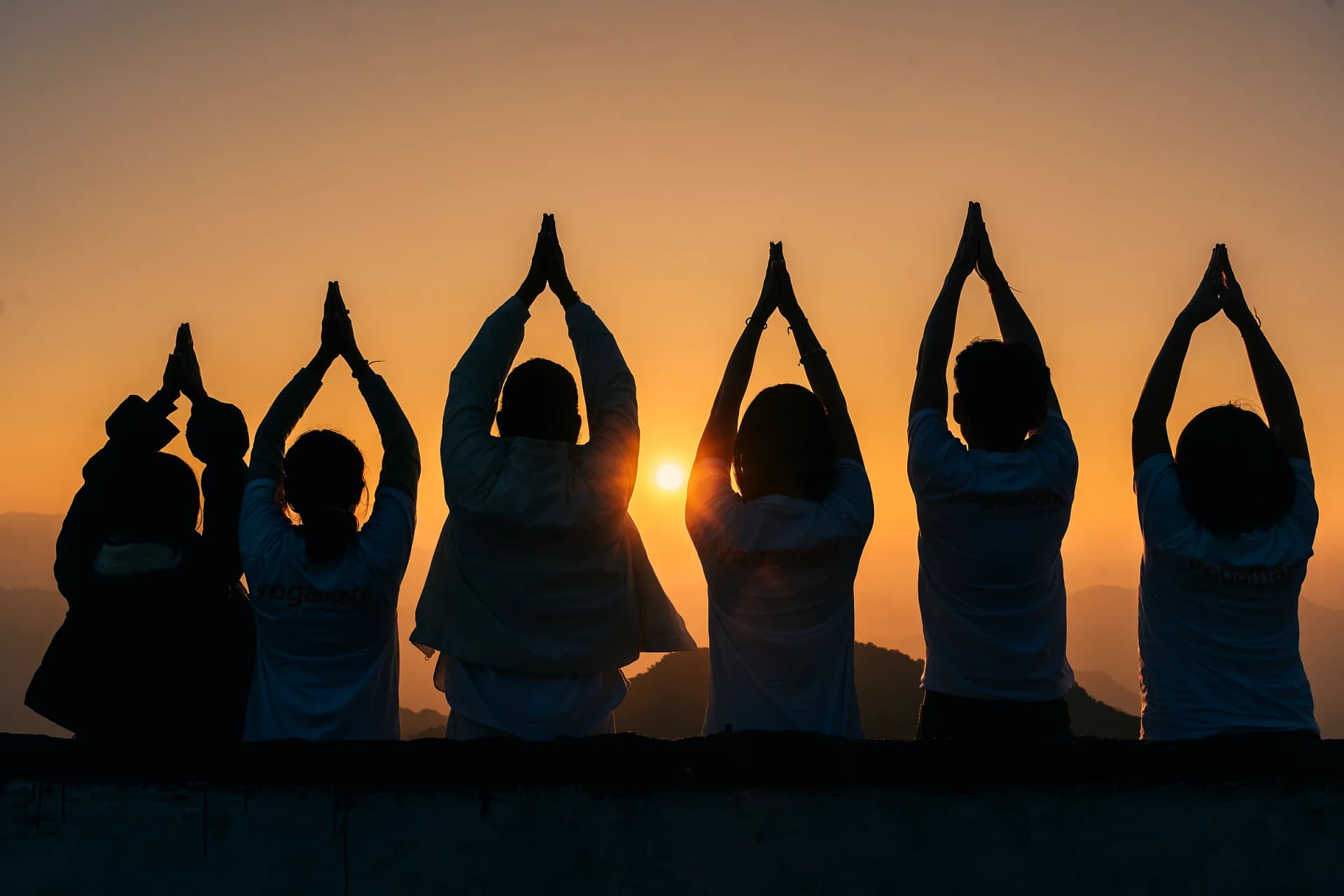
For most people, the best time for yoga in Rishikesh is October to November or February to April. Mornings are cool, days are clear and the Ganga runs calm. But yoga in Rishikesh is a year-round practice: at Yogamani in Tapovan, drop-in classes run every day, in every season.
This guide to yoga in Rishikesh walks through the year as a student would feel it. It covers the weather, the festivals, the crowds and what each season asks of your body. It also says plainly what runs at Yogamani in each month, so you can plan yoga in Rishikesh around your own dates rather than a travel brochure.
When is the best time for yoga in Rishikesh?
The best time to visit Rishikesh for yoga is autumn, from October to November, and spring, from February to April. These months have mild days, cool mornings and little rain. If you are asking which month is best for Rishikesh, any of them is a safe choice. They suit beginners, longer courses and outdoor yoga in Rishikesh by the river.
Autumn arrives once the monsoon has washed the valley. The hills are green, the air is clean and the river slowly clears. Rishikesh weather in October and November is warm by midday and fresh at dawn, which is exactly what a morning class needs. Diwali usually falls in this season, and the town glows with lamps along the ghats.
Because the weather is kind, autumn is also busy. Rooms in Tapovan fill faster, and the popular retreat dates go first. If you want a quiet start to yoga in Rishikesh, come in the first half of the month, or message ahead so the ashram can hold your place.
Is Rishikesh in winter too cold for yoga?
No. Rishikesh in winter is cold in the early morning and late evening, but the days are often bright and pleasant. From December to January, mornings can be close to single figures and fog sometimes sits on the river. With warm layers, yoga in Rishikesh in winter is calm and very rewarding.
Winter yoga in Rishikesh has a gift of its own. The town is quieter, the light is soft and sitting practices go deep. Many students find meditation and pranayama easier when the body is still and the mind is not fighting the heat. Classes simply move a little later or start with a longer warm-up.
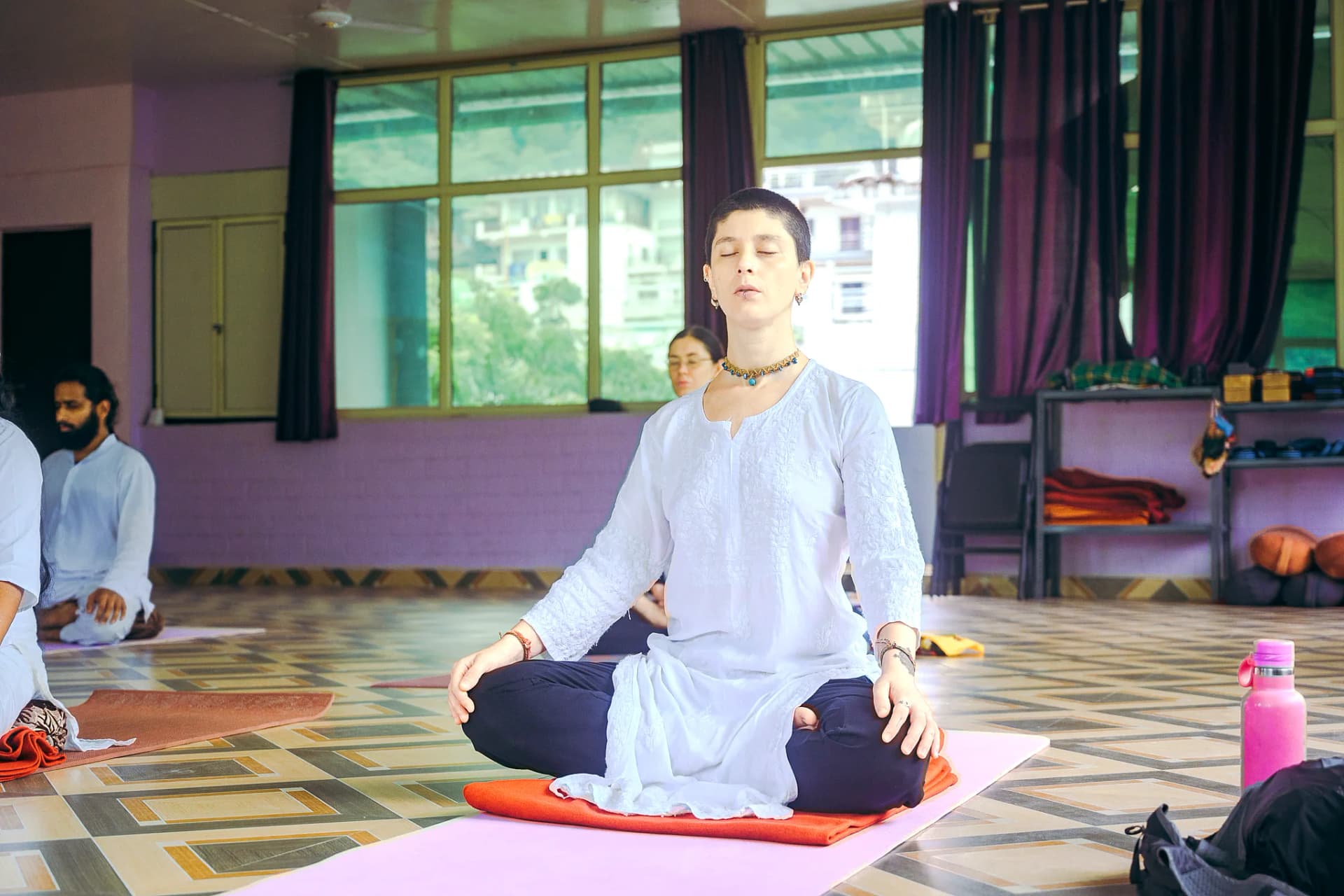
At Ashram on Ganges, where the 7 Day Yoga Retreat is held, winter mornings are cold and blankets are provided. The rooms are simple, so pack for comfort rather than style.
What to pack for yoga in Rishikesh in winter:
- A warm jacket, a woollen hat and socks for early classes.
- Thermal layers you can take off as the body warms.
- A shawl or blanket for meditation and pranayama.
- Loose, breathable clothes for asana practice.
- A refillable water bottle; dry air makes you thirsty.
- A torch for dark mornings and evenings.
Rishikesh in spring: warm mornings and festivals
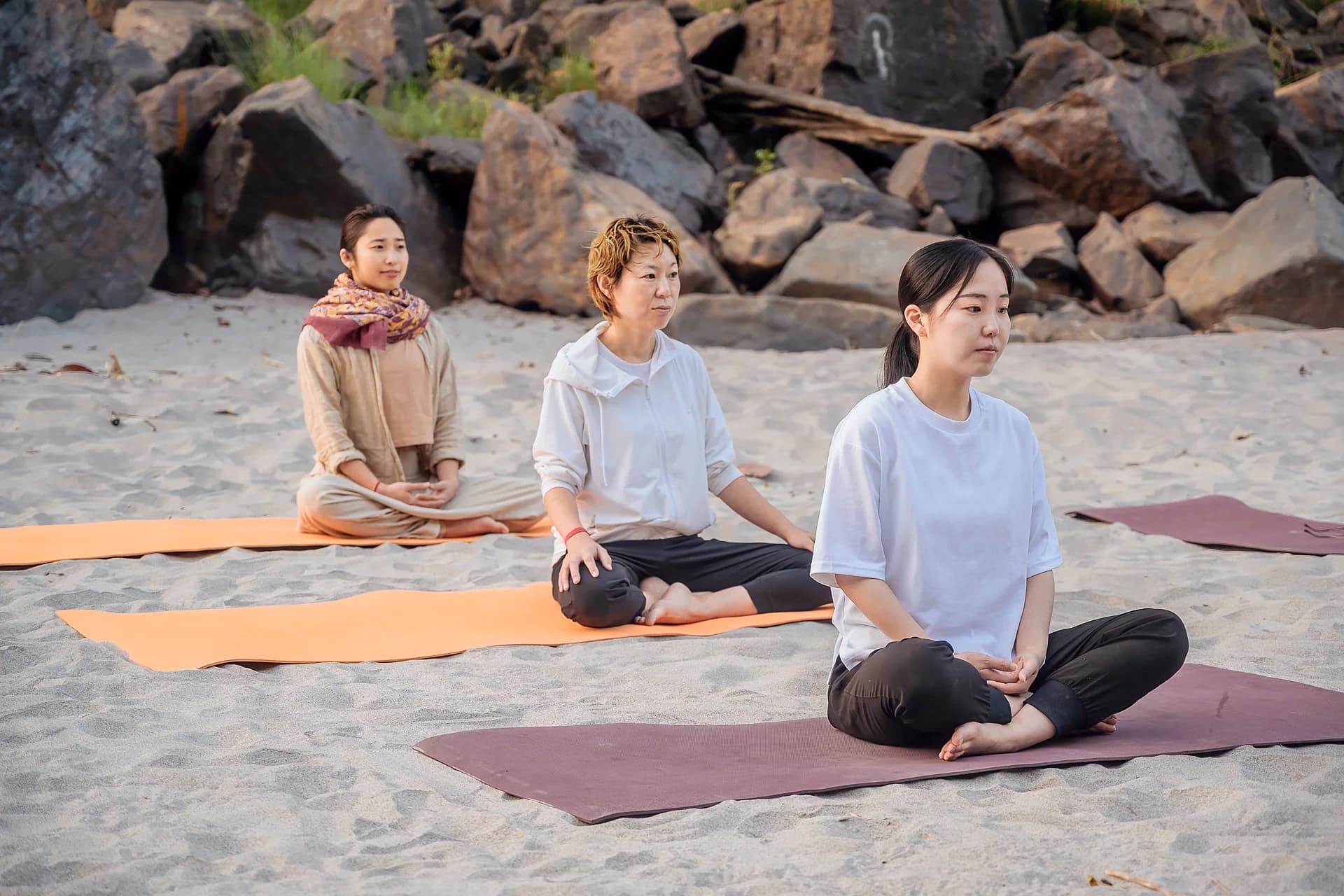
Spring, from February to April, is the second favourite season for yoga in Rishikesh. The cold lifts in February, the mornings turn soft and the trees flower. It is a good season for a first visit, a retreat or a longer course of yoga in Rishikesh.
Rishikesh in March for yoga is lively. Rishikesh hosts a large international yoga festival each March, and Holi colours the streets. Maha Shivaratri usually falls in February or March too. If you enjoy a festive town, this is a wonderful time. If you want quiet, choose dates away from the festival week and plan your room early.
By late April the afternoons grow hot. The Char Dham Yogayatra season begins in April, and the high temples open to pilgrims. Many students pair a week of yoga in Rishikesh with the first walks into the mountains.
Can you do yoga in Rishikesh during the monsoon?
Yes, you can. The monsoon in Rishikesh runs roughly from July to September. It brings heavy showers, high water and very green hills. Indoor classes carry on, and yoga in Rishikesh feels far quieter than in peak season.
There are some things to know. The river is strong, so stay well back from the water and follow local advice. Mountain roads can close after landslides, so leave spare days if you plan to travel on. River rafting usually pauses for the season. In July, the Kanwar Yatra brings very large crowds of pilgrims through Rishikesh and Haridwar for some days.
Summer before the rains, from May to June, is hot in the afternoons. Practise early, rest in the heat of the day, and keep evening classes gentle. Panch Kedar walks open from May, and the cooler heights draw many walkers then.
Monsoon and summer yoga in Rishikesh suits people who want a steady routine, few crowds and plenty of time to study. It suits a short first visit less well, as plans can change with the weather.
What runs at Yogamani in each season
Most programmes at Yogamani run all year, so the season changes the feel of yoga in Rishikesh more than the choice. Here is how the year looks from Tapovan.
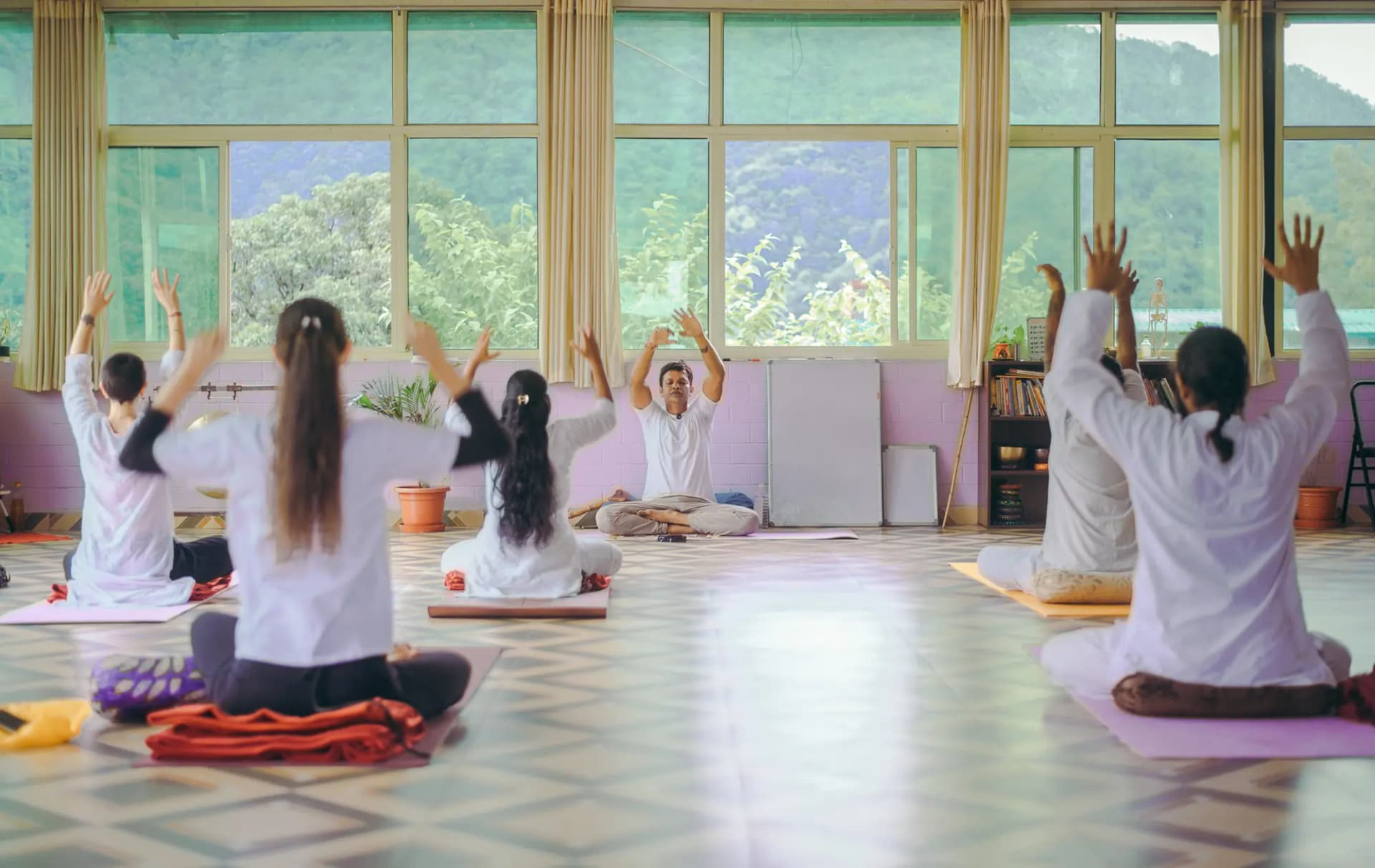
- Daily drop-in classes: every day, including Sundays, in English and Hindi, at the two Yogamani practice spaces in Tapovan. Classes also move outside the shala when the season allows.
- 3 Day Sādhana Retreat: every weekend in Tapovan, Saturday to Monday, in every season.
- 7 Day Yoga Retreat: at Ashram on Ganges, starting on the 2nd, 9th, 16th and 23rd of each month, with up to 12 participants.
- Yoga Deep Dive Courses: one subject studied for one to four weeks, with the cycle starting on the 2nd of each month.
- Sound Healing and Nāda Yoga Teacher Training: one week, starting on the 2nd, 9th, 16th and 23rd.
- Yogayatra: Char Dham from April to November, Panch Kedar from May to November, and off-season treks such as Kasad Devi and Kumaon from November to April.
Timetables can change from day to day, so check today's classes on WhatsApp before you walk over. If you are planning a yoga retreat in Rishikesh, choose your dates first and then the setting that suits your comfort and budget.
The season changes the weather, not the practice. The breath, the mat and the morning are the same in every month.
Whatever month you choose for yoga in Rishikesh, arrive a day early if you can. A day to rest after the journey helps your first class feel easy, and it gives you time to walk to the Ganga and watch the evening aarti.
Frequently asked questions about yoga in Rishikesh by season
Which month is best for yoga in Rishikesh?
October, November, February and March are the easiest months for most visitors. The weather is mild and dry, the mornings are cool for practice, and the river is calm. For yoga in Rishikesh with fewer people, early autumn and late February are often the gentlest choices.
Is Rishikesh cold in December?
Yes, mornings and evenings in December are cold for yoga in Rishikesh, and fog can sit on the river at dawn. Days are often sunny and pleasant. Bring warm layers, a hat and a shawl for meditation, and you will practise comfortably through the winter months.
Can you do yoga in Rishikesh during the monsoon?
Yes. Indoor classes of yoga in Rishikesh continue through July, August and September, and the town is quieter. Keep away from the fast river, expect some road closures in the hills, and leave room in your plans in case rain changes your travel days.
Is Rishikesh crowded in March?
March is one of the busiest months. The international yoga festival, Holi and fine weather all bring visitors. It is a joyful time for yoga in Rishikesh, but book your room and retreat dates early, and choose days outside the festival week if you prefer quiet.
Do yoga classes in Rishikesh run all year?
At Yogamani, yes. Drop-in classes run every day in Tapovan, the 3 Day Sādhana Retreat runs every weekend, and the 7 Day Yoga Retreat starts four times a month. Message on WhatsApp to check the timetable for your dates before you arrive.
Related reading
- Your first yoga class in Rishikesh: what to bring and what to expect
- Drop-in yoga classes in Rishikesh: how they work and how to choose one
- Winter yatra in the Himalayas: where to walk from November to April
Plan your yoga in Rishikesh with Yogamani
Tell Yogamani on WhatsApp when you will be in Rishikesh and how long you can stay. You will hear which classes, retreats and courses run during your dates, from a single drop-in class in Tapovan to a week at Ashram on Ganges.